- If you want to process citrus fruits with the juicer, remove the peel as well as the white pith.
The white pith gives juice a bitter taste.
- Fruits that contain starch, such as bananas, papayas, avocados, gs and mangoes are not suitable
for processing in the juicer. Use a food processor, blender or hand blender to process
these fruits.
Serving
- Drink the juice immediately after you have extracted it. If it is exposed to air for some time, the
juice loses its taste and nutritional value.
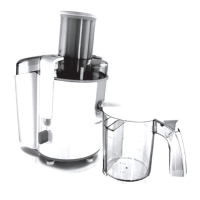
- If you want clear juice without a foam layer, put the lid with integrated foam separator on the
jug. If you want cloudy juice with a foam layer, remove the lid with integrated foam separator
from the jug.
- Apple juice turns brown very quickly. To slow down this process, add a few drops of lemon juice.
- When serving cold drinks, add a few ice cubes.
Fruit and vegetable facts
Fruit/
vegetable
Vitamins/minerals Kilojoule/calorie count Juicing
speed
Maximum
quantity
Apples Vitamin C 200g=150kJ (72 cals) high 3.5kg or 2.5l
juice
Apricots High in dietary bre,
contains potassium
30g=85kJ (20 cals) low 2.5kg or 1.5l
juice
Beetroot Good source of folate,
dietary bre, vitamin C and
potassium
160g=190kJ (45 cals) high 1.5-2kg or
0.6l-1l juice
Blueberries Vitamin C 125g=295kJ (70 cals) low 4kg or 2l
juice
Brussels
sprouts
Vitamin C, B, B6, E, folate
and dietary bre
100g=110kJ (26 cals) low 3.5kg or 2l
juice
Cabbage Vitamin C, folate, potassium,
B6 and dietary bre
100g=110kJ (26 cals) high 2.5kg or 1.2l
juice
Carrots Vitamin A, C, B6 and dietary
bre
120g=125kJ (30 cals) high 1.5-2kg or
0.6l-1l juice
Celery Vitamin C and potassium 80g=55kJ (7 cals) high 1.5kg or 0.7
l juice
Cucumber Vitamin C 280g=120kJ (29 cals) low 4.5kg or 3l
juice
Fennel Vitamin C and dietary bre 300g=145kJ (35 cals) low 3.5kg or 2.5l
juice
Grapes Vitamin C, B6 and
potassium
125g=355kJ (85 cals) low 4kg or 2.5l
juice
Kiwi fruit Vitamin C and potassium 100g=100kJ (40 cals) low 4kg or 2.5l
juice
ENGLISH 9


 To Next Page