Chapter 1
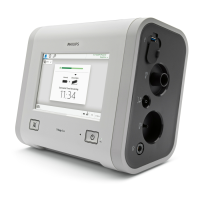
1047358 Rev N Respironics V60 Ventilator User Manual
1-3
Warnings, cautions, and notes
NOTE: The ventilator is not intended for use as an ambulance transport
ventilator or as an Automatic Transport Ventilator as described by the
American Hospital Association and referenced by the FDA. It is
intended to allow the patient to be transported within the hospital
setting using a cart to move the ventilator.
NOTE: When attachments or other components or subassemblies are added
to the ventilator breathing system, the pressure gradient across the
ventilator breathing system, measured with respect to the ventilator
outlet, may increase.
NOTE: To ensure the correct performance of the ventilator and the accuracy
of patient data, use only Respironics-approved accessories with the
ventilator. See Appendix C, “Parts and accessories”.
NOTE: This Respironics V60 Ventilator and its recommended accessories
that have patient contact are not made with natural rubber latex.
NOTE: If an alarm persists for no apparent reason, discontinue ventilator use
and contact Philips.
NOTE: If you detect any unexplained changes in the performance or visual
displays of the ventilator, discontinue ventilator use and contact
Philips.
NOTE: The Respironics V60 Ventilator does not support automatic record
keeping.
NOTE: All ventilator mode and alarm settings, alarm messages and
significant events are retained and automatically logged, even when
power is lost.
Preparing for
ventilation
WARNING: Connect the ventilator only to an appropriate medical-grade oxygen
source.
WARNING: To reduce the risk of hypoxia, connect only oxygen to the high-pressure
connector at the rear of the ventilator.
WARNING: To reduce the risk of fire, do not use a high-pressure oxygen hose that is
worn or contaminated with combustible materials like grease or oil.
WARNING: The Respironics V60 Ventilator is designed to use ambient air and high
pressure 100% oxygen. No other gases should be used.
WARNING: Do not use the ventilator with helium or mixtures with helium.
WARNING: Do not use the ventilator with nitric oxide.
WARNING: To prevent possible asphyxia and to reduce the risk of CO
2
rebreathing,
take these precautions with respect to mask and exhalation port use:
- Use only an oro-nasal mask with an anti-asphyxia valve or a nasal
mask for noninvasive ventilation.
- Do not occlude the exhalation port.
- Turn on the ventilator and verify that the port is operational before
application. Pressurized gas from the ventilator should cause a
continuous flow of air to exhaust from the leak port, flushing exhaled
gas from the circuit.



 To Next Page
 Loading...