106
Supplemental Sheet for Sinus motorglider nose-wheel edition
wwwpipistrel.si
REV. 0
Aircraft and systems on board
Page 55. - Undercarriage
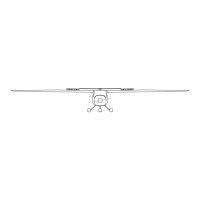
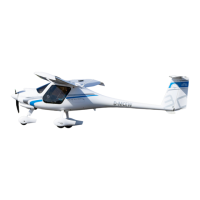
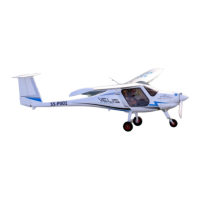
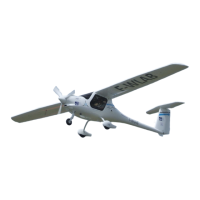
The undercarriage is a tricycle type with two main brake-equipped wheels mounted on struts and a
stearable nose wheel.
distance between main wheels 1,60 m
distance between main and nose wheel 1,49 m
tire 4,00'' x 6'' (mail wh.), 4,00'' x 4'' (nose wh.)
tire pressure 1,0 - 1,2 kg/cm
2
(main wh.), 1,0 kg/cm
2
(nose wh.)
brakes disk type, driven by brake pedals located on both rudder pedals
brake uid DOT 3 or DOT 4
Handling and Maintenance
page 67. -Undercarriage
daily
st 5
hours
50
hours
100
hours
250
hours
500
hours
1.000
hours
10.000
hours
main strut, nose wh. condition
C C SC
Appendix
Pages 82 - 86. - Aircraft familiarisation
Taxi
Taxiing with the Sinus ultralight motorglider nose-wheel edition is rather simple considering the
stearable nose wheel. For sharper turns on the ground you can also use wheel brakes to assist your-
self. I would recommend you taxi slow, up to 10 km/s (5 kts), while holding the stick back fully to ease
the pressure of the nose wheel.
Take o and initial climb
As you start to move, pull the stick 1/3 of elevator’s deection backwards to ease the pressure on
the nose wheel and lift it o the runway slightly. Do not use full back deection as this will cause
the aircraft’s tail to touch the ground. When the nose wheel is lifted o the ground correctly,
there is nothing else but to hold the same angle of attack and the aircraft will become airborne.
Roundout (Flare) and touchdown
The are must be gentle and the aircraft must touch down with the main (back) wheels rst, so
you will not bounce from the runway. After touchdown, operate the rudder pedals if necessary to
maintain runway heading and try to have the nose wheel o the ground for as long as possible.
When the nose wheel is to touch the ground, rudder pedals MUST be exactly in the middle not to
cause damage to the stearing mechanism. While braking, hold the stick back fully!


 To Next Page
 Loading...