The Powerwerks PW50 is a highly portable P.A. (Public Address) system designed for amplifying vocals, instruments, keyboards, drum machines, audio devices, and more, suitable for a variety of environments. This owner's manual provides essential information for quick setup and operation, ensuring years of enjoyment from the product.
Function Description:
The PW50 serves as a compact and versatile sound amplification system. It integrates multiple input channels, tone shaping controls, and a master volume to manage the overall sound output. A key feature is its "POWERLINK" capability, allowing two PW50 units to be linked together for expanded input and output options, effectively doubling the number of available channels and increasing the overall sound coverage. It also includes a dedicated subwoofer output for enhanced low-frequency response when paired with a powered subwoofer.
Important Technical Specifications:
- Output Power: 50W at 8 Ohm load (1% THD).
- Accepted Inputs:
- CH 1 & 2: Mic XLR Balanced, Line level 1/4" Un-balanced. These inputs also provide +15V phantom power for condenser microphones.
- CH 3 (AUX IN): 1/8" Headphone/line Level Stereo, mixed to mono.
- Frequency Response: 20Hz-20kHz (tailored to speaker cabinet for accurate acoustical response).
- Hum & Noise:
- Residual Noise: -65dB (all level controls 0% minimum).
- Nominal System Noise: -48dB (all level controls at 50%).
- System Gain (at 1kHz):
- Mic to Speaker Output (CH 1 & 2): +70dB.
- Line to Speaker Output (CH 1 & 2): +56dB.
- AUX IN to Speaker Output: +42dB.
- Channel EQ (High, Low): High frequencies at 4kHz and above, Low frequencies at 800Hz and below.
- POWERLINK (IN and OUT): Both jacks accept a balanced input and send a pre-master volume output mix of channels. Recommended for linking two PW50 units.
- Subwoofer Out: Line Out, 20Hz-150Hz. A crossover at 150Hz is activated when a standard 1/4" mono (tip/sleeve) SHIELDED instrument cable is inserted into this jack, rolling off frequencies below 150Hz from the PW50's internal speakers. When not used, PW50 speakers are full range.
- Speakers: Two 4.5" speakers and one 3.5" piezo driver.
- Speaker Power Capacity: 50W RMS.
- Nominal Impedance: 8 Ohms (not designed for external speakers).
- Power Requirements: 80W nominal.
- USA/Canada: 120VAC/60Hz.
- Europe/UK: 230VAC/50Hz.
- Australia: 240VAC/50Hz.
- Japan: 100VAC/50-60Hz.
- Dimensions & Weight:
- mm/kg: 190 W x 460 H x 165 D / 6.7 kg.
- Inches/Pounds: 7.5" W x 18" H x 6.5" D / 14.7 lb.
Usage Features:
- Input Section:
- MIC Inputs (XLR): Designed for low-impedance microphones or equipment with mic-level, balanced outputs. Provides 15-volt phantom power for condenser microphones without damaging dynamic or non-condenser mics.
- LINE Inputs (1/4"): For high-impedance microphones, keyboards, drum machines, and other audio devices.
- AUX IN (1/8"): Stereo input for external audio devices like MP3 players, CD players, or computers. Stereo signals are summed to mono.
- Volume Controls: Individual volume controls for each channel (1, 2, and 3) to adjust levels and relative balance.
- Tone Controls (Low, High):
- Low: Adjusts bass frequencies. Clockwise for deeper, warmer tone; counterclockwise for a brighter sound.
- High: Accents treble frequencies. Clockwise for clearer, crisper sound; counterclockwise for a softer, less bright sound.
- Master Volume: Controls the overall volume of all channels and the POWERLINK input. Note that it does not affect the POWERLINK Output level.
- POWERLINK IN/OUT: Allows linking two PW50 units using a standard mic cable. Channels from both units are summed, and individual volume controls manage the mix. The Master volume on each PW50 controls its own loudness. The POWERLINK IN jack's shield (pin 1) is connected to chassis ground, while the POWERLINK OUT jack's shield (pin 1) is lifted from chassis ground. The POWERLINK OUT can also connect to a power amp with a balanced line input.
- Subwoofer Out: Sends a line-level, unbalanced low-frequency signal (crossed over at 150Hz) to a powered subwoofer (e.g., PW112S). Inserting a 1/4" mono (tip/sleeve) SHIELDED instrument cable into this jack activates the internal crossover, rolling off frequencies below 150Hz from the PW50's speakers. It is recommended to plug the AC cables of both the PW50 and subwoofer into the same outlet or power strip to prevent ground loop hum.
- Power Switch: Activates AC power to the PA system.
Maintenance Features:
- AC Power Cord Receptacle: Allows for firm insertion of the provided AC cord. The cord can be removed for storage or replacement if damaged. It is crucial to replace the AC cord if its protective jacket or ground pin is damaged or removed to ensure safety.
- Safety Instructions: The manual emphasizes reading all safety and operating instructions, keeping them for future reference, and understanding all warnings. It advises against using the product near water, blocking ventilation openings, or installing it near heat sources.
- Cleaning: Only use a dry cloth to clean the product.
- Servicing: All servicing should be referred to qualified service personnel, especially if the apparatus has been damaged, exposed to rain/moisture, or is not operating normally.
- FCC Statements: The device complies with FCC rules for Class B digital devices. Users are advised on measures to correct potential interference, such as reorienting antennas, increasing separation from the receiver, or consulting a technician.
- Hearing Protection: The manual includes OSHA guidelines for permissible noise level exposures and strongly recommends wearing ear plugs or protectors when operating the amplification system at high sound pressure levels to prevent permanent hearing loss.
- Electrical Safety: Warnings regarding the risk of electric shock are prominently displayed, advising against opening the chassis and referring servicing to qualified personnel. It also warns against exposing the apparatus to dripping or splashing liquids and placing liquid-filled objects on it. The MAINS plug or appliance coupler serves as the disconnect device and should remain readily operable.

 Need help?
 General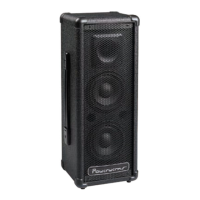

 To Next Page