FITTING INSTRUCTIONS FOR USE WITH
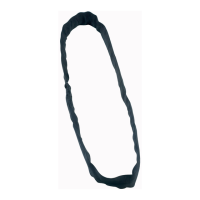
ANCHORAGE SLING (90287 / 90302)
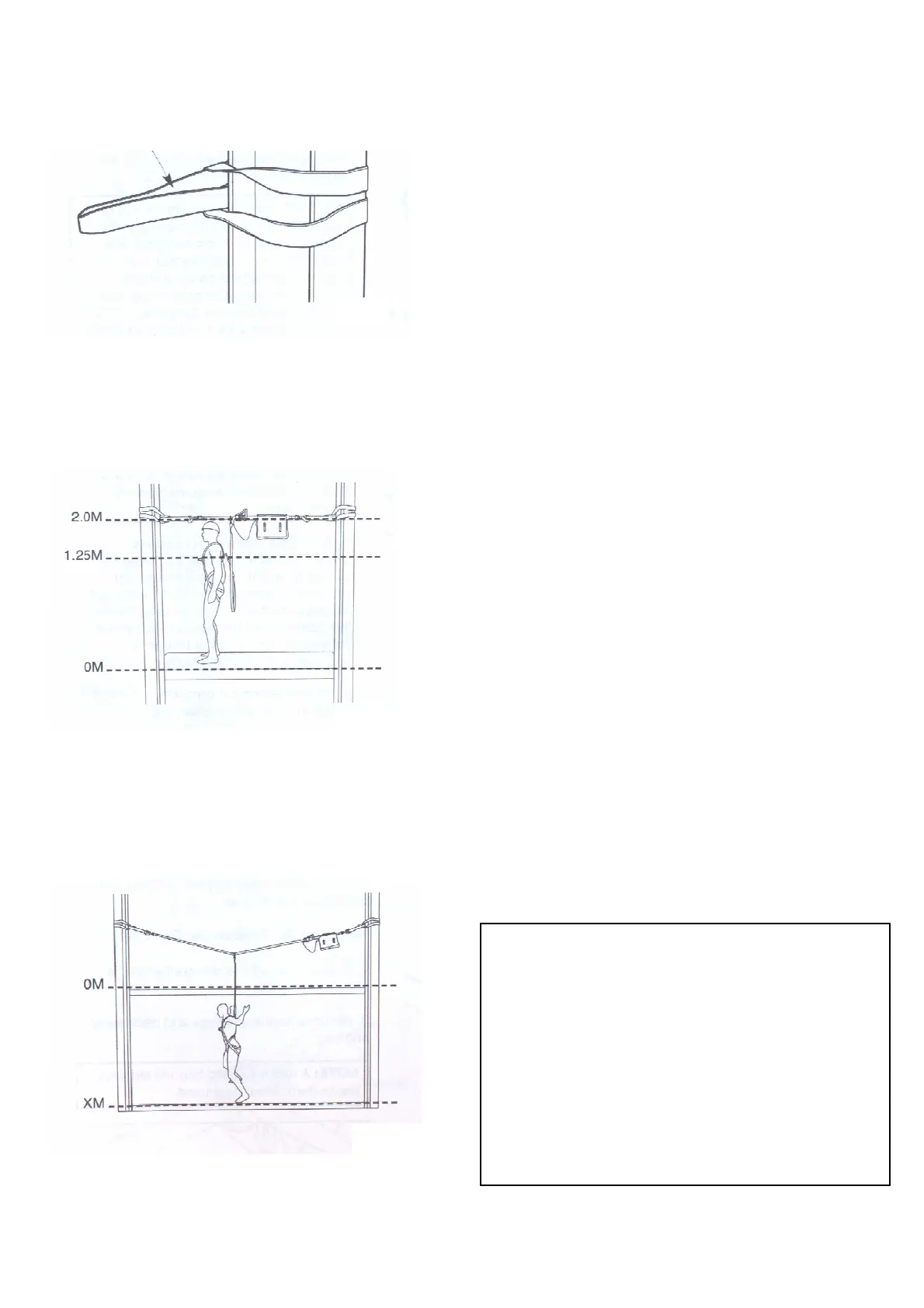
Prior to fitting the line as described previously,
it is necessary to fit the two other anchorage
slings (Fig. G). These should be positioned as
high as possible above the user, thus ensuring
that in the event of a fall the distance is kept to
a minimum. (Fig. H & Fig. I).
By fitting the anchorage sling in the correct
configuration, it will ensure that the Horizontal
Lifeline will remain in the position it is fitted.
This will aid assembly of the overall system.
Important Points
1. Thoroughly inspect all components before
and after fitting.
2. Do not use additional bars or levers to
induce a higher tension in the line. This will
increase end anchor loads in the event of a
fall.
3. Ensure that harness/lanyard attachments,
karabiners etc. are free from sharp edges or
burrs.
4. Ensure that anchor points are adequate, at
lease 15kN. (30kN for 2 persons).
5. Ensure that when using attachment straps
the sleeve is suitably positioned to prevent any
abrasion or cutting of the straps.
NOTE: Clearance Required Below User
Due to the fact that the line deflects when
loaded, users and installers must consider the
clearance required below the Horizontal
Lifeline to ensure the users’ safety in the event
of a fall. The danger to the user can be greatly
reduced if the line is installed at head height,
and/or shorter lanyards are used to connect.
These factors combine to reduce the graph on
the next page, which explains the safe
clearance X when used with P+P Chunkie or
NRG Fall Arrest Lanyards (Fig. H, I, J and K).
5
P+P Anchora
e Slin
Fi
. G
Fi
. H
Fi
. I


 To Next Page
 Loading...