EasyManua.ls Logo

Roche MagNA lyser - User Manual

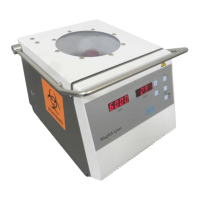
Roche MagNA lyser
4 pages
Go to English
Print Icon
To Next Page IconTo Next Page
Loading...
Normas de uso del MagNA lyser
1. El equipo se puede utilizar de forma autónoma por parte de los usuarios.
2. En el caso de emplearse durante mucho tiempo (más de una hora) es necesario
reservarse en la hoja de reservas que se encuentra junto al aparato.
3. Ante cualquier duda sobre su funcionamiento preguntar al responsable del equipo,
Lucía Jordá laboratorio 234.
CÓMO INICIAR EL APARATO
1. Seleccione la velocidad deseada. Presione la tecla SET UNA VEZ, HASTA QUE EL NÚMERO EN
LA PANTALLA DE VELOCIDAD PARPADEE. Para aumentar la velocidad en 100 rpm, presione la
tecla + una vez; para disminuirlo, presione la tecla -
2. Seleccione el tiempo de ejecución deseado. Presione la TECLA SET UNA VEZ, HASTA QUE EL
NÚMERO EN LA PANTALLA DE HORA PARPADEA. Para restablecer la hora, use las teclas +/-.
3. Después de configurar ambos parámetros, presione la tecla SET por tercera vez para regresar
al modo de operación
CARGAR LAS MUESTRAS
1. Encienda el interruptor de alimentación principal, cuando la luz LED amarilla se encienda
presione la tecla OPEN para desbloquear y abrir la tapa.
2. Cargue las muestras en el soporte del rotor MagNA
Lyser (Figura 1) y colóquelas SIMÉTRICAMENTE. MUY
IMPORTANTE: UTILICE SIEMPRE TUBOS con TAPÓN DE
ROSCA.
Figura 1. Soporte del rotor
3. Coloque el rotor en el eje del MagNA Lyser. Gire el rotor hasta que las proyecciones del eje
encajen EXACTAMENTE en el orificio central del rotor.
4. Coloque la placa de retención (Figura 2) en la parte superior
del rotor. Gire hasta que los pernos de las abrazaderas caigan
en los orificios del rotor.
Figura 2. Placa de retención
Question and Answer IconNeed help?

Do you have a question about the Roche MagNA lyser and is the answer not in the manual?

Overview

The MagNA Lyser is a laboratory device designed for sample preparation, specifically for the homogenization of biological samples. It operates by rapidly shaking samples, which are placed in tubes within a rotor, to disrupt cells or tissues. This process is crucial for extracting nucleic acids (DNA/RNA) or proteins for downstream analysis.

Function Description:

The primary function of the MagNA Lyser is to homogenize samples. Users load samples into specific tubes, which are then placed symmetrically within a rotor. The device then spins the rotor at a high speed, causing the samples to be agitated and homogenized. This mechanical disruption is effective for a wide range of sample types, including tissues, cells, and microorganisms. The device allows for precise control over both the speed and duration of the homogenization process, enabling users to optimize parameters for different sample types and experimental requirements.

Important Technical Specifications:

  • Speed Control: The device offers adjustable speed settings, allowing users to select a desired rotation speed in increments of 100 rpm. This flexibility is important for achieving optimal homogenization without damaging sensitive biomolecules.
  • Time Control: Users can set the desired run time for homogenization, which is crucial for consistent and reproducible sample preparation. The time display blinks when in adjustment mode, and users can use +/- keys to set the duration.
  • Rotor Design: The MagNA Lyser utilizes a specific rotor stand (Figure 1) designed to hold multiple sample tubes. The tubes must be placed symmetrically to ensure balanced operation and prevent damage to the device.
  • Sample Tube Compatibility: It is explicitly stated that users must "ALWAYS USE CAP TUBES" (tubos con tapón de rosca), indicating a requirement for secure, screw-cap tubes to prevent sample leakage during high-speed operation.
  • Retention Plate: A retention plate (Figure 2) is used to secure the sample tubes within the rotor, ensuring they remain in place during the homogenization process. This plate is fastened with three red securing knobs.

Usage Features:

  • Autonomous Operation: The equipment is designed for autonomous use by individual users, implying a user-friendly interface and straightforward operation.
  • Reservation System: For extended use (more than one hour), a reservation system is in place, requiring users to sign up on a reservation sheet. This suggests the device is in high demand or requires monitoring for prolonged operation.
  • User Support: In case of operational doubts, users are directed to contact a specific individual, Lucía Jordá, in laboratory 234, indicating dedicated support for the equipment.
  • Intuitive Control Interface: The device features a simple control panel with "SET," "+," and "-" keys for adjusting speed and time parameters. The blinking display for numerical values guides the user through the setting process.
  • Safety Interlocks: The device includes a main power switch and an "OPEN" key to unlock and open the cover, likely incorporating safety interlocks to prevent operation when the cover is open or to ensure the cover is securely closed during operation. An amber LED light indicates readiness for operation.
  • Symmetrical Sample Loading: A critical usage feature is the requirement to load samples "SYMMETRICALLY" (SIMÉTRICAMENTE) in the rotor stand. This is essential for maintaining balance during high-speed rotation, preventing vibrations, and ensuring the longevity of the device.
  • Rotor and Retention Plate Installation: The manual provides clear instructions for placing the rotor onto the shaft, ensuring its projections fit into the central hole, and then securing it with the retention plate. The retention plate's clamps bolts must drop into the rotor keyholes before tightening.
  • Manual Tightening of Knobs: The three red securing knobs on the retention plate are to be tightened "BY HAND" (a MANO) in a clockwise direction.

Maintenance Features:

  • Knob Care: A crucial maintenance-related instruction is the warning "PLEASE DO NOT OVERTIGHTEN, AS THE KNOBS BREAK VERY EASILY" (POR FAVOR NO APRIETE EN EXCESO, YA QUE LAS PERILLAS SE ROMPEN MUY FÁCILMENTE). This highlights a delicate component that requires careful handling to prevent damage and ensure continued functionality.
  • Auxiliary Tool for Stubborn Screws: In rare instances where the screws become "too tight to be opened manually" (demasiado apretados para abrirlos manualmente) after a run, an "auxiliary tool" (herramienta auxiliar) (Figure 3) is provided for opening them. This indicates a design consideration for potential operational issues and a specific tool for addressing them, preventing users from using inappropriate tools that could cause damage. This tool is only to be used in these specific, rare cases.

In summary, the MagNA Lyser is a specialized laboratory instrument designed for efficient and controlled sample homogenization, emphasizing user safety, precise parameter control, and careful handling of its components.

Roche MagNA lyser Specifications

General IconGeneral
BrandRoche
ModelMagNA lyser
CategoryLaboratory Equipment
LanguageEnglish

Related product manuals