
 Need help?
Do you have a question about the ROOT INDUSTRIES Type-R and is the answer not in the manual?
Scooter use is a hazardous activity that can lead to serious injury or death, even with precautions.
Key guidelines for safe operation include wearing safety gear, riding on appropriate surfaces, and obeying traffic laws.
Ensures child wears proper protective gear like a certified helmet and enclosed shoes with flat soles.
Always inspect your scooter before riding to ensure proper function and reduce the risk of injury.
Failure to use common sense increases injury risk; use at your own risk with serious attention to safety.
Instructions on how to tighten the scooter's compression using an Allen key to prevent handlebar movement.
Steps for lubricating wheel bearings, including cleaning, oiling, and checking for proper spin.
Guidance on attaching handlebars to the fork, aligning components, and securely tightening bolts.
Outlines covered components like decks, bars, forks, wheels, and clamps with their respective warranty periods.
Details parts and damages not covered by warranty, including external forces and specific components.
Lists components such as grips, griptape, bearings, headsets, and brakes that are excluded from warranty coverage.
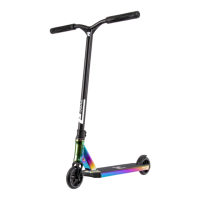
The provided manual describes a Root Industries Type R Complete Scooter, a two-wheeled, non-motorized vehicle designed for recreational riding and stunt performance.
The Root Industries Type R Complete Scooter is engineered to provide a stable and responsive platform for riders. Its primary function is to enable personal transportation and the execution of various freestyle scooter tricks. The scooter is comprised of several key components that work in conjunction to facilitate its operation:
The scooter is intended for use on smooth, paved, flat, clean, and dry surfaces, free from loose debris. It is not designed for use in wet conditions, mud, ice, or on rough, uneven terrain, as these can impair traction and increase the risk of accidents. The design emphasizes durability and performance, catering to riders who may engage in high-stress activities like stunt riding, though it acknowledges that such use can lead to damage.
The Root Industries Type R Complete Scooter offers several features that enhance its usability and rider experience:
To ensure the longevity and safe operation of the Root Industries Type R Complete Scooter, the manual outlines several key maintenance procedures:
These maintenance steps are crucial for ensuring the scooter remains in good working condition, prolonging its lifespan, and most importantly, ensuring the rider's safety. The manual stresses that proper inspection and maintenance can significantly reduce the risk of injury.
 General
| Wheel Diameter | 110mm |
|---|---|
| Compression | IHC |
| Bearings | ABEC-9 |
| Bar Width | 22 inches |
| Weight | 3.6kg |
| Max Rider Weight | 100kg (220 lbs) |
| Material | Aluminum |

 To Next Page