IMPORTANT!
It is essential that you read the instructions in this manual
before assembling, operating, and maintaining the product.
Subject to technical modications.
Safety, performance, and dependability have been given
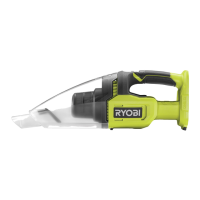
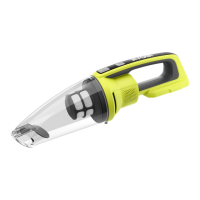
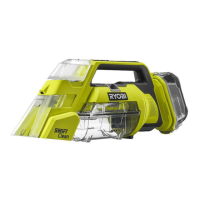
top priority in the design of your hand vac.
INTENDED USE
The hand vac is intended for dry vacuuming for household
or similar non-industrial applications.
Do not use the product for any other purpose.
WARNING! Do not use the product to vacuum liquids
of any kind.
HAND VAC SAFETY WARNINGS
■ This appliance is not intended for use by persons
(including children) with reduced physical, sensory or
mental capabilities, or lack of experience and knowledge,
unless they have been given supervision or instruction
concerning use of the appliance by a person responsible
for their safety. Children should be supervised to ensure
that they do not play with the appliance.
■ The product is intended for household use only.
■ Never vacuum materials such as hot coals, cigarette
butts, matches, etc.
■ Do not use the product without dust bowl or filter in
place.
■ Use extra care when using the product on stairs.
■ Do not use the product to pick up hard objects such as
nails, screws, coins, etc. Damage or injury could result.
■ Remove the battery when the product is not in use or
when changing accessories.
■ Rechargeable batteries are to be removed from the
product before being charged.
■ Exhausted batteries are to be removed from the product
and safely disposed of.
■ If the product is to be stored unused for a long period,
the batteries should be removed.
■ The supply terminals are not to be short-circuited.
ADDITIONAL BATTERY SAFETY WARNINGS
■ To reduce the risk of fire, personal injury, and product
damage due to a short circuit, never immerse your
tool, battery pack or charger in fluid or allow a fluid to
flow inside them. Corrosive or conductive fluids, such
as seawater, certain industrial chemicals, and bleach
or bleach-containing products, etc., can cause a short
circuit.
TRANSPORTING LITHIUM BATTERIES
Transport the battery in accordance with local and national
provisions and regulations.
Follow all special requirements on packaging and labelling
when transporting batteries by a third party. Ensure that
no batteries can come in contact with other batteries
or conductive materials while in transport by protecting
exposed connectors with insulating, non-conductive caps or
tape. Do not transport batteries that are cracked or leaking.
Check with the forwarding company for further advice.
MAINTENANCE
■ Use only original accessories and spare parts. Should
components need to be replaced which have not been
described, please contact an authorised service centre.
All repairs should be performed by an authorised service
centre.
■ Avoid using solvents when cleaning plastic parts. Most
plastics are susceptible to various types of commercial
solvents and may be damaged by their use. Use clean
cloths to remove dirt, carbon dust, etc.
■ Do not at any time let brake fluids, gasoline, petroleum-
based products, penetrating oils, etc., come in contact
with plastic parts. Chemicals can damage, weaken or
destroy plastic which may result in serious personal
injury.
SYMBOLS
Direct current
Regulatory Compliance Mark (RCM). Product
meets applicable regulatory requirements.
Please read the instructions carefully before
starting the machine.
Do not dispose of waste batteries, waste
electrical and electronic equipment as
unsorted municipal waste. Waste batteries
and waste electrical and electronic equipment
must be collected separately. Waste batteries,
waste accumulators, and light sources have to
be removed from the equipment. Check with
your local authority or retailer for recycling
advice and collection point. According to
local regulations, retailers may have an
obligation to take back waste batteries and
waste electrical and electronic equipment
free of charge. Your contribution to the reuse
and recycling of waste batteries and waste
electrical and electronic equipment helps to
reduce the demand of raw materials. Waste
batteries, in particular containing lithium, and
waste electrical and electronic equipment
contain valuable and recyclable materials,
which can adversely impact the environment
and the human health if not disposed of in an
environmentally compatible manner. Delete
personal data from waste equipment, if any.
3


 To Next Page
 Loading...