Need help?
Do you have a question about the Samsara VG Series and is the answer not in the manual?
Details on using the direct connection cable to link the VG to the vehicle's diagnostics port.
Steps for utilizing the splitting cable to connect VG via dashboard panel and original diagnostics port.
The Samsara VG-Series Vehicle Gateway is a robust device designed to provide comprehensive vehicle telematics, enabling real-time tracking, diagnostics, and fleet management capabilities. This gateway serves as the central hub for collecting critical data from a vehicle, transmitting it to the Samsara cloud for analysis and display on the Samsara dashboard. Its primary function is to bridge the gap between a vehicle's on-board systems and a cloud-based management platform, offering insights into vehicle performance, location, and driver behavior.
The core function of the VG-Series Vehicle Gateway is to acquire and transmit vehicle data. It connects directly to the vehicle's diagnostics port, allowing it to access a wide range of information, including engine parameters, fault codes, and other operational metrics. This data is then processed and sent securely to the Samsara cloud via a cellular connection. The gateway is equipped with GPS capabilities, enabling precise location tracking and historical route analysis. This allows fleet managers to monitor vehicle movements, optimize routes, and ensure timely deliveries.
Beyond basic tracking, the gateway facilitates advanced diagnostics. By continuously monitoring the vehicle's engine and other critical systems, it can detect potential issues early, often before they lead to costly breakdowns. When a fault code is generated, the gateway captures this information and relays it to the cloud, alerting fleet managers to the problem. This proactive approach to maintenance helps reduce downtime, extend vehicle lifespan, and improve overall operational efficiency.
The VG-Series also plays a crucial role in driver safety and performance monitoring. By integrating with various sensors and vehicle data streams, it can provide insights into driving behaviors such such as harsh braking, rapid acceleration, and speeding. This information can be used to coach drivers, promote safer driving habits, and reduce the risk of accidents. The gateway's ability to provide real-time data allows for immediate intervention and feedback, fostering a culture of continuous improvement within the fleet.
Furthermore, the gateway supports integration with optional accessories, such as a GPS antenna for non-standard mounting positions. This flexibility ensures that the device can be optimally installed in a variety of vehicle types and configurations, maximizing signal reception and data accuracy. The secure cellular connection ensures reliable data transmission, even in remote areas, making it a dependable solution for diverse operational environments.
The VG-Series Vehicle Gateway is designed for straightforward installation and operation, making it accessible for fleet managers and technicians. The installation process typically involves connecting the gateway to the vehicle's diagnostics port, which is usually located under the dashboard. Two types of cables are provided to accommodate different installation scenarios: a Direct Connection Cable and a Splitting Cable. The Direct Connection Cable is used when the gateway can be directly plugged into the diagnostics port without interfering with other devices. The Splitting Cable, on the other hand, allows for the original diagnostics port to remain accessible while the gateway is connected, which is useful when other diagnostic tools or devices need to share the port.
Once connected, the gateway begins its boot-up sequence, indicated by an orange LED light. During this phase, the device initializes its internal systems and attempts to establish a secure cellular connection to the Samsara cloud. A blinking orange light signifies that the gateway is actively trying to establish this connection. This process is critical for data transmission and communication with the Samsara platform.
A key usage feature is the visual feedback provided by the LED indicator. A solid green light confirms that the gateway has successfully established a secure connection to the cloud and is ready to transmit data. This clear visual cue allows installers and users to quickly verify the operational status of the device. If the gateway receives an updated configuration from the cloud, this process may repeat, ensuring that the device is always running with the latest settings and features.
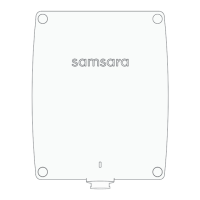
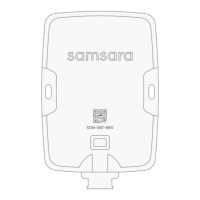
The mounting location of the gateway is a critical aspect of its usage. For optimal performance, the VG should be mounted securely, facing upwards with the Samsara logo towards the sky, and free from metal obstructions that could block its signal. This ensures clear reception from GPS satellites and reliable cellular communication. If an ideal mounting position is not feasible, an optional external GPS antenna can be used to improve signal reception, demonstrating the device's adaptability to various vehicle layouts and environmental conditions.
After successful installation and connection, the gateway's data becomes accessible through the Samsara dashboard. Users can visit samsara.com/activate to register the device and begin viewing vehicle data, including real-time location, historical routes, diagnostic alerts, and driver performance metrics. This seamless integration with the cloud platform provides a comprehensive overview of the fleet, empowering managers to make informed decisions.
While the VG-Series Vehicle Gateway is largely a "set it and forget it" device, there are several implicit maintenance considerations that contribute to its longevity and reliable performance. The primary maintenance feature is its robust design, built to withstand the demanding environment of commercial vehicles. This includes resistance to vibrations, temperature fluctuations, and other common stressors encountered during daily operation.
One crucial aspect of maintenance, though not a direct device feature, is ensuring the physical security of the gateway and its cables. After installation, it is recommended to secure the gateway and any loose cables with zip ties. This prevents accidental disconnections, minimizes wear and tear on the cables, and ensures that the equipment does not interfere with driver operation. Proper cable management is essential for preventing damage and maintaining consistent data flow.
The gateway's ability to receive over-the-air (OTA) updates is a significant maintenance advantage. This means that firmware updates and configuration changes can be pushed to the device remotely from the Samsara cloud. This eliminates the need for manual intervention or physical access to the device for software maintenance, ensuring that the gateway always operates with the latest features, security patches, and performance enhancements. This remote update capability significantly reduces maintenance effort and costs.
The self-diagnostic capabilities of the gateway, indicated by the LED lights, also serve as a form of maintenance. If the gateway fails to connect to the cloud (e.g., remains blinking orange or solid orange for an extended period), it signals a potential issue that requires attention. This could range from a poor cellular signal to a physical connection problem, prompting troubleshooting steps to restore full functionality. This immediate visual feedback helps in quickly identifying and addressing operational anomalies.
Furthermore, the system's reliance on a secure cellular connection implies a continuous monitoring of network health. While the gateway itself doesn't offer direct user-facing network maintenance tools, its consistent attempt to establish and maintain a connection ensures that any network-related issues are quickly identified by the Samsara cloud platform, which can then alert administrators. This ensures that data transmission remains uninterrupted.
In summary, the VG-Series Vehicle Gateway is designed for minimal direct maintenance, relying instead on robust construction, secure installation practices, and remote update capabilities to ensure continuous and reliable operation. Its self-diagnostic indicators provide immediate feedback on its status, facilitating prompt resolution of any issues that may arise.
 General
| Cellular | 4G LTE |
|---|---|
| GPS | Yes |
| Accelerometer | Yes |
| Power | 9-36 VDC |
| Ingress Protection | IP67 |
| WiFi | 802.11 b/g/n |
| Interfaces | Ethernet |
| Connectivity | WiFi |
| Dimensions | 120mm x 80mm x 40mm |
| Certifications | FCC, CE, IC |

 To Next Page