231
by Schnell
When the “MAN./PROG./AUT.”
switch is in “AUT.” position and the
doors and/or guards are open, the
machine stops.
To produce exact and precise
stirrups, accurate straightening is
very important.
A straight bar is the result of the
operator’s experience, but it is also
determined by the quality of the
material.
NOTE!
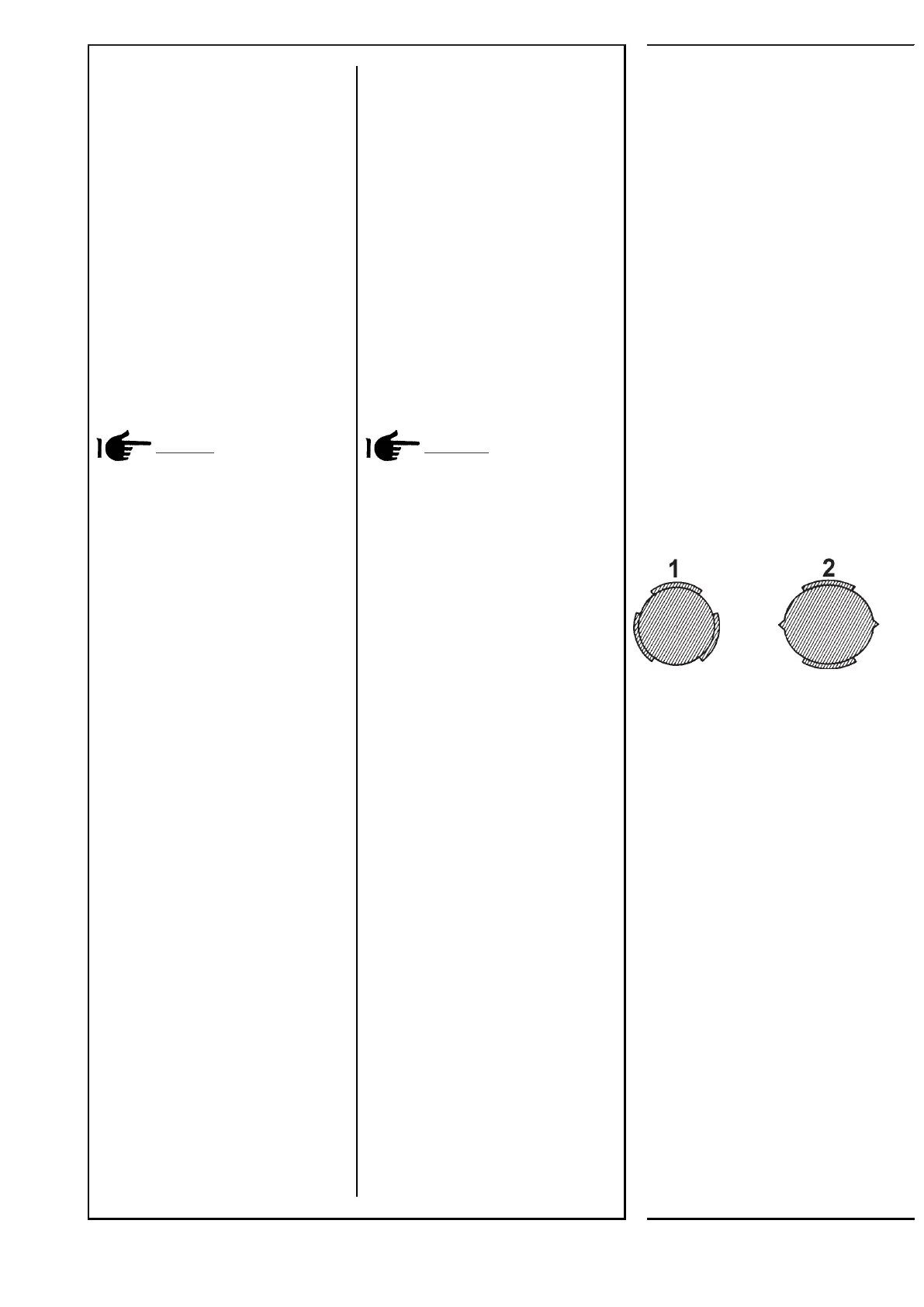
There are two basic types of wire
available; you can distinguish them
by their methods of manufacture:
1 - Cold draw.
2 - Hot laminated.
The first type of wire has a
fairly uniform cross-section
and has uniform
mechanical characteristics.
As a result, this
material straightens with ease,
without need for intense pressure
on the straightening rollers.
The second type of wire however,
has an irregular cross-section, and
often has variable mechanical
characteristics even within a single
coil. Consequently, this material is
harder to straighten and we
recommend applying higher
pressures on the straightening
rollers and, if necessary, to insist
until sufficiently uniform
straightening is achieved.
Quando il selettore "MAN./PROG./
AUT." è in posizione "AUT." e
vengono aperti gli sportelli e/o i
carter, la macchina si arresta.
Per produrre staffe precise è
importantissima una raddrizzatura
accurata.
La raddrizzatura del tondino viene
regolata in base all'esperienza
dell'operatore ma è
determinata anche dalla natura
del materiale.
NOTA !
In commercio esistono due tipi
fondamentali di tondini che si
diversificano per il processo di
fabbricazione:
1 - Trafilato a freddo.
2 - Laminato a caldo.
Il primo tipo di tondino presenta
una sezione abbastanza regolare
ed ha caratteristiche meccaniche
uniformi.
Di conseguenza questo materiale
si raddrizza con una certa facilità
senza bisogno di grosse pressioni
sui rulli di raddrizzatura.
Il secondo tipo di tondino presenta
invece una sezione irregolare ed
ha molto spesso caratteristiche
meccaniche variabili anche
all'interno di una stessa bobina. Di
conseguenza questo materiale è
più difficile da raddrizzare e
consigliamo di esercitare pressioni
più elevate sui rulli di raddrizzatura
e, se necessario, insistere fino
ad ottenere una raddrizzatura
sufficientemente uniforme.


 To Next Page
 Loading...