SAFETY INFORMATION 31
FFuueelliinngg PPrroocceedduurree
WWAARRNNIINNGG
GGaassoolliinnee iiss eexxttrreemmeellyy ffllaammmmaabbllee aanndd hhiigghhllyy eexxpplloossiivvee uunnddeerr cceerrttaaiinn ccoonn--
ddiittiioonnss.. FFoollllooww tthhee iinnssttrruuccttiioonnss iinn tthhiiss sseeccttiioonn eexxpplliicciittllyy.. IImmpprrooppeerr hhaannddlliinngg
ooff ffuueell ccoouulldd rreessuulltt iinn pprrooppeerrttyy ddaammaaggee,, sseerriioouuss iinnjjuurryy oorr ddeeaatthh.. LLeeaakkiinngg
ffuueell iiss aa ffiirree aanndd eexxpplloossiioonn hhaazzaarrdd.. IInnssppeecctt ssyysstteemm ffoorr lleeaakkss ffrreeqquueennttllyy..
Fuel is flammable and explosive under certain conditions. Do not smoke or allow
open flames or sparks in the vicinity.
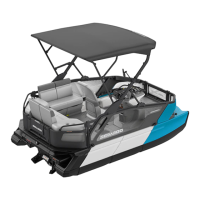
If the watercraft is equipped with a full enclosure, it is recommended to open a
section to ventilate adequately while fueling the gas tank.
1. Stop the engine.
2. If on the water, moor the watercraft securely to the dock.
3. The operator and passenger(s) must get off of the watercraft.
4. Unzip the canvas to get access to the fuel tank cap.
5. Open the fuel cap slowly in a well ventilated area to stabilize pressure.
NNOOTTEE::
A short whistling sound is normal.
6. Insert the spout into the filler neck.
7. Pour fuel slowly so the air can escape from the tank and prevent fuel flow
back. Be careful not to spill fuel.
8. Stop filling after the release of the gas pump nozzle handle and wait a mo-
ment before removing the spout. Do not retract the gas pump nozzle to put
more fuel into the fuel tank. Do not overfill.
9. Reinstall the fuel tank cap and tighten it clockwise until you hear a ratchet
sound.
10.Always wipe off any fuel spillage from the watercraft.
11.Zip the canvas opening.
FUELING


 To Next Page
 Loading...