The document describes the Sherpa 4x4 Winch, an off-road recovery device designed for vehicles, boats, and non-industrial applications. The manual emphasizes safe operation, proper installation, and regular maintenance to ensure optimal performance and longevity.
Function Description
The Sherpa 4x4 Winch is a powerful pulling device used for vehicle recovery in challenging environments. It utilizes a cable or rope wound around a drum to exert pulling force, aiding in situations where a vehicle is stuck or needs to be moved. The winch's performance is affected by the number of cable layers on the drum, with pulling capacity decreasing as more layers accumulate. It features a robust braking system designed for 4x4 applications, which engages when a force pulls back against the winch, providing a secure hold. Dual motor winches offer enhanced pulling power, with both motors operating during "winch in" operations, while only the primary motor is active during "winch out."
Usage Features
General Operation:
- Duty Cycle: The winch has a duty cycle and requires cool-down periods, especially under high loads. It's recommended not to winch for longer than 30 seconds at high loads, followed by a 10-minute cool-down.
- Cable Spooling: Uneven spooling can cause problems; if this occurs, reverse the winch to relieve the load and adjust the anchor point. After recovery, un-spool and rewind the cable neatly.
- Controller Use: The hand controller should be stored in a dry, safe place and inspected before use. It should always be connected with the clutch disengaged.
- Clutch Engagement: The clutch must be fully engaged for pulling. Do not engage the clutch with the motor running or under load.
- Direction Changes: Avoid sudden changes in winch rotation. Allow the winch to stop completely before switching between "winch out" and "winch in."
- Hook Usage: Never loop the hook back onto the cable or rope, as this can cause kinking or fraying. Always use a sling, tree trunk protector, or chain of suitable strength.
- Observation: Observe the winch at all times during recovery, stopping periodically to ensure the cable is spooling evenly to prevent jamming.
- Anchor Points: Do not attach tow or recovery hooks to winch mounting apparatus; they must be attached to the vehicle frame. Use rated "D" or Bow shackles with an approved tree trunk protector for safe anchor points.
- Cable Wraps: Ensure at least five (5) wraps of cable/rope remain on the drum at all times when extending the cable. A red marking on cable winches indicates this minimum.
- Winch Dampeners: Always use winch dampeners during winching.
- Incline Winching: Apply blocks behind the wheels when winching vehicles on an incline.
- Pulling Limits: Do not attempt to exceed the pulling limits of the winch.
- Vehicle Assistance: Do not drive the vehicle to assist the winch, as this can cause damaging shock loads.
- Shock Loads: Be aware of shock loads, which occur when increased force is suddenly applied to the cable.
- Hoisting: Never use the winch for hoisting applications or to lift, support, or transport personnel.
- Clutch Handle: Do not attempt to move the winch by lifting the clutch handle.
- Battery Condition: Ensure the battery is in good condition and the engine is running to avoid flattening the battery.
- Cable Condition: Ensure the cable is in good condition and properly attached. Do not use a frayed cable or replace it with a lower-strength cable.
- Mounting: The winch must be mounted on a flat surface, with the rope/cable winding onto the drum on the lower side, closest to the mounting bolts. Incorrect mounting can lead to brake failure.
- Solenoid Box: The solenoid box can be mounted in various ways. While the outer enclosure is not waterproof, the internal solenoid is IP68 rated for submersion.
- Electrical Connections: All electrical connections must be tight to prevent sparks, poor performance, and damage. A battery isolator switch is recommended in series on the positive cable.
- Winch Brake: The brake is a ratchet style, applying when force pulls back against the winch. It "sets" by winching in and allowing counter-rotation. When winching downhill, rely on the vehicle's pedal brake, as the winch brake may not "set" during "winch out" operations.
Dual Motor Winch Specifics:
- Operation: Both motors operate during "winch in," but only the primary motor operates during "winch out."
- Direction Change: Do not suddenly change from "winch in" to "winch out" as the secondary motor will still have inertia, potentially damaging the winch. Ensure the winch has completely stopped.
- Wiring: Dual motor winches draw high amperage (up to 900 Amps under high load), so wiring to dual batteries is recommended to spread the current draw.
Maintenance Features
Regular Maintenance:
- Lubrication: All moving parts are factory-lubricated with high-temperature lithium grease. Periodically lubricate the steel cable with light penetrating oil. Apply a small amount of lubricating oil to the engagement lever if it becomes stiff.
- Cable Inspection: Inspect the steel cable for broken strands and replace it as necessary.
- Initial Cable Spooling: After initial use, the cable must be wound onto the drum under a load of at least 500lbs (230kgs) to prevent damage. A familiarization run on a slight incline is recommended to tension and stretch the cable, creating a tight wrap.
- Regular Use: It is highly recommended to use the winch regularly (around once a month) by powering the cable out 15m, freely spooling 5m, and then powering it back in. This keeps components lubricated and in good working condition.
- Scheduled Maintenance: Annual scheduled maintenance is recommended. If the winch is exposed to extreme service (e.g., river crossings, muddy environments), increase maintenance frequency.
- Electrical Connections: Maintain electrical connections to prevent corrosion, which can reduce performance and cause shorts. In salty environments, use a silicon sealer.
Service Record (Annual Service Requirements):
- General Inspection: General description of the winch prior to service.
- Rope/Cable Inspection: Remove the rope/cable, inspect its general condition, and note comments.
- Electric Drive Inspection: Remove the electric drive from the winch. Inspect motor internals for moisture and dirt, clean with circuit cleaner. Inspect motor brushes and armature for cleanliness, reporting on condition and adjustments.
- Gearbox Inspection: Loosen tie rods and remove the gearbox. Clean and grease drum internals and the center shaft. Report on condition and adjustments.
- Gearbox Disassembly: Disassembly is generally not required unless there are signs of water/mud ingress. If disassembled, lay parts out in order, taking care not to damage seals or gaskets. Clean and re-grease gears with high-temperature gear grease.
- Brake Shoes: Only replace brake shoes if extreme wear is present, ensuring correct orientation.
- Winch Motor Service: Service the winch motor only when it's removed from the winch. Remove the motor cap to inspect brushes. Check for water ingress and corrosion. Clean and lubricate brush springs, ensuring they move freely. Replace brushes if significantly worn. Reassemble by installing the armature into the motor cap while retracting brushes, then refitting the armature to the motor housing. Use ATV sealant at joints to prevent water ingress.
- Electrical Cable Inspection: Inspect electrical cables for condition and effectiveness of sheathing, reporting any adjustments.
- Control Box Inspection: Inspect the control box for general condition and cleanliness. Check internal wires for corrosion and damage, reporting any adjustments.
- Hand Controller Inspection: Inspect the hand controller for general condition and function.
- Additional Notes: Document any additional notes or work performed.
Important Service Notes:
- Winch service should only be performed by suitably qualified professionals.
- The winch should be removed from the vehicle before service.
- Genuine Sherpa 4x4 parts must be used for any replacements.
- Photographs of faulty parts are recommended for warranty claims.

 Need help?
 General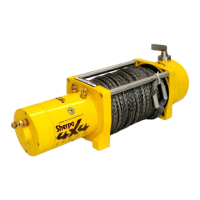

 To Next Page