24
The Modified TMC Radio “Standard” Repeater.
From work carried out by Alan Prescott at Keswick MRT, it’s been discovered that the repeater function provided by the DMAP board, is not strictly
necessary. If the crossover cable is connected to the existing front RJ45 sockets on each SRM9000, then rebroadcast mode is entered as soon as power is
applied to both radios in much the same way as it is in the ‘Simple Repeater’. It’s the ‘Both radios’ that is critical here. If the secondary radio has it’s power
provided by a switch or relay that is operated at the same time as the aerial change-over relay, then rebroadcast mode is automatic and operational at a
single button press.
If the button is pressed again, then the aerial change-over relay drops out and connects the primary radio to a straight-through aerial and removes
power to the secondary radio at the same time, switching you back to normal comms. This is an elegant solution that has a lot to commend it. The ‘default’
condition, should the relay fail to operate, is normal, all channel, comms. The DMAP board is needed only for the additional sockets it provides and the
cheaper MA-ASIG board can also be used.
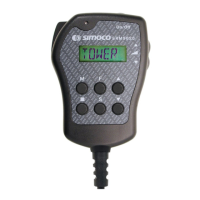
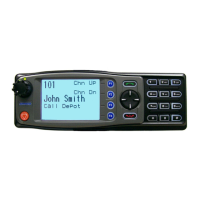
If required, a second control head can be connected to the remaining DMAP RJ45 so giving the two heads required by some teams, plus rebro.
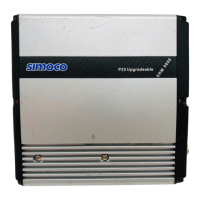
SRM9030 fitted with DMAP board
TWC
147.350MHz
Secondary Radio
Primary Radio
Diplexer
Pin 8
Pin 4
If the primary radio has a button programmed to send the DB-15 pin 8, low
when pressed (Auxiliary) then the aerial change-over relay will operate and
switch in the diplexer. When ‘Off’, the diplexer is not in circuit
Power Relay
Power is switched to the secondary
radio, only if rebroadcast is required
Connection to the vehicle power supply
Permanent power connection to the primary radio
Crossover cable
Co-ax
aerial
change-
over
relay
A second control head
(of the same type!) may
be fitted elsewhere in
the vehicle if needed.


 To Next Page
 Loading...