MRMap Development Team 14/01/2009
What re-broadcast does is to fill in the gaps on those occasions when the main system
struggles to cope. You wheel it out in just the same way you would your manual relay vehicle.
Under some circumstances, it doesn’t even have to be a full-blown team vehicle anyway.
These devices can be fitted to virtually anything that can provide them with power as Penrith
and Bowland Pennine have both shown. Now we have it where the re-bro vehicle is not taking
out an active hill-going member of the team, nor is it necessarily tying up a team vehicle. If
the private vehicle doesn’t have a pump-up mast fitted, and how many do? Arrange with a
local farmer who lives at a well-used relay location, to put a mast on his barn and plug your
radios into it when you need them. There are always ways.
The job of the vehicle driver now becomes more critical as base can quite easily tell when a hill
-party are moving out of comms range but they will find it hard to predict just where the relay
vehicle needs to move to. That’s a job best left to the man on the ground, the driver. Relay
vehicle driver is a job probably not best left to the newest team member.
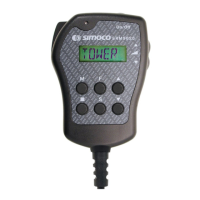
If the driver uses a handset that has been arranged to scan between the team working
channel and the rebro channel, then he or she will be able to hear both sides of the
conversation, provided by the rebro they’re operating. By the same token, the driver can also
speak to either side of the rebro by using the opposite channel on the handset. They can
become either base or hill-party depending on which it is they need to speak to.
Indeed, program the two channels to say who it is you will be speaking to and it’s even easier.
Program the radio’s display to read ‘Hill-Party’ and program the frequency as 147.350 MHz and
the driver will become base for the time being. The transmissions will be boosted by the re-
bro. If this is used then the handset’s power need only be a watt or less and the battery will
last forever.
By the same token, program the display to say ‘Base’ and the channel as your TWC and the
driver becomes another hill-party radio and will be heard by base via the re-bro. In neither
case does the driver’s radio need to be able to transmit back to either side un-aided. It uses
the re-bro in just the same way all others do.
The driver can now leave the vehicle temporarily without being out of comms with either hill or
base.
Sometimes the urgency of a message can be lost when it’s passed by another’s voice. Using re
-broadcast, the margin for translation errors when passing messages is dramatically reduced
as no intermediary has to repeat them with all the inherent dangers of accidental
interpretation or inflection changes.
The intention isn’t that they are used routinely to provide base to hill communications although
the position of your team base has a lot to do with this and, for example, Duddon & Furness
have a base location not well suited to covering their whole area. Their deployment of
re-broadcast vehicles will be more than most. It’s not in the interests of avoiding interference
for us all to operate in this way but one or two aren’t going to cause too many problems if
those who don’t need to deploy them regularly, keep to that principle.


 To Next Page
 Loading...