
EasyManua.ls Logo

Sipma PK 4000 KOSTKA - User Manual

Sipma PK 4000 KOSTKA
80 pages
Print Icon
To Next Page IconTo Next Page
Loading...
4
SIPMA
S.A.
ul. Budowlana
26
20-469 Lublin,
Polska
tel. (+48) 81 74
45
071 www.sipma.pl
USER’S MANUAL
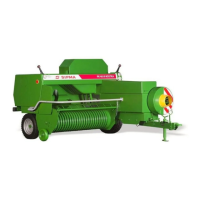
High density pick-up baler SIPMA PK
4000
KOSTKA
SIPMA PK 4010
KOSTKA
SIPMA PK 4011
KOSTKA
PKWiU
29.32.33-30.10
ORIGINAL MANUAL
READ THE MANUAL CAREFULLY BEFORE
USING
THE
MACHINE
Edition XII –2016

Table of Contents

Questions and Answers

  • C
    cassandracameronAug 18, 2025
    What to do if my Sipma PK 4000 KOSTKA machine is clogging?
    • J
      Jessica JonesAug 19, 2025
      If your Sipma Farm Equipment is clogging, it may be due to non-compliance with working conditions, too much material in the feeding unit, activation of the automatic overload clutch, or insufficient PTO shaft rotations. Ensure the tractor transmission shaft maintains 540 rpm, adjust the machine's working speed based on the material, and allow the feeder's automatic fingers to clear the clogging. Always switch off the tractor engine before addressing clogging and secure the tractor to prevent unauthorized start-up.
  • M
    msotoAug 21, 2025
    Why is my Sipma PK 4000 KOSTKA not collecting material from the field completely?
    • E
      Erica ByrdAug 21, 2025
      If your Sipma Farm Equipment isn't fully collecting material, the pick-up drum might be too high, the pick-up springs may be damaged, or the driving speed could be too fast. Try lowering the pick-up drum, replacing any broken or bent springs, and reducing your driving speed while maintaining the tractor power transmission drive shaft speed.
  • D
    David OrtizAug 23, 2025
    What causes irregular bale length in Sipma PK 4000 KOSTKA, and how to fix it?
    • L
      Lindsey OneillAug 23, 2025
      Irregular bale length in Sipma Farm Equipment can occur if the switch arm is sliding, material feeding is non-uniform, the switch bar is worn, drive wheels are loose, or there's too much material per piston stroke. Readjust the switch arm, ensure uniform material feeding, replace worn parts, tighten the hexagonal nut, and either increase transmission shaft rotations, collect smaller swathes, or reduce driving speed.
  • M
    Matthew HuntAug 26, 2025
    How to fix fuzzed bales with Sipma PK 4000 KOSTKA?
    • D
      Deborah BaileyAug 26, 2025
      Fuzzed bales when using Sipma Farm Equipment are often caused by blunt knives on the piston and pressing chamber or incorrect knife location. Sharpen or rotate the knives in the pressing chamber. Also, set the guiding rails of the piston and adjust the piston knife, ensuring a knife clearance of approximately 0.5-1.0mm.
  • J
    Jennifer KimAug 28, 2025
    What to do if the knotting twine has not wrapped the whole pressed bale, and the knot is located only at the front end of the twine (from the piston end) in my Sipma PK 4000 KOSTKA?
    • D
      Donald GreenAug 28, 2025
      If the knotting twine only wraps the front of the bale, it may be caused by insufficient tightening of the twine catcher. Try tightening the holder spring by tightening the bolt (½ - 1 rotation).
  • C
    Cindy HendersonAug 30, 2025
    What causes twine to be fuzzed or broken just behind a knot in Sipma PK 4000 KOSTKA Farm Equipment, and how can I resolve it?
    • F
      fergusonsharonAug 30, 2025
      If the twine is fuzzed or broken just behind a knot, it may be because the knife lever's scrapping edge is pushing too hard on the knotter’s finger ridge or the knife lever surface is rough. Regulate the knife lever to lightly touch the knotter’s finger ridge and smooth the twine race surface, ensuring free rotation of the knotter's finger.
  • P
    Patrick GillSep 1, 2025
    Why is the knot too loose on my Sipma PK 4000 KOSTKA Farm Equipment?
    • E
      ericaconnerSep 1, 2025
      A loose knot on your Sipma Farm Equipment is likely due to the kneader's spring not being sufficiently tightened. Slightly tighten the tightening nut of the holder spring.
  • A
    Angela RoseSep 4, 2025
    What should I do if the knotting twine has wrapped the whole pressed bale, but a knot is located only at the rear end of the twine (from the end of the pressing chamber) on my Sipma Farm Equipment?
    • K
      Katherine WilsonSep 4, 2025
      If the knot is only at the rear, the twine may not be caught by the holder or properly delivered to the knotter. Check the twine holder setting, ensuring the distance between the holder and needle is 3-5 mm. The dimension measured from the twine holder's end to the second edge of the needle slot in the knotting mechanisms table should be 50±2 mm.
  • N
    Nicholas JohnsonSep 6, 2025
    What to do if there is a single knot located at the end of the twine, and the second end of the twine is only threaded in my Sipma Farm Equipment?
    • J
      Jordan AllisonSep 6, 2025
      If you find a single knot with the other end only threaded, the twine might be insufficiently tightened or delivered too high, missing the knotter’s finger. Regulate the twine tightener by tightening the wing nut (½ rotation), ensuring the twine is between the two guide pins. Also, check and adjust the twine holder's location if needed.
  • A
    Angela AlexanderSep 8, 2025
    Why does a knot remain on the knotter’s finger, and the twine is breaking on my Sipma Farm Equipment?
    • B
      Bradley CastroSep 8, 2025
      If a knot remains on the knotter’s finger and the twine is breaking, the pressure spring or kneader spring may be too tight, or the knife lever isn't scraping the knot. Loosen the nut on the kneader bolt and release the kneader spring (½ - 1 rotation).

Summary

Introduction

Identification of the Baler

Locate the manufacturer's number and year of production on the baler body and plate.

General Information

Designation and General Requirements

Understand the baler's intended use, operating requirements, and manufacturer's responsibility.

Equipment and Spare Parts

List of basic equipment and spare parts included with the baler.

Delivery, Receipt, Transport, Assembly and Installation

Procedures for receiving, transporting, assembling, and installing the baler.

Receipt

Check the baler for mechanical damages and missing elements upon delivery.

Safety Remarks and Warnings

Notes and Warnings Concerning Transportation

Safety guidelines and warnings specific to transporting the baler.

Notes and Warnings Concerning Baler Servicing

Safety precautions and warnings related to maintenance and servicing of the baler.

Fire Fighting Regulations

Rules and precautions to prevent and combat fires when operating the baler.

Residual Risk Description

Evaluating Residual Risk During Baler Operation

How to assess and mitigate risks associated with baler operation.

Warning Stickers

Usage and Operational Servicing

Technical and Operational Data

Specifications and operating parameters for the baler models.

Design and Operating Principle

Overview of the baler's components and how it functions.

First Start-up

Step-by-step guide for initial setup and operation of the baler.

Connecting the Baler with the Tractor

Procedure for safely attaching the baler to a tractor.

Assembling the PTO Drive Shaft

Instructions for correctly installing the PTO drive shaft.

Hydraulic Pipes

Information on the hydraulic system, couplings, and maintenance.

Setting the Baler in Transport and Operation Positions (PK 4000)

How to switch the baler between transport and operation modes for PK 4000.

Setting the Baler in Transport and Operation Positions (PK 4011)

How to switch the baler between transport and operation modes for PK 4011.

Setting the Pick-up

Adjusting the pick-up unit for different material conditions.

Preparation of Knotting Mechanism for Operation

Steps to prepare the knotting system for twine and bale formation.

Adjusting the Bale Length

How to set the desired length of the bales.

Regulating the Bale Compaction Rate

Adjusting the density of the bales.

Adjusting the Metal Plate Chute

Setting the chute for bale placement on the field.

Assembling the Rear Bale Skid Ramp

Instructions for assembling and positioning the bale skid ramp.

Baler Operation

Guidelines for operating the baler during normal use.

Technical Service

Regulation of the Main Operating Units

Procedures for adjusting key operational components of the baler.

Setting the Piston with Regard to the Feeder

Adjusting the piston's position relative to the feeder mechanism.

Setting the Knotter Shaft Clutch with Regard to the Transmission Shaft

Aligning the knotter shaft clutch with the transmission shaft.

Setting the Knotting Needles

Adjusting the position of the knotting needles.

Setting the Needles with Regard to the Piston

Aligning the knotting needles with the piston.

Resetting the Needle with Regard to the Piston

Correcting the needle's position relative to the piston.

Setting the Needles Against the Knotters

Adjusting the needles' position relative to the knotters.

Setting the Twine Holders Against the Needles

Adjusting the twine holders' position relative to the needles.

Setting the Piston and the Knives

Adjusting the piston and the cutting knives for optimal performance.

Regulating the Main Chain Tensioner

Adjusting the tension of the main drive chain.

Recoil Mechanism

Information on the recoil mechanism and its function.

Regulation and Adjustment of the Feeder

Adjusting the feeder for proper material intake and bale formation.

Pick-up Shaft Clutch

Adjustment of the pick-up shaft clutch for overload protection.

Flywheel Clutch

Adjustment and maintenance of the flywheel clutch.

Pick-up Clutch

Adjustment of the pick-up clutch for overload protection.

Feeder Clutch

Information on the feeder clutch torque setting.

Protection of the Needles

How the needles are protected from damage.

Adjusting the Knotter Shaft Brake

Adjusting the brake on the knotter shaft.

Knotter - Operation

Detailed explanation of how the knotter mechanism works.

Kneader

Function and adjustment of the kneader in the knotting system.

Twine Catcher

Operation and adjustment of the twine catcher.

Knife Arm

Tasks and function of the knife arm in the knotting process.

Operation Inspection

Checking and adjusting the knife lever for proper knot tying.

Daily Maintenance

Routine maintenance tasks to be performed daily.

Lubrication

General guidelines and safety for lubricating the baler.

Lubrication Table

A table detailing lubrication points, lubricant, and frequency.

Details Concerning Lubrication

Specific instructions and recommendations for lubrication procedures.

Reasons for Baler Malfunction and Troubleshooting

Table 2 Reasons for Baler Malfunction

Lists common malfunctions, their causes, and repair methods.

Causes of Knotting Errors and Methods of Removal

Identifies knotting errors and provides solutions.

Baler Maintenance

Procedures for periodic maintenance overhauls.

Disassembly and Used Part Disposal

Additional Information

Baler Electrical Wiring Diagram

Schematic of the baler's electrical system.

Information on Servicing and Post-Warranty Repairs

General Warranty Conditions

Sipma PK 4000 KOSTKA Specifications

General IconGeneral
CategorySquare Baler
Weight1750 kg
Bale length300 - 1300 mm
String typeTwine
Power15-25 HP
VoltageNot applicable
FrequencyNot applicable

Related product manuals