Winding the bobbin
- 1. Put a spool of thread on spool pin. (Fig.20)
- 2. Guide the thread through the bobbin winder tension disk on the
upper side of the machine. (Fig.21)
- 3. Put the bobbin on the bobbin winder pin, wind thread clockwise
around bobbin several times. (Fig. 22)
- 4. Push bobbin to the left. (Fig.23)
- 5. Switch on the machine to start winding. (Fig.24)
-
thread you wanted had winded on bobbin.
-
and cut the thread. (Fig.25)
Caution
- During bobbin winding, no thread on the needle/take up lever is al-
- Before bobbin winding, raise the presser foot.
Adjusting stitching
- 1. As shown in the picture A, normal stitching shall have top and bot-
tom threading evenly, neither over tight nor loose.
- 2. If the bottom threading looks like a straight line (Fig.B), which indi-
cates the top thread is too loose. Please turn upper thread tension dial
to direction with bigger number to increase pressure until the stitching
return to norma.
- 3. If the top thread looks like straight line (Fig.C), which indicates an
over-tight top thread. Please turn the upper thread tension dial to the
direction with smaller number to reduce pressure until the stitching
back to normal.
Other functions
Overlocked
- We must select an overlock or overlock stitch, 5 or 6 leaving the width
and length values that come by default. (depending on the machine
they will be one or the other)
- Advancing slowly, the fabric that we have left, while the needle is
Pre-riveted drilling
- It consists of moving the needle without thread front and back to pierce
the fabric and thus be able to put a brooch or a rivet.
- If you want a bigger hole you should change the needle to a thicker
one.
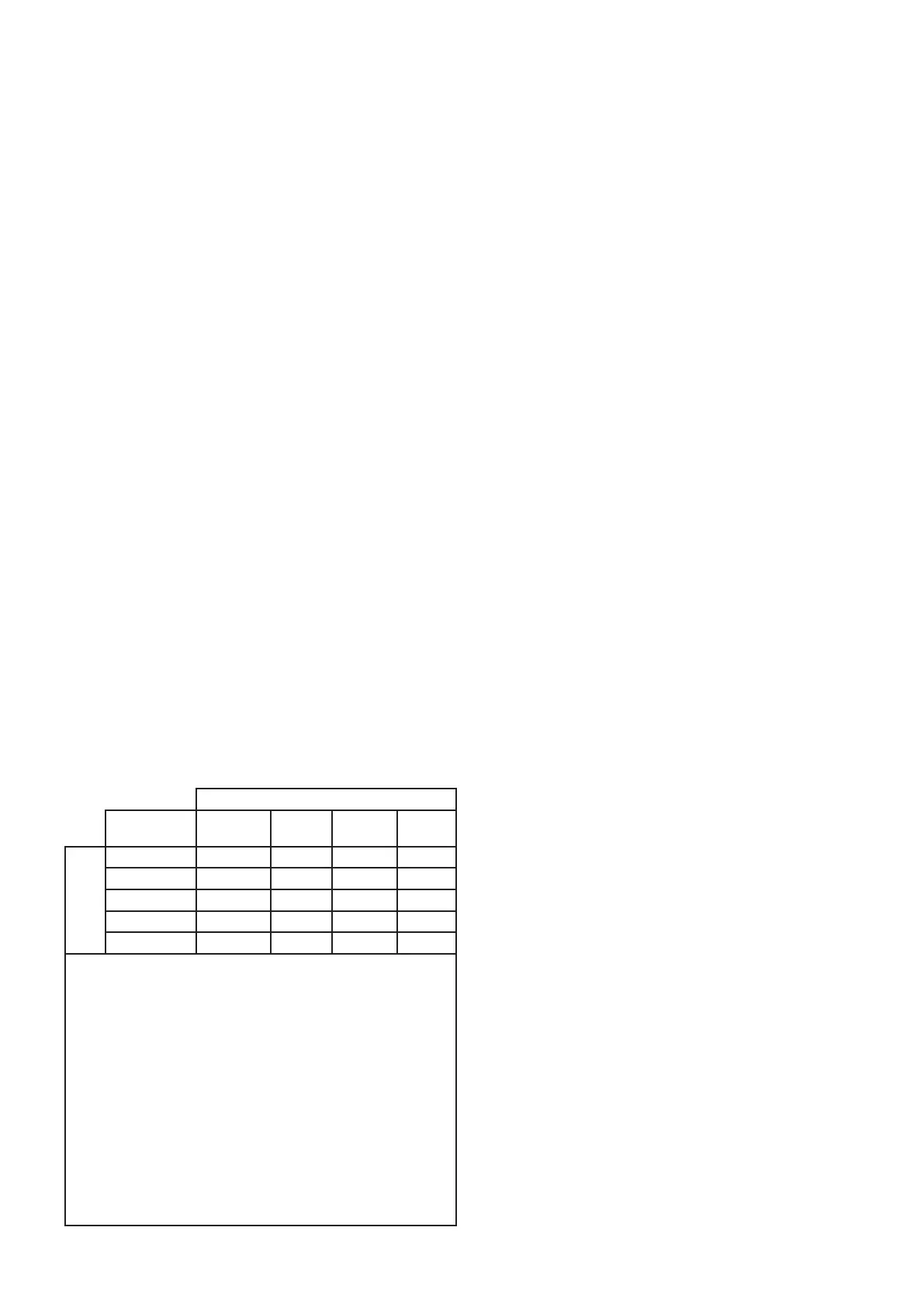
Applicable cloth for sewing
Cloth
Sewing
presentation
Cotton /
Linen
Silk /
Wool
Polyester Elastic
-
cation
Regular
Thick
Thin
Hard
Soft
•
•
•
Note:
•
• Thick (fabric): two layers of the fabric thickness >0.8mm
•
• If the cloth, which size is “100mmx30mm”, is extending to or
over 106 mm under 0.5Kg tension force, then the cloth is de-
4. Soft fabric: such as towel, duster, etc.
-
-
- Unplug the appliance from the mains.
- Put the cable back in the cable housing.
- Clean the appliance.
Carry handle/s:
- This appliance has a handle on the upper part of the body, which facili-
tates comfortable transportation.
Safety thermal protector:
- The appliance has a safety device, which protects the appliance from
overheating.
-
disconnect it from the mains supply, and wait for approximately 15
minutes before reconnecting. If the machine does not start again seek
authorised technical assistance.
CLEANING
- Disconnect the appliance from the mains and allow it to cool before
undertaking any cleaning task.
- Clean the equipment with a damp cloth with a few drops of washing-up
liquid and then dry.
- Do not use solvents, or products with an acid or base pH such as
bleach, or abrasive products, for cleaning the appliance.
- Do not let water or any other liquid get into the air vents to avoid dam-
age to the inner parts of the appliance.
- Never submerge the appliance in water or any other liquid or place it
under running water.
Supplies
- Supplies can be acquired from distributors and authorised establish-
- Only the following type of supplies must be used with the appliance.
- Lamp type: E14, Max: 15 W
- These supplies are available in specialist shops.


 To Next Page
 Loading...