EasyManua.ls Logo

SolarV Epever Tracer 2606 BP - User Manual

SolarV Epever Tracer 2606 BP
4 pages
Print Icon
To Next Page IconTo Next Page
Loading...
www.solarv.de Copyright © 2022 SolarV GmbH All rights reserved
Tracer 2606 BP
Tracer 3906 BP
Tracer 5210 BP
Tracer 7810 BP
USER MANUAL
MPPT Solar Charge Controller
Question and Answer IconNeed help?

Do you have a question about the SolarV Epever Tracer 2606 BP and is the answer not in the manual?

Summary

Safety Information

Overview of MPPT Solar Charge Controller

Connection Order

Connect components in the specified sequence, paying attention to polarity.

Load Self-Test Function

The load turns ON for 10s after power-on, then restores to the set working mode.

LED Indicators

Explains the meaning of different LED colors and flashing patterns for PV and Battery status.

Load Working Mode

Describes manual mode, light ON/OFF, and light ON+Timer modes for load control.

Wiring Instructions

Details the connection of PV, Battery, and Load terminals with specific warnings.

Protection Features

PV Protection

Covers protection against over current, short circuit, and reverse polarity for PV input.

Battery Protection

Details protection against reverse polarity, over-voltage, over-discharge, and overheating.

Load Protection

Includes protection against overload and short circuits for the load output.

Technical Specifications

Overview

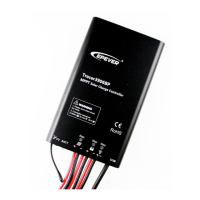
This document describes the SolarV MPPT Solar Charge Controller, a device designed for efficient management of solar power systems. The controller adopts advanced Maximum Power Point Tracking (MPPT) charging methods to optimize system charging and discharging, enhancing system flexibility and reducing overall system cost. It is suitable for a variety of battery types, including sealed, gel, flooded, and lithium batteries. Users can monitor and modify the working status and parameters of the controller, making it versatile for applications such as solar home systems, traffic signals, solar street lights, and solar garden lamps.

Function Description

The MPPT Solar Charge Controller's primary function is to regulate the power flow from solar panels to the battery bank and to the load, ensuring optimal charging and discharge management. It utilizes MPPT technology to maximize power harvest from the solar array, even under varying sunlight conditions. The controller also acts as an LED driver for specific models, integrating lighting control functionalities.

The device supports various battery types, including lead-acid (sealed, gel, flooded) and lithium batteries (LiFePO4, Li-NiCoMn). For lithium batteries, it includes self-activating and low-temperature protection functions, ensuring battery longevity and safety. The controller features PV power limitation, which prevents over-sizing of the solar array from damaging the battery.

Communication interfaces, such as RS485, allow for monitoring and parameter setting via mobile apps or PC software. It uses the standard Modbus communication protocol, ensuring broad compatibility. The RS485 connector can also provide a 5VDC/150mA power supply. Additionally, the controller can connect to IoT modules and Cloud Server monitoring software for remote system monitoring. Real-time energy statistics are also available, providing users with insights into system performance.

Usage Features

The controller is designed for ease of use and robust performance. Its high-quality components from ST, IR, and Infineon ensure a long product lifespan and reliable operation across a wide range of environmental temperatures.

Installation and Connection: The installation process requires careful attention to polarity. Components should be connected in a specific sequence: battery first, then PV, and finally the load. Fuses or breakers are recommended for safety, particularly in the battery circuit, with a rating of 1.25 to 2 times the rated current. The controller performs a load self-test upon power-up, turning the load ON for 10 seconds before reverting to the set working mode.

LED Indicators: The device features clear LED indicators for PV, battery, and charging status, providing immediate visual feedback on the system's operational state.

  • PV Indicator: Green indicates normal PV connection or charging. Different flashing patterns signal low voltage, overvoltage, or no PV connection.
  • Battery Indicator: Green indicates normal battery status or full charge. Flashing patterns indicate overvoltage, under-voltage, over-discharged, or overheating. Orange indicates under-voltage, and red indicates over-discharged or overheating/low temperature.
  • Charging Status Indicator: This LED provides information on the charging process.

Load Working Modes: The controller offers several load working modes to suit different application needs:

  1. Manual Mode (Default ON): The load is controlled manually.
  2. Light ON/OFF: The load turns on when it's dark and off when it's light.
  3. Light ON + Timer: The load turns on when it's dark and stays on for a specified duration (working time 1 and working time 2).
  4. Real-time Control: Allows control of the load ON/OFF time through a real-time clock setting.

Protection Features: The controller incorporates comprehensive protection mechanisms to safeguard the system and the device itself:

  • PV Over Current: Limits battery charging current to the maximum battery current rating.
  • PV Short Circuit: Stops charging if a PV short circuit occurs, resuming normal operation once cleared.
  • PV Reverse Polarity: Protects against damage if the PV is connected in reverse, provided certain conditions are met (e.g., only PV connected, battery positively connected, PV open-circuit voltage below 85V for specific models).
  • Battery Reverse Polarity: Full protection against battery reverse polarity, resuming normal operation once the connection is corrected.
  • Battery Over Voltage: Stops charging when the battery voltage reaches the over-voltage disconnect point.
  • Battery Over Discharge: Stops discharging when the battery voltage reaches the low-voltage disconnect point.
  • Battery Overheating: Automatically stops working if the environment temperature exceeds 65°C and recovers below 55°C.
  • Lithium Battery Low Temperature Protection: Stops charging/discharging if the temperature sensor is below a set low-temperature value.
  • Load Overload: Disconnects the load if the current exceeds 1.05 times the maximum rating, requiring manual clearance or load reduction.
  • Load Short Circuit: Switches off the load and attempts to reconnect five times. If the short circuit persists, manual intervention or a night-day cycle is required.
  • Temperature Sensor Break Down: If the sensor is damaged, the controller charges/discharges at a default temperature of 25°C.
  • High Voltage Transients: Provides protection against small high voltage transients, with recommendations for external suppression in lightning-prone areas.

Maintenance Features

The MPPT Solar Charge Controller is designed for minimal maintenance, but certain aspects contribute to its longevity and reliable operation.

  • Aluminum Housing: The robust aluminum housing provides excellent cooling, contributing to the device's durability and performance.
  • IP68 Waterproof Degree: The high waterproof rating ensures protection against dust and water ingress, making it suitable for harsh outdoor environments. It is crucial to install the waterproof cap on the RS485 communication port if it is not in use to prevent water from entering.
  • External Fuse/Breaker: The requirement for external fuses or breakers simplifies maintenance and troubleshooting by providing easily replaceable components for circuit protection.
  • Tight Power Connections: Emphasizing tight power connections prevents excessive heating from loose connections, which can degrade performance and shorten the lifespan of the device.
  • Software Monitoring: The availability of PC and mobile APP software allows for continuous monitoring of the controller's working status and parameters. This enables proactive identification of potential issues and facilitates necessary adjustments, reducing the need for physical inspection.
  • Troubleshooting Guide: The manual includes a comprehensive troubleshooting section with possible reasons and solutions for common faults indicated by LED signals, aiding users in quickly resolving issues.
  • Warranty: The warranty information outlines conditions under which the warranty applies, encouraging proper usage and installation to ensure the device's long-term functionality.

SolarV Epever Tracer 2606 BP Specifications

General IconGeneral
ModelTracer 2606 BP
Rated Battery Voltage12V/24V Auto
Rated Charge Current20A
Max PV Input Voltage100V
Battery TypeSealed, Gel, Flooded, User
Temperature Compensation-3mV/°C/2V (default)
EnclosureIP30
CommunicationRS485
ProtectionPV short circuit, PV reverse polarity, Battery over voltage, Battery reverse polarity
GroundingNegative
Max PV Input Power260W (12V), 520W (24V)