2
WARNING
To
avoid
electrical
shock,
do
not
open
the
cabinet.
Refer
servicing
to
qualified
personnel
only.
Caution
Use
of
controls
or
adjustments
or
performance
of
procedures
other
than
those
specified
herein
may
result
in
hazardous
radiation
exposure.
The
use
of
optical
instruments
with
this
product
will
increase
eye
hazard.
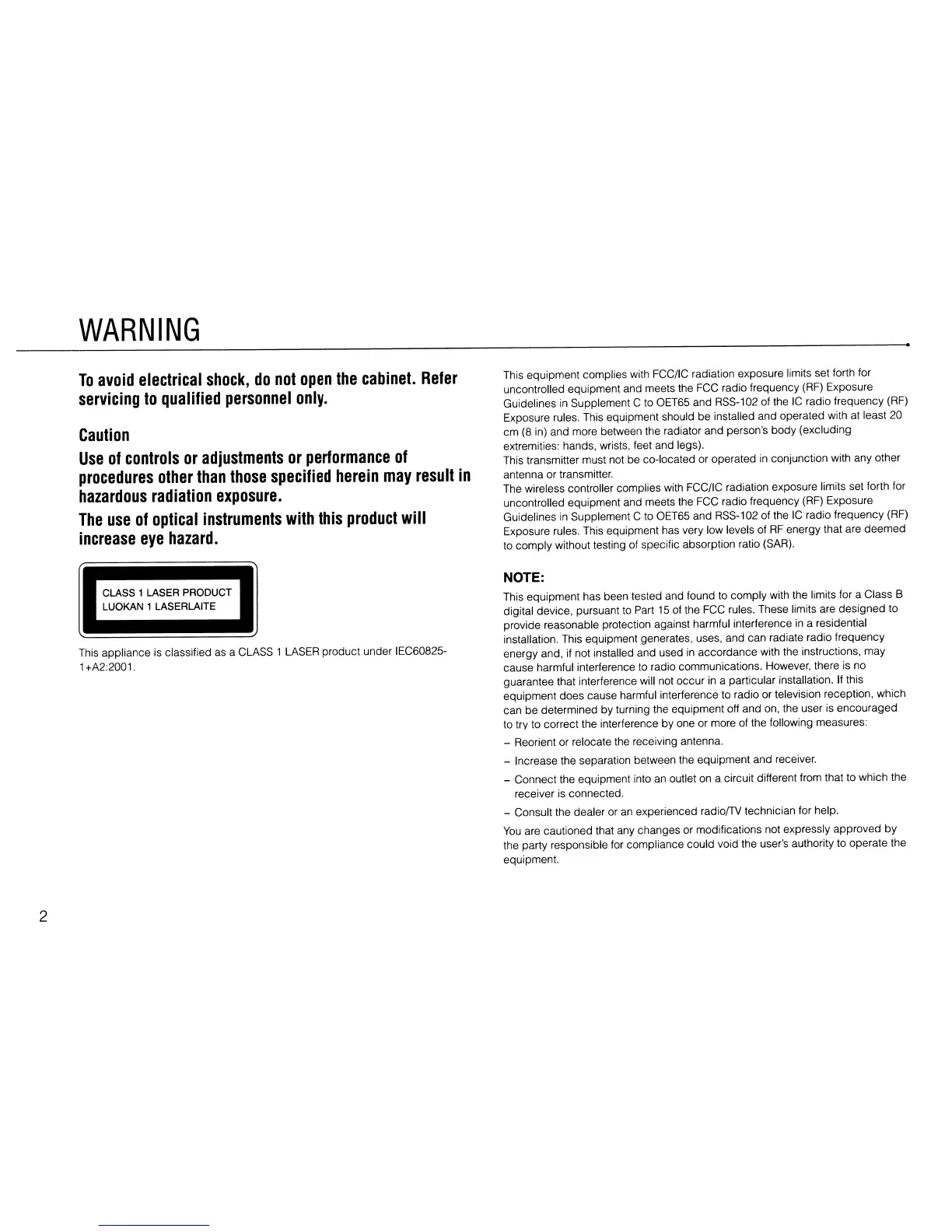
This appliance is classified
as
a CLASS 1 LASER product under IEC60825-
1+A2:2001.
This equipment complies with FCC/IC radiation exposure limits set forth for
uncontrolled equipment and meets the FCC radio frequency (RF) Exposure
Guidelines
in
Supplement C to OET65 and RSS-102 of the
IC
radio frequency (RF)
Exposure rules. This equipment should be installed and operated with at least 20
cm (8 in) and more between the radiator and person's body (excluding
extremities: hands, wrists, feet and legs).
This transmitter must not be co-located or operated
in
conjunction with any other
antenna or transmitter.
The wireless controller complies with FCC/IC radiation exposure limits set forth for
uncontrolled equipment and meets the FCC radio frequency (RF) Exposure
Guidelines
in
Supplement C to OET65 and RSS-102 of the
IC
radio frequency (RF)
Exposure rules. This equipment has very low levels of
RF
energy that are deemed
to comply without testing of specific absorption ratio (SAR).
NOTE:
This equipment has been tested and found to comply with the limits for a Class B
digital device, pursuant
to
Part
15
of the FCC rules. These limits are designed to
provide reasonable protection against harmful interference
in
a residential
installation. This equipment generates, uses, and can radiate radio frequency
energy and, if not installed and used
in
accordance with the instructions, may
cause harmful interference to radio communications. However, there is no
guarantee that interference will not occur
in
a particular installation.
If
this
equipment does cause harmful interference to radio or television reception, which
can be determined by turning the equipment off and on, the user is encouraged
to try to correct the interference by one or more of the following measures:
- Reorient or relocate the receiving antenna.
- Increase the separation between the equipment and receiver.
- Connect the equipment into
an
outlet
on
a circuit different from that to which the
receiver is connected.
- Consult the dealer or
an
experienced radiofTV technician for help.
You
are cautioned that any changes or modifications not expressly approved
by
the party responsible for compliance could void the user's authority
to
operate the
equipment.


 To Next Page