This document is an instruction manual for the SRC-56P rivet tool, a pneumatic tool designed for setting blind rivets.
Function Description
The SRC-56P is a powerful, durable, and high-speed production tool primarily used for placing break stem rivets. It operates using compressed air and is designed for efficient and safe riveting operations. The tool's design emphasizes user comfort and reduced operator fatigue due to its ergonomic and lightweight construction. It features a longer stroke, allowing it to set rivets with longer bodies in a single operation, and is designed for minimized noise during use.
Important Technical Specifications
- Capacity:
- For aluminum and steel blind rivets: Φ4.0 - Φ 6.4 (5/32" - 1/4")
- For stainless steel blind rivets: Φ4.0 - Φ 4.8 (5/32" - 3/16")
- Stroke: 20mm
- Pull Force: 10.0KN
- Air Pressure: 5-7 bar (approximately 45-105 psi)
- Weight: 1.50 kgs
Air Supply Requirements
- The tool operates with compressed air within the range of 3-7 Kgf/cm² (45-105 psi).
- The use of pressure regulators and filtering systems on the main air supply is recommended. These should be fitted within 3 meters of the tool to ensure maximum tool life and minimum maintenance.
- Air supply hoses must have a minimum working pressure rating of 150% of the maximum pressure produced in the system or 10 bar, whichever is higher.
- Hoses should be oil-resistant, have an abrasion-resistant exterior, and be armored if operating conditions may cause damage.
- All air hoses must have a minimum bore diameter of 6.4 millimeters or 1/4 inch.
Usage Features
- Safety First: The manual emphasizes reading all safety directions before installation, operation, or servicing. It strictly prohibits dismantling the tool without prior study of the manual.
- Approved Medium: The tool must only be connected to compressed air, with the pressure set between 5 to 7 bar.
- Intended Use: The tool is specifically designed for placing break stem rivets and should not be used for other purposes.
- Operator Safety: Users are required to wear safety glasses to protect against rivet stem ejection, and others in the vicinity should also wear them. The tool should never be directed towards any person or the operator.
- Ergonomic Design: The tool's ergonomic design and light weight contribute to reduced operator fatigue, making it suitable for extended use.
- Durability: Machined parts and imported seals enhance the tool's life.
Maintenance Features
The manual outlines two primary maintenance procedures: cleaning and adding oil.
Cleaning
- Frequency: Jaws, jaw housing, and upper housing should be cleaned every 10,000 cycles.
- Safety Precaution: Always disconnect the air supply before any maintenance operation.
- Procedure:
- Disconnect the air supply.
- Unscrew the nosepiece, outer cylinder, and then the jaw housing.
- Clean aluminum scraps from the outer cylinder, jaw housing, and jaws.
Adding Oil
- Safety Precaution: Keep the tool upright during all oiling operations. Connect the air supply but do not press the trigger.
- Indication of Low Oil: Insufficient oil is indicated if the tool cannot set a rivet in one hit. Proper lubrication is crucial for the tool's proper function and to prevent premature wear of parts.
- Procedure:
- Unscrew the oil fill screw from the tool body using the supplied hex key.
- Fill the supplied syringe with hydraulic oil.
- Screw the filled syringe into the oil fill screw hole.
- Inject all the oil from the syringe into the tool. Adequate oil has been added if oil flows back into the syringe when pressure is released.
- Press the syringe two or three times to prevent air from entering the oil in the tool.
- Unscrew and remove the syringe.
- Screw the oil fill screw back into the hole using the hex key and wipe off any excess oil.
The manual also includes a detailed parts list and an exploded diagram for the SRC-56P, facilitating identification and replacement of components during maintenance or repair.

 Need help?
 General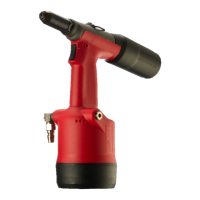

 To Next Page