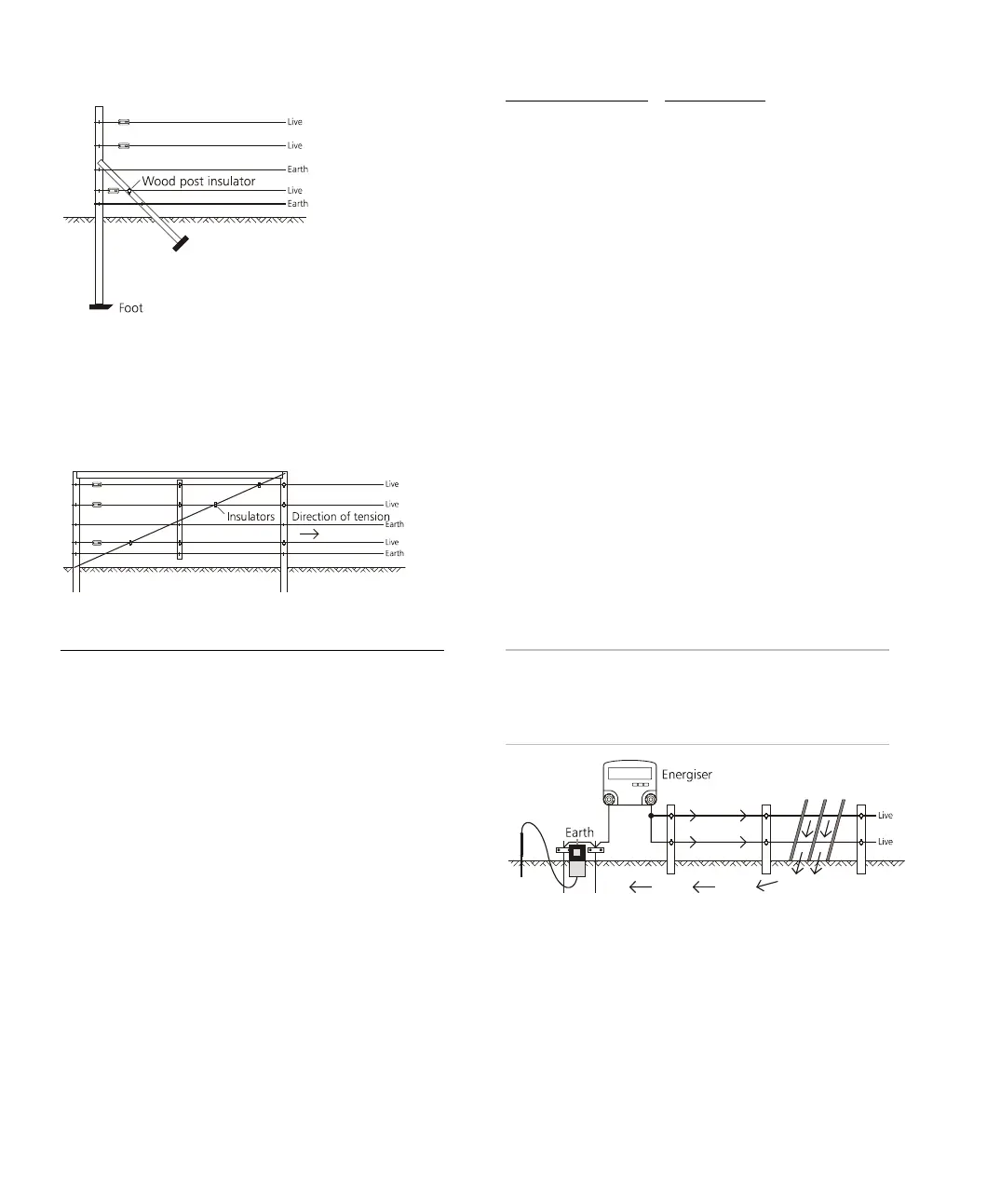
Earth-return system
Horizontal stay
Suitable for field gate, high-tension strainer.
Very simple to erect and most suitable as a high
tension strainer, excellent in areas where the soil gets
very wet or where heavy frost occurs.
Installing and testing an earth system
4
Select a suitable site for the earth system. Sites need
to be:
At least 10 m (33') from other earth systems
(e.g. telephone, mains power or the earth system
from another energiser).
•
•
•
•
Away from stock or other traffic that could
interfere with the installation.
At a site that can be easily observed for
maintenance.
Ideally at a site that has damp soil (e.g. a shaded
or swampy location). Note that the earth does
not need to be directly adjacent to the energiser
installation.
Drive Stafix earth rods into the ground. Use high-
voltage, insulated cable and earth clamps to
continuously connect the earth rods and the
energiser's Fence earth terminal. Make sure the
insulation is stripped back to ensure good contact
between the wire and the earth rod. The table below
specifies the minimum number of 2 m (6'6") earth
rods recommended for an earthing system:
Energiser
Earth rods
M0.5 (0.5 J) 1
M1.0 (1.0 J) 2
M2.5 (2.5 J) 3
Test the earth system, using the following procedure:
1 Turn off the energiser.
2 At least 100 m (330') away from the energiser,
short circuit the fence by laying several steel rods
or lengths of pipe against the fence. For best
results, the fence voltage should be lowered to
2000 V or less. In dry or sandy conditions, it may
be necessary to drive the rods up to
300 mm (12") into the earth.
Note:
It is not acceptable to short-circuit a fence
return system to the earth wire of the fence.
3 Turn the energiser back on.
4 Using a Stafix Digital Voltmeter, ensure that the
fence voltage is below 2 kV.
5
Check your earth system.
Insert the voltmeter's
earth probe into the ground at the full extent of
the lead, and hold the hook against the last earth
rod. The tester should not read more than 0.3 kV.
Anything higher than this indicates that better
earthing is required. Either add more earth rods
or find a better ground area to drive in the earth
rods.
Note:
When earthing energisers located in dairies,
earth at least 20 m (65') away from the dairy using
double-insulated wire to avoid touching the dairy
building or equipment.



 To Next Page