like these allow your dog to focus on what you are asking him to do, and maximize the learning potential of
each training session. As you and your dog become more proficient at obedience commands, gradually add
distractions to the training environment (additional people, increased activity, or other dogs).
Training Duration: Although the ideal duration of a training session varies from dog to dog, as a rule, it is best to
keep your sessions under 15 minutes. This ensures that training will be the highlight of your dog’s day, and his
enthusiasm will remain high throughout each session. Finish each session with brief play, fetch, or any game
you like to play with your dog. We recommend that you perform two (2) training sessions per day, but if time is
limited, one (1) daily session will suffice. (Never “double-up” sessions. It doesn’t help your dog learn any faster,
and too long of a session may decrease your dog’s enthusiasm.)
Is the Pro-Training Collar™ right for your dog?
If your dog is having severe behavioral problems, such as dominance or fear-induced aggression, consult with a
qualified Training and Behavior Specialist or Veterinarian before beginning this or any training program. You can
begin training puppies as early as eight weeks old. For puppies that are eight to sixteen weeks old, follow the
“Teaching Phase” section of this guide.
THE FOUNDATIONS OF TRAINING
Motivation and Correction: Proper reinforcement, through a balance of motivation and correction, is essential
to the learning process. Positive Reinforcement through motivation shows your dog that he has done something
right, while a correction helps him understand what is wrong. Positive Reinforcement is the motivation
used in this guide and comes in the form of food (treats), petting, praise, and play. Positive Reinforcement
helps build your dog’s confidence, while motivating him to repeat good behaviors. A correction helps your
dog immediately understand when he has made a mistake and minimizes the reoccurrence of inappropriate
behaviors. Throughout this guide, a correction will also be referred to as a “Pop.” A Pop is a quick and firm
snap of the leash. The snap comes from the wrist and is designed to get your dog’s attention. By working with
the scientifically engineered elements in the Pro-Training Collar™, the Pop redirects the behavior your dog is
engaged in when administered.
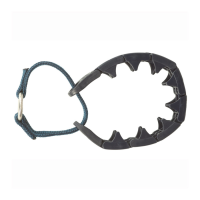
The Pro-Training Collar™ is your primary tool for guidance and corrections. It is safe and understandable to your
dog. By using a combination of rewards (for a job well done) and corrections (for guidance or disobedience),
you become a good leader that your dog trusts and enjoys. Through clear and consistent communication your
dog will choose to do things that result in reward versus correction. Positive Reinforcement such as praise
and petting should be genuine and heartfelt, while corrections should be given without emotion. Following any
correction, your dog should receive an appropriate reward for engaging in the right behavior.
A note on treats: Treats are recommended throughout this guide. They are a very important part of training,
especially during the teaching phases (when your dog is beginning to learn a new exercise or becoming more
proficient at one he has already learned). It will not be necessary to use treats forever and you can omit them
from the training process as you and your dog master commands in a variety of situations. Praise, play, and
3


 To Next Page
 Loading...