98
Eggs are nature’s contribution to ‘fast food’.
Conveniently packaged, simple to use and
inexpensive.
They are an extremely nutrient-dense food,
providing vitamins, minerals, protein and
fats, with the standard size egg containing
only 300KJ.
A nutritious, balanced meal can be made
in under 10 minutes by serving a boiled or
poached egg with toast and orange juice.
Dressed up or served plainly, an egg always
tastes and looks great.
• When purchasing, avoid cracked or broken
eggs and check the ‘best by’ date on the
carton.
• Store eggs in the refrigerator with the
pointed side down in their carton. This
reduces the risk of damage, slows down
moisture loss and prevents eggs from
absorbing odours from strong smelling
foods.
• If a recipe specifies using eggs at room
temperature, simply remove them from the
refrigerator 30 minutes before using.
• To test for freshness, place an egg in a
bowl of cool water. If it sinks, it is fresh –
if it floats, throw it out.
• Piercing the large end of the egg with
the egg piercer on the underside of the
measuring cup prevents it from cracking
during cooking, with the added bonus of
making it easier to peel.
• Chill hard boiled eggs in cold water
immediately after cooking to prevent blue
discolouration around the yolk.
• Hard boiled eggs are much easier to slice
if they are cold. If you don’t have an egg
slicer, use a sharp, thin-bladed knife,
dipping into cold water every few slices.
• Refrigerated as soon as they cool, boiled
eggs will keep for up to 1 week.
Egg TipsCare and Cleaning
After each use
Turn the power off and unplug from the
power outlet.
To clean the plastic parts
Wash the cover, egg rack, and poaching
trays in warm soapy water, rinse and dry
thoroughly.
Note: Do not clean any parts in a dishwasher
as the high temperatures reached may distort
the plastic.
To clean the heating vessel
Wipe over with a damp cloth. Do not use
harsh abrasives as these will scratch the
non-stick surface.
After cleaning the heating vessel, rub a small
amount of vegetable or cooking oil into the
non-stick surface. This allows easier removal
of mineral deposits that exist normally in
water.
Important: Do not immerse the unit in water
or any other liquid.
Care is required when handling the egg
piercer on the measuring cup.
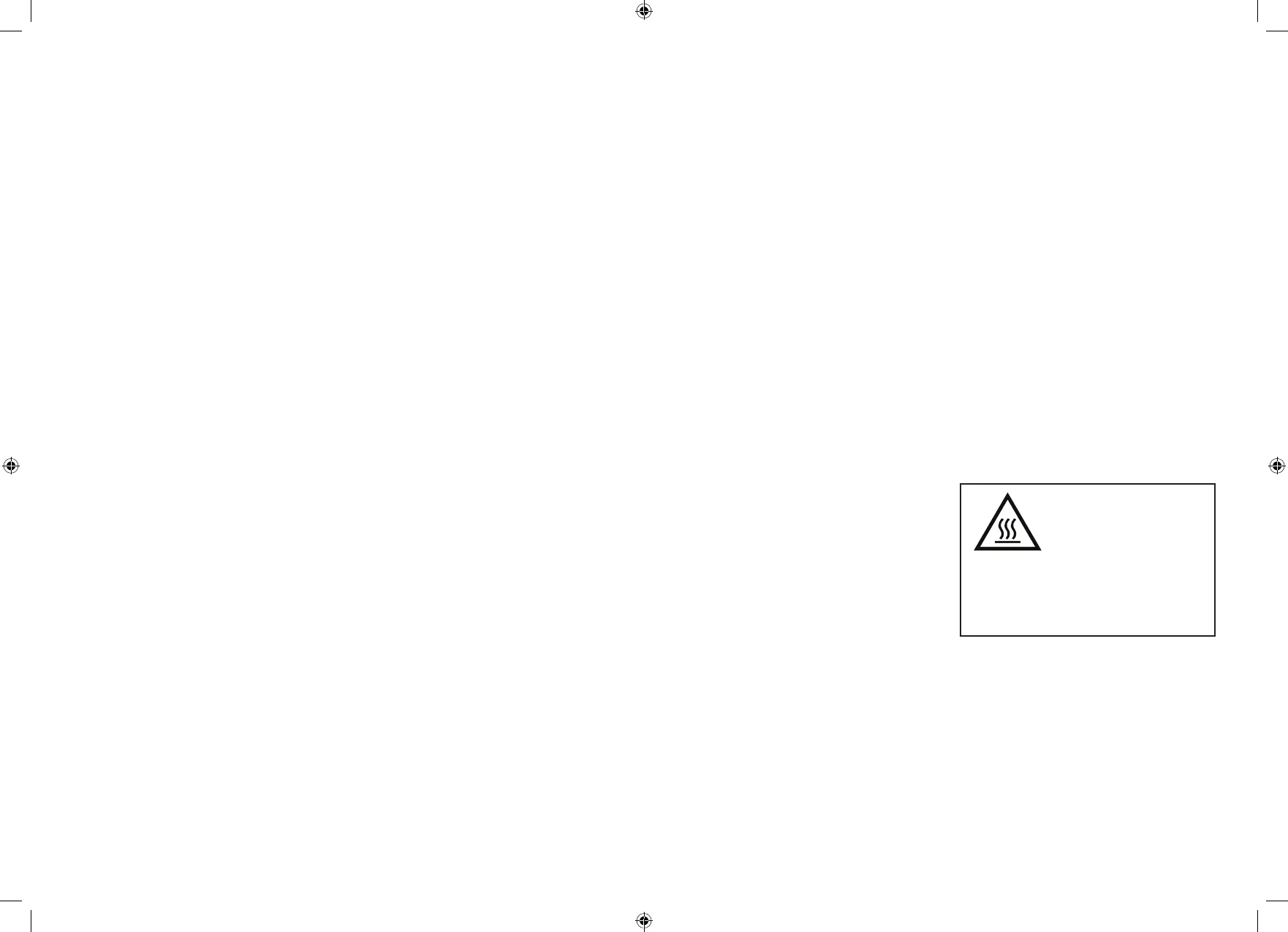
This symbol indicates, temperature of
accessible surfaces may be high when the
appliance is operating and for some time
after use.
Hot Surfaces
Do Not Touch
EC1300_20EM1 (ANZ).indd 8-9EC1300_20EM1 (ANZ).indd 8-9 4/15/20 11:034/15/20 11:03


 To Next Page
 Loading...