Sutron Corporation 8310 & 7310 Users Manual 8800-1125Rev. 2.7 (BETA) 4/16/2014 pg. 183
Environment/Enclosure
The 8310 is designed to withstand temperature extremes but should be protected against direct
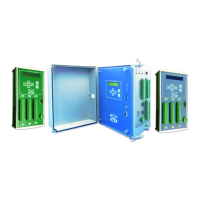
exposure to rain and dust. If you plan to install the 8310 outside, order an 8310-O. This
configuration fits nicely into NEMA-4 or IP65 type enclosures available from Sutron and others.
If the 8310 is installed inside another structure such as a gage house, then the 8310-N or O can
be installed without an additional enclosure. The advantage to using an enclosure even for
indoor installations is that the enclosure provides a way of organizing batteries, cables and
protecting them from inadvertent handling.
When using an enclosure, it is good practice plan for the cable entrance/exit in the bottom or
sides of the enclosure. Avoid cables entering the top of the enclosure as this promotes leaking.
For outdoor installations, cables should enter the bottom of the enclosure. Plan on using liquid
tight fittings around cables to create a seal around the cable and the enclosure.
A gell-cell type battery may be placed in the same enclosure as the 8310. This type of battery is
designed to recapture the gasses that result from charging the battery. Some other batteries
however, will release the gasses into the enclosure. If the battery has a vent hole on it then this
should be connected to a tube and routed outside the enclosure. If the battery does not have a
vent hole and is not a "sealed" type battery, it should be placed outside the enclosure.
The following drawings show the dimensions of the different model 8310s.


 To Next Page
 Loading...