EasyManua.ls Logo

Suzuki Clarinet - User Manual

Suzuki Clarinet
6 pages
Print Icon
To Next Page IconTo Next Page
Loading...
Reed
Mouthpiece
Turn
Clockwise
to Tighten
Align the
tops of the
Reed and
Mouthpiece
q w e
6. WHEN YOU HAVE FINISHED PLAYING YOUR CLARINET
Loosen the Ligature. Carefully remove
the Reed. Dry it with the Polishing
Cloth starting at the thick end moving
towards the tip. Be very careful at the
tip. Return it to the Reed Holder.
Now take off the Ligature and remove
the Mouthpiece. Take the Cleaning
Swab and put the weighted end into
the Mouthpiece. Then, pull the Swab
Next, take the Swab and put the
weighted end into the Barrel of your
Clarinet until it comes out the Bell.
Gently pull the Swab through the
Clarinet. Repeat. This will dry the inside
of your Clarinet and help protective the
key pads from moisture.
Put the Ligature back on the
Mouthpiece and tighten slightly. Then
put the Cap over the Mouthpiece and
return it to the Case.
Remove the Barrel next. Hold the
Upper Joint near the top with one hand
while handling the Barrel with your
other hand. Slowly twist the Barrel back
and forth until it comes off. Return it to
the Case.
Now separate the Upper and Lower
Joints. Press down on the Bridge Key of
the Upper Joint so the bridge is raised.
Slowly and carefully twist the sections
back and forth until they have been
separated. Do NOT turn them around
and around! Return the Upper Joint to
the proper Compartment in the Case.
Hold the Bottom Joint in one hand
and the Bell in the other hand. Slowly
twist the Bell back and forth until it
is separated from the Lower Section.
Return the Lower Section and Bell to
the Case.
Be careful! When removing the Reed,
do not touch the tip. When separating
the Upper and Lower Joints, make sure
the Bridge Key is down. Do not force the
parts into the Case. There is only one
correct compartment for each part. Do
not force the lid closed. If it does not
close easily, check the placement of the
parts.
5. PREPARING YOUR MOUTHPIECE, REED AND LIGATURE
This is a very delicate stage of your Clarinet assembly so pay close attention and be careful.
A.
Installing the Reed
Locate and remove the Reed Holder from the Storage
Compartment.
Carefully take a Reed out of the Reed Holder and place the
Reed in your mouth for a minute. The Reed needs to be
moistened before you can place it on the Mouthpiece.
Now place the FLAT side of the moistened Reed on the FLAT
side of the Mouthpiece. The top of the Mouthpiece and the
top of the Reed should be at the same height.
q
BE CAREFUL! The top of the Reed is VERY thin and delicate.
If you chip or crack it, you will have to use another Reed.
Locate the Ligature. The screws should remain loose. While
holding the Reed in position with your left thumb, CAREFULLY
place the Ligature over the Mouthpiece and Reed. DO NOT
TOUCH THE THIN PART OF THE REED! Push the Ligature down
on the Mouthpiece so that it covers the smooth part of the
Reed.
w
Now, slowly tighten the screws on the Ligature until they are
tight, but not too tight. This will hold the Reed in place while
you are playing.
e
Your Clarinet is now completely assembled and should look
like the drawings in Section 3. All the logos should be lined up
in exactly the same position. No single logo should be off to
the left or right of the center of your Clarinet.
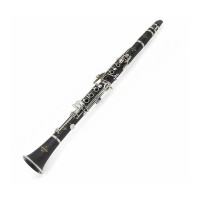
Your new Clarinet should
now look like this.
Have fun!
6. WHEN YOU HAVE FINISHED PLAYING YOUR CLARINET
the left or right of the center of your Clarinet.
Your new Clarinet should
now look like this.
Have fun!
© 2006 Suzuki Corporation
www.suzukibandinstruments.com
DO
Be careful when handling your Flute. It is a delicate
instrument.
DO
Swab out the Mouthpiece and Flute after you have
nished playing.
DO
Place each section back in the correct compartment in
the Case.
DO
Use Cork Grease on each tenon before assembling
your Flute.
DO
Use a gentle back and forth motion when putting
together or taking apart your Flute sections.
DO
Place the Cap over the Mouthpiece after you have
removed the Reed.
DO’S DON’TS
DONT
Force the sections into the Case.
DONT
Close the lid if it seems dif cult.
DONT
Eat while playing.
DONT
Turn the Flute sections around and around.
DONT
Press hard on the keys or rods when handling them.
DONT
Touch the tip of the Reed.
Care
&
Maintenance
& Maintenance&
d
d

Assembly, Care & Maintenance Guide
www.suzukibandinstruments.com
Question and Answer IconNeed help?

Do you have a question about the Suzuki Clarinet and is the answer not in the manual?

Summary

STOP! Read This First Before You Assemble Your Clarinet

Did You Know This?

Provides background on the Suzuki Corporation and the clarinet's design for ease of learning.

Precise and Delicate Instrument Handling

Emphasizes the instrument's delicate nature and advises seeking teacher guidance for assembly.

Tips for Rapid Improvement

Suggests the importance of private lessons for rapid improvement and finding a good music teacher.

1. UNPACKING YOUR NEW CLARINET

Position and Open the Clarinet Case

Guides on positioning, identifying, and opening the clarinet case correctly.

Unwrap Clarinet Sections and Accessories

Details removing protective wrapping and foam tabs, and identifying accessories.

2. CLARINET PARTS IDENTIFICATION

Carrying Case Contents

Lists the main sections of the clarinet found within the case.

Included Accessories

Lists the accessories that come with the new clarinet.

3. ASSEMBLED CLARINET OVERVIEW

4. HOW TO ASSEMBLE YOUR CLARINET

Grease Cork Tenons

Instructs on applying cork grease to tenons for smooth assembly and handling.

Attach Bell to Lower Joint

Details connecting the bell to the lower joint using a gentle back-and-forth motion.

Attach Upper Joint

Explains attaching the upper joint to the lower joint, including bridge key operation.

Attach Barrel

Guides on attaching the barrel to the upper joint with a careful back-and-forth motion.

Attach Mouthpiece

Describes the final step of attaching the mouthpiece and aligning it correctly.

5. MOUTHPIECE, REED, AND LIGATURE PREPARATION

Install the Reed

Provides detailed instructions for moistening and attaching the reed to the mouthpiece.

6. POST-PLAYING CLARINET CARE

Care & Maintenance Guidelines

Summary

STOP! Read This First Before You Assemble Your Clarinet

Did You Know This?

Provides background on the Suzuki Corporation and the clarinet's design for ease of learning.

Precise and Delicate Instrument Handling

Emphasizes the instrument's delicate nature and advises seeking teacher guidance for assembly.

Tips for Rapid Improvement

Suggests the importance of private lessons for rapid improvement and finding a good music teacher.

1. UNPACKING YOUR NEW CLARINET

Position and Open the Clarinet Case

Guides on positioning, identifying, and opening the clarinet case correctly.

Unwrap Clarinet Sections and Accessories

Details removing protective wrapping and foam tabs, and identifying accessories.

2. CLARINET PARTS IDENTIFICATION

Carrying Case Contents

Lists the main sections of the clarinet found within the case.

Included Accessories

Lists the accessories that come with the new clarinet.

3. ASSEMBLED CLARINET OVERVIEW

4. HOW TO ASSEMBLE YOUR CLARINET

Grease Cork Tenons

Instructs on applying cork grease to tenons for smooth assembly and handling.

Attach Bell to Lower Joint

Details connecting the bell to the lower joint using a gentle back-and-forth motion.

Attach Upper Joint

Explains attaching the upper joint to the lower joint, including bridge key operation.

Attach Barrel

Guides on attaching the barrel to the upper joint with a careful back-and-forth motion.

Attach Mouthpiece

Describes the final step of attaching the mouthpiece and aligning it correctly.

5. MOUTHPIECE, REED, AND LIGATURE PREPARATION

Install the Reed

Provides detailed instructions for moistening and attaching the reed to the mouthpiece.

6. POST-PLAYING CLARINET CARE

Care & Maintenance Guidelines

Overview

The Suzuki Clarinet Master Class Series is a musical instrument designed for education, offering a blend of precision, delicate craftsmanship, and user-friendly features for assembly, care, and maintenance. Manufactured by the Suzuki Corporation, a leading producer of musical instruments for over 50 years, this clarinet aims to provide a high-quality experience for students and musicians alike.

Function Description:

The Suzuki Clarinet is a woodwind instrument intended for playing in various musical settings, including school bands, marching bands, and orchestras. It is designed to produce a beautiful musical sound, with hundreds of small, precise parts working in harmony. The instrument is suitable for beginners, with a design that facilitates quick and easy learning.

Important Technical Specifications:

While specific technical dimensions and materials are not detailed, the manual emphasizes the instrument's precise and delicate construction. It consists of five main sections: the mouthpiece (with cap and ligature), barrel, upper joint, lower joint, and bell. These sections are designed to fit together securely to form the complete instrument. The clarinet comes with a "Roadie" aluminum case for protection and transport.

Usage Features:

The manual provides a step-by-step guide for assembling the clarinet, emphasizing careful handling due to its delicate nature.

  • Unpacking: The clarinet is shipped in an aluminum "Roadie" case with the Suzuki logo. Users are instructed to open the case only when the logo is visible to ensure it's right-side up. The five sections of the clarinet and accessories are individually wrapped in plastic and paper, with small foam tabs protecting the keys during shipping. These protective materials must be carefully removed.
  • Greasing Cork Tenons: Before assembly, the cork tenons on the upper joint, lower joint, and mouthpiece must be greased with the included cork grease. A small amount of grease is applied with a finger and spread evenly around each cork. This step is crucial for smooth assembly and to prevent damage.
  • Attaching the Bell to the Lower Joint: The lower joint's cork is twisted into the bell. The manual stresses a slow, back-and-forth motion, avoiding forceful twisting or turning the parts completely around.
  • Attaching the Upper Joint: The upper joint is connected to the lower joint. A key on the upper joint, referred to as the "Bridge Key," must be pressed down during this step to raise the bridge and prevent damage. Again, a slow, back-and-forth motion is recommended.
  • Attaching the Barrel: The barrel is pushed onto the cork tenon of the upper joint using the same slow, back-and-forth motion. The instrument should be held upright during this step.
  • Attaching the Mouthpiece: The mouthpiece, which includes a cap and ligature, is pushed into the barrel. The cap and ligature are removed first. The flat part of the mouthpiece must be aligned with the register key on the upper joint.
  • Installing the Reed: This is a delicate process. A reed is taken from the reed holder and moistened in the mouth for about a minute. The flat side of the moistened reed is then placed on the flat side of the mouthpiece, ensuring the tops of both are aligned. The ligature, with loose screws, is carefully placed over the mouthpiece and reed, covering the smooth part of the reed. The screws are then slowly tightened until snug, but not overtight. The manual warns that the reed is very thin and delicate, and can easily chip or crack.
  • Alignment: Once assembled, all Suzuki logos on the instrument should be lined up in the exact same position, indicating proper alignment of the sections.

Maintenance Features:

Proper care and maintenance are essential for the longevity and performance of the Suzuki Clarinet.

  • Post-Playing Disassembly: After playing, the clarinet must be disassembled and cleaned.
    • Reed Removal: The ligature screws are loosened, and the reed is carefully removed. It should be dried with the polishing cloth, starting from the thick end and moving towards the tip, then returned to the reed holder. The tip should not be touched.
    • Mouthpiece and Ligature Cleaning: The ligature is removed, and the mouthpiece is detached. The weighted end of the cleaning swab is inserted into the mouthpiece and pulled through to dry it. The ligature is then reattached to the mouthpiece and tightened slightly, and the cap is placed over the mouthpiece before returning it to the case.
    • Barrel Removal: The barrel is removed from the upper joint with a slow, back-and-forth twisting motion.
    • Joint Separation: The upper and lower joints are separated by pressing down on the bridge key of the upper joint to raise the bridge. A slow, back-and-forth twisting motion is used.
    • Bell Removal: The bell is separated from the lower joint using a slow, back-and-forth twisting motion.
    • Swabbing the Instrument: The cleaning swab is pulled through the barrel and then through the main body of the clarinet (from the bell end) to dry the inside and protect the key pads from moisture. This process should be repeated.
  • Storage: Each section of the clarinet must be placed back into its correct compartment in the case. The manual emphasizes that there is only one correct compartment for each part, and forcing parts or the lid closed should be avoided.
  • General Care:
    • Handling: Always handle the clarinet carefully, as it is a delicate instrument.
    • Cork Grease: Use cork grease on each tenon before assembly.
    • Assembly/Disassembly: Use a gentle back-and-forth motion when putting together or taking apart sections.
    • Mouthpiece Cap: Always place the cap over the mouthpiece after removing the reed.
    • Avoid Force: Do not force sections into the case, close the lid if it seems difficult, or force parts together during assembly.
    • Playing Habits: Do not eat while playing.
    • Twisting: Avoid turning clarinet sections around and around during assembly or disassembly.
    • Key Pressure: Do not press hard on the keys or rods when handling the instrument.
    • Reed Tip: Never touch the tip of the reed.

The manual also recommends seeking private instruction after learning the basics from a music teacher to "get real good, real fast." For any problems or questions, users are advised to call the toll-free number provided rather than returning the clarinet to the store.

Suzuki Clarinet Specifications

General IconGeneral
BrandSuzuki
ModelClarinet
CategoryMusical Instrument
LanguageEnglish

Related product manuals