This document provides installation instructions for the Terraneo 336010 and related devices, primarily focusing on intercom and door entry systems. The manual includes wiring diagrams and component layouts, illustrating how various modules connect to form a complete system.
Function Description:
The Terraneo 336010 system appears to be a modular audio and video door entry system, designed for multi-apartment or multi-user buildings. It facilitates communication between an outdoor station (door panel) and indoor stations (intercoms or video monitors), allowing residents to identify visitors, grant access, and control common area lighting.
Key functions include:
- Audio Communication: Two-way audio communication between the outdoor panel and indoor handsets/monitors.
- Door Release: The ability for indoor stations to remotely unlock the main entrance door.
- Call to Floor: Pushbuttons (A) at the floor level allow visitors to call a specific apartment.
- Staircase Lighting Control: Pushbuttons (B) can activate staircase lights, providing convenience and safety.
- Entrance Hall Door Release: A dedicated pushbutton (C) in the entrance hall allows for door release from within the building.
- Modular Expansion: The system supports multiple outdoor panels, indoor stations, and additional modules for increased functionality or capacity.
Important Technical Specifications (Inferred from diagrams):
- Wiring: The diagrams consistently show multi-core cables (e.g., 6-core, 8-core, 14-core, 20-core) connecting various components. Specific terminal numbers (e.g., 1, 2, 3, 4, 5, 6, 7, 8, 14, 20) are used for connections, indicating a standardized wiring scheme.
- Power Supply: While not explicitly detailed, the presence of various modules suggests a central power supply unit (PSU) is required to power the entire system. The "DT" (presumably for "Digital Terraneo" or "Data Transmission") and "11/97" (November 1997) on the cover indicate the product's lineage and potential digital communication capabilities, though the diagrams primarily show analog wiring.
- Component Identification:
- 336010 (Page 2): This appears to be a central distribution or interface module, possibly handling audio routing and power distribution for a single-family or small multi-apartment setup. It has multiple "IN" and "OUT" ports (PI1, PI2, PI3, PI4) with various terminal configurations (e.g., 5, 6, 14, 5, 6, 7, 8).
- 346130 (Page 3): Similar to the 336010 but potentially for a larger system or with different features, as indicated by the different part number. It also features "IN" and "OUT" ports (PI1, PI2, PI3, PI4).
- 336810 (Page 4): This module is shown in a multi-apartment setup, likely serving as a floor distributor or a central unit for a specific block of apartments. It has "OUT" and "IN" ports and terminals for 7, 8, 1, and PI.
- 336320 (Page 4): This appears to be an indoor station or a module associated with an indoor station, showing connections for 5A, 5B, 5C, 5D, and other terminals (e.g., 22, 23, 24). It also has a switch or button labeled "EC."
- 332970, 336230, 306010, 336010 (Page 4): These are likely additional modules or power supplies used in larger, more complex installations, possibly for expanding the number of apartments or adding specific functionalities.
- Outdoor Panel: Depicted with pushbuttons and a speaker/microphone grille.
- Indoor Handset/Monitor: Shown with a speaker, microphone, and pushbuttons (e.g., for door release).
- System Capacity: The diagrams on page 4, showing multiple "5 5 5 5 5" connections and "9+n" wiring, suggest the system can be scaled to accommodate numerous apartments ("n" indicating a variable number of units).
Usage Features:
- Ease of Installation: The diagrams provide clear visual guidance for wiring, using numbered terminals and color-coded (implied by distinct lines) connections. The modular design suggests straightforward assembly.
- User Interface (Indoor): Indoor stations typically feature a handset for audio communication and dedicated buttons for door release and potentially other functions like activating staircase lights.
- User Interface (Outdoor): Outdoor panels include call buttons for individual apartments and a speaker/microphone for communication.
- Accessibility: The "Call to Floor" and "Staircase Lighting Control" features enhance convenience and safety for residents and visitors.
- Security: The remote door release function allows residents to screen visitors before granting access.
Maintenance Features:
- Modular Design: The modular nature of the system simplifies troubleshooting and replacement of individual components. If a specific module fails, it can be replaced without overhauling the entire system.
- Clear Wiring Diagrams: The detailed wiring diagrams are crucial for maintenance, allowing technicians to quickly identify and trace connections for repairs or system expansions.
- Component Labeling: The use of distinct part numbers for each module (e.g., 336010, 346130, 336810) aids in identifying and ordering replacement parts.
- Standardized Connections: The consistent use of numbered terminals across different modules suggests a standardized approach, which simplifies maintenance and reduces the learning curve for technicians.
In summary, the Terraneo 336010 and associated components form a robust and scalable door entry system, designed for various building types. Its modularity, clear wiring, and comprehensive feature set make it a practical solution for managing building access and communication.

 Need help?
 General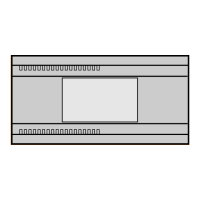

 To Next Page