MS Detector Maintenance
API Source Maintenance
@@@@@@@@@@@@@@@@@@@@@@@@@@@@@@@@@@@@@@@@@@@@@@@@@@@@@
'JOOJHBO-52
5IFSNP
&-&$530/$03103"5*0/
4-8 _______________________ Finnigan LTQ Hardware Manual _______________________
sweep cone and the ion transfer capillary follow the procedure described in
the topic Flushing the Ion Sweep Cone and Ion Transfer Capillary on
page 3-8.
Removing and Cleaning the Ion Transfer
Capillary
The bore of the ion transfer capillary can become blocked by buffer salts or
high concentrations of sample. The ion transfer capillary can be easily
removed for cleaning. You do not have to vent the system to remove the ion
transfer capillary.
If the pressure in the ion transfer capillary-skimmer region (as measured by
the Convectron gauge) drops considerably below 1 Torr, you should suspect a
blocked ion transfer capillary. You can check the Convectron gauge pressure
in the Vacuum dialog box of the Tune Plus window. To display the Tune Plus
window choose Start > Programs > Xcalibur > LTQ Tune. Choose
Setup > Vacuum to display the Vacuum dialog box.
To remove and clean the ion transfer capillary, do the following:
1. Turn off the flow of liquid from the LC (or other sample introduction
device) to the API source. To turn off the flow of liquid from the LC to the
API source, do the following:
a. Choose Start > Programs > Xcalibur > LTQ Tune to open the
Tune Plus window.
b. In the LTQ Tune Plus window, choose Setup > Inlet Direct
Control (or click on the AS/LC direct control button). The Inlet
Direct Control view appears.
c. Select the LC tab and click on (or Stop Pump or Pump Off) to
stop the LC pump.
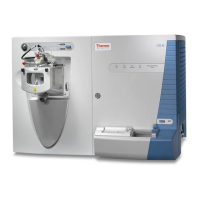
2. Place the electronics service switch (located on the right side of the MS
detector) in the Service position
to turn off the non-vacuum system
voltages.
CAUTION. Make sure that the LTQ electronics service switch is in the
Service position before you proceed.


 To Next Page
 Loading...