The document provided is an Operator's Manual for the Tigercat 234 Loader, specifically covering serial numbers 2342001 to 2342100. This manual is a critical resource for operators, technicians, and owners of the Tigercat 234 Loader, offering comprehensive information on its operation, maintenance, and safety protocols.
Function Description
The Tigercat 234 Loader is designed for various forestry applications, primarily focusing on log processing, sorting, log transferring, and loading. As a loader, its core function involves manipulating logs, whether by lifting, moving, or stacking them, to facilitate further processing or transportation. This machine is integral to timber harvesting operations, providing the necessary power and precision to handle heavy logs efficiently. Its design suggests a robust construction capable of operating in demanding environments typical of logging sites. The presence of a boom and grapple (visible in the cover image) indicates its capability to grasp and maneuver logs with significant reach and lifting capacity. The machine's role is to enhance productivity and safety in log handling, reducing manual labor and accelerating the workflow in forestry operations.
Important Technical Specifications
While the manual itself doesn't explicitly list detailed technical specifications on the cover or table of contents, it implies several key aspects through its structure and purpose:
- Model: Tigercat 234 Loader. This identifies the specific model of the machine.
- Serial Number Range: 2342001 to 2342100. This is a crucial identifier for parts ordering, service, and ensuring the correct manual version is used, as Tigercat produces different manuals for different serial number ranges (e.g., 2340101 to 2340600, 2340601 to 2342000).
- Manual Issue Date: ISSUE 1.0 OCTOBER, 2014. This indicates the version and release date of the manual, which is important for tracking updates and revisions. Tigercat notes that information is current as of the printing date and that improvements may not be covered, advising contact with a dealer for the latest information.
- Manufacturer: Tigercat Industries Inc., located in Brantford, Ontario, Canada. Contact details including P.O. Box, city, province, country, telephone, and fax numbers are provided.
- Engine Type (Implied): The "CALIFORNIA Proposition 65 Warning" explicitly mentions "Diesel engine exhaust," indicating that the Tigercat 234 Loader is powered by a diesel engine. This is a standard power source for heavy machinery in forestry due to its torque characteristics and fuel efficiency.
- Associated Literature: The document lists other available literature for the 234 Loader, including different operator's manuals for various serial number ranges, service manuals for corresponding ranges, and a parts catalog. This highlights the comprehensive support documentation available for the machine. The part number for this specific manual is 44176AENG, and for the corresponding service manual, it's 44177AENG.
Usage Features
The manual outlines several usage features by detailing the sections it covers:
- Operator's Manual: This primary document focuses on guiding the operator through the proper and safe techniques for operating the 234 Loader. It includes information on the machine's controls and operational procedures.
- Attachment Operation: The manual contains important information regarding the safe operation of the machine's attachment (likely a grapple or similar log-handling tool). This suggests that the attachment is an integral part of the loader's functionality and requires specific operational knowledge.
- Safety Information: A dedicated "SAFETY" section (Section 1) is emphasized as critical, with additional WARNING and CAUTION notices placed throughout the manual. This underscores Tigercat's commitment to operator safety and highlights the inherent risks associated with operating heavy machinery.
- Controls and Operation: This section (Section 2) details how to use the machine, including the layout and function of various controls, to achieve efficient and safe log handling.
- Trained Personnel Requirement: The introduction explicitly states that "Only trained personnel should be allowed to operate or work on the machine." This emphasizes the complexity and potential hazards of the equipment, requiring skilled operators.
- Field Product Changes: A section on "NON-APPROVED FIELD PRODUCT CHANGES" suggests that modifications to the machine without manufacturer approval are discouraged, likely due to safety and performance implications.
Maintenance Features
The manual also covers essential maintenance aspects, crucial for the longevity and optimal performance of the 234 Loader:
- Lubrication and Maintenance: A dedicated section (Section 3) provides guidelines for lubricating and maintaining the machine. This is vital for preventing wear and tear, ensuring smooth operation, and extending the lifespan of components.
- Preventive Maintenance Schedule: The introduction mentions that the service manual contains a "preventive maintenance schedule to ensure optimum machine performance." While this specific operator's manual might not detail the full schedule, it directs users to the service manual for comprehensive maintenance planning.
- Servicing Procedures: The service manual (referenced as a companion document) contains detailed servicing procedures, which are essential for addressing issues, performing routine checks, and replacing parts.
- Parts Catalog: The availability of a "Parts Catalog" (Part No. 29468A) is a key maintenance feature, allowing operators and technicians to identify and order correct replacement parts, which is critical for repairs and upkeep.
- Dealer Support: Tigercat advises contacting the dealer for information on improvements not covered in the manual or for discrepancies, indicating a strong support network for maintenance and technical assistance.
- Regular Updates: Tigercat's policy of making changes to the machine after the manual's release date and sending out updates on a regular basis highlights a proactive approach to maintenance support, ensuring that users have access to the most current information.

 Need help?
 General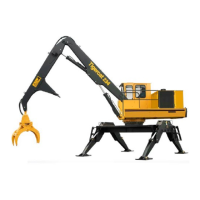

 To Next Page