

EasyManua.ls Logo

Toku TPB-90 - User Manual

Toku TPB-90
8 pages
Print Icon
To Next Page IconTo Next Page
Loading...
Symbol
Please observe all safety precautions listed below.
WARNING:This may cause an accident resulting in injury or death if it is not observed.
CAUTION:This may cause injury, damage or trouble to the air tool or equipment if it is not followed.
WARNING
To reduce risk of injury, everyone using, installing. repairing, maintaining changing accessories on, or working
near this tool MUST read and understand these instructions before performing any such task.
DO NOT DISCARD-GIVE TO USER
Do not use an Air Breaker until this safety instruction has been read and understood completely.
This manual is necessary to help you to use the Air Breaker correctly.
WARNING
Do not use an Air Breaker before reading this safety instruction manual.
Obey all of the safety measures indicated in this manual
FOR DETAILED INFORMATION ABOUT TOKU AIR TOOLS AND EQUIPMENT
CONTACT TO
TOKU PNEUMATIC TOOL CO., LTD.
3-4, 4-Chome Katakasu, Hakata-Ku, Fukuoka 812-0043 Japan
Phone:+81-92-431-0401 FAX:+81-92-431-1014
E-mail:int-op@toku-net.co.jp URL:http://www.toku-net.co.jp/en/ 7th edition
OPERATOR’S INSTRUCTIONS
AND PARTS LIST
AIR CONCRETE BREAKER
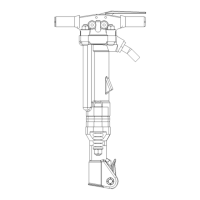
MODEL TPB-90
1
Question and Answer IconNeed help?

Do you have a question about the Toku TPB-90 and is the answer not in the manual?

Summary

General Safety Precautions

Safety When Using Air Tools

Essential safety measures and protective equipment for operating air tools.

Rules for Safe Operation

Mandatory rules for safe use, modifications, and part replacements.

Workplace Safety

Guidelines for ensuring safety in the work environment and during operation.

Chisel Maintenance Safety

Procedures and warnings for safe chisel inspection and replacement.

Operation and Setup Procedures

Hose Connection

Instructions for securely connecting the air hose to the tool.

Operating the Air Breaker

Key steps and precautions for the correct operation of the air breaker.

Service and Maintenance Guide

Procedures for service, maintenance, and general care of the tool.

Operational Awareness

Emphasizes concentration, common sense, and avoiding impaired operation.

Preparations for Operation

Compressor and Air Hose Checks

Ensuring compressor capacity and air hose integrity before use.

Air Breaker and Chisel Inspection

Checking the air breaker body and chisel for damage or suitability.

Protective Equipment and Air Supply

Guidelines for wearing PPE and setting correct air pressure.

Lubrication Procedures

Daily and continuous lubrication requirements for tool longevity.

Troubleshooting and Parts Information

Inspection and Storage

Procedures for inspecting, cleaning, and storing the air breaker.

Loss of Power Causes

Common reasons for reduced power or erratic operation in the tool.

Replacement Parts Ordering

Guidelines for ordering genuine replacement parts using part numbers.

Parts List and Identification

Exploded View of Components

Diagram showing the assembly and individual parts of the air breaker.

Spare Parts Service Chart

Service chart detailing wear levels and replacement frequency for parts.

Serial Number and Name Plate Location

Information on locating the serial number and name plate on the tool.

Overview

The TOKU TPB-90 is an air concrete breaker, designed for heavy-duty demolition tasks. This operator's instruction and parts list manual provides comprehensive information for its safe and effective use, maintenance, and repair.

Function Description

The TPB-90 is a pneumatic tool that utilizes compressed air to drive a chisel for breaking concrete and other hard materials. Its primary function is to provide powerful percussive action for demolition work, making it suitable for construction, road repair, and other heavy-duty applications. The tool's operation involves a piston striking a chisel, which then impacts the work surface. The design emphasizes durability and efficiency for demanding environments.

Important Technical Specifications

While specific numerical specifications like weight, impact energy, or air consumption are not explicitly detailed in the provided pages, several key technical aspects can be inferred:

  • Air Pressure: The tool requires a supply of clean, dry air at 90 psig (6.2 bar) for best operation. Higher pressures are explicitly warned against as they can drastically reduce tool life and void the warranty. The maximum pressure is stated as 600 kPa (approximately 87 psig), which aligns with the recommended operating pressure. The nameplate also indicates a Pmax of 0.6 MPa (6 bar).
  • Compressor Requirements: A minimum compressor capacity of 25 hp and 80 CFM at 90 psig (6.2 bar) is recommended, indicating the tool's significant air demand.
  • Hose Connection: The manual specifies the use of metallic caps for air hose connections to prevent loosening due to vibration. For multiple tools, all hoses except the leader hose should be 1" or larger.
  • Chisel Compatibility: The tool is designed to work with specific chisels, and users are instructed to ensure the chisel is suitable for the shank of the Air Breaker and the intended work.
  • Lubrication: The TPB-90 requires regular lubrication with turbine oil equivalent to ISO VG46. The importance of adequate and continuous lubrication is highly emphasized, as even a few minutes of operation without oil can severely damage internal components like valve parts, cylinder, and piston.
  • Parts and Components: The exploded view and parts list detail numerous components, including the cylinder, piston, valve, valve chest, front head, back head, tappet, steel retainer, and various bolts, nuts, springs, and O-rings. Specific parts like the "Muffler CP" (part 800) suggest noise reduction features.

Usage Features

The manual outlines several important usage features and safety guidelines:

  • Safety Precautions: Extensive warnings are provided regarding personal protective equipment (PPE), including ear protection (due to high noise levels), gloves, dust-proof masks, helmets, protective goggles, and working shoes. The manual also warns against heavy vibration, which can cause injury to hands, fingers, and wrists during prolonged operation. Users are advised to stop using the tool if they experience pain and consult a doctor.
  • Workplace Safety: Operators are instructed to keep the work site clear of unauthorized personnel, especially children. The working area must be well-arranged, prepared, and adequately lit. The tool should not be used in explosive conditions.
  • Chisel Handling: Users must keep their feet away from the chisel to prevent injury if it drops or breaks. The chisel retainer must be firmly locked before operation, and the tool should never be started without a chisel. Regular inspection and replacement of defective or dull chisels are crucial.
  • Tool Handling: The Air Breaker should always be held with both hands, ensuring the handle is clean and free of grease or oil. Operators must maintain good balance and avoid placing the tool on a person's foot or getting on the tool itself. The tool should be pushed firmly against the object before engaging the throttle valve.
  • Pre-Operation Checks: Before each use, operators must check the compressor capacity, ensure the drain has been removed, inspect the air hose for damage, clean the air hose interior, and verify the Air Breaker's main body for looseness, cracks, or breakage. Chisel suitability and correct mounting must also be confirmed.
  • Environmental Awareness: Exhaust should always be directed away from the operator and others in the area. Setting up a dust vacuum device is recommended for indoor operation.
  • Disconnection: The tool must always be disconnected from the air supply when not in operation. If quick-disconnect couplings are used, a leader hose should be employed to separate the coupling from the tool.

Maintenance Features

The manual emphasizes regular maintenance to ensure the longevity and safe operation of the TPB-90:
  • Lubrication Schedule: Daily lubrication is critical. Before each shift, a liberal quantity of gum solvent oil should be poured into the air inlet, followed by connecting the tool to the air line and operating it. This procedure should be repeated before storing the tool. An air line lubricator should be used in conjunction with the integral oiler. Lubrication should be performed at least twice a day.
  • Cleaning: The exterior surface of the Air Breaker should be cleaned with a cloth. When using solvents for cleaning parts, ensure they meet safety standards and use them in a well-ventilated area.
  • Storage: Before storage, apply 3 cc of oil from the air inlet, operate the tool for about 5 seconds, and repeat this 2-3 times. A cap should be placed on the air inlet to prevent dust or foreign material entry. The tool should be stored in a dry place.
  • Bolt Torque Inspection: Regular inspection of bolt torque, at least once a week for regular users, is recommended to prevent loss of power and damage to the tool.
  • Troubleshooting: The manual lists common causes for loss of power or erratic action, such as reduced compressor output, excessive drain on the air line, moisture or restricted pipes/hoses, improper hose/fitting size, incorrect or worn chisel shanks, and "free running" (blank blows).
  • Parts Replacement: Users are strongly advised to use only GENUINE TOKU TOOL Replacement Parts. The manual includes a "Spare Parts Service Chart" which guides users on the expectant life of components and recommended replacement levels (e.g., 100% for "must replace," 70% for "high wear," etc.) based on average tool usage over a one-year period. This chart also categorizes parts subject to external damage.
  • Modifications: Any modifications to the air tool without the manufacturer's permission are strictly prohibited, as the manufacturer will not assume responsibility for accidents or troubles resulting from unauthorized reconstruction.

Toku TPB-90 Specifications

General IconGeneral
BrandToku
ModelTPB-90
CategoryTools
LanguageEnglish