33
Short Circuit
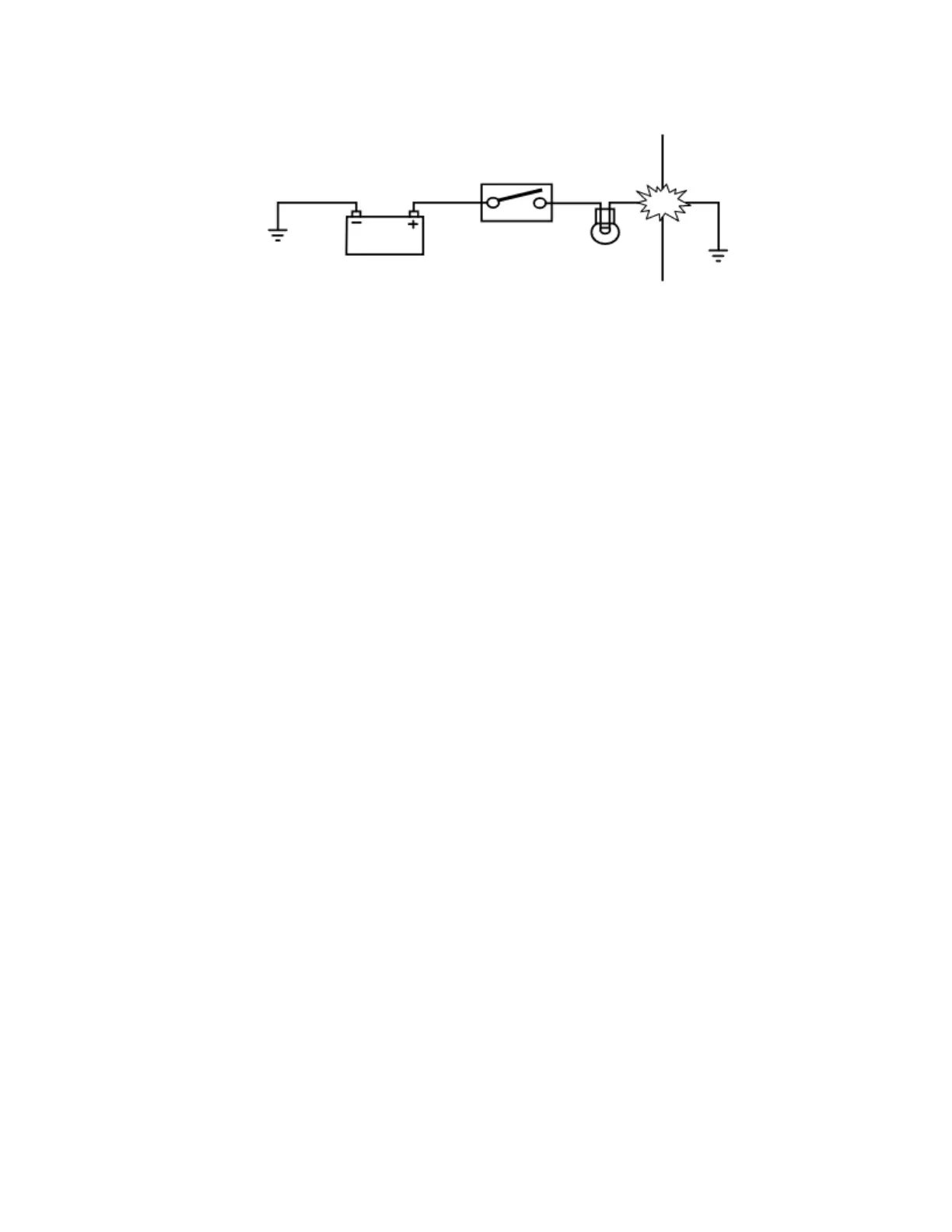
A 'short cut' in an electrical circuit - current bypasses the intended circuit, either to
ground or to another, different circuit. Often caused by failure of the cable insulation
due to chafing or trapping of the wire. There are two different types of short circuit -
short to ground and short to battery Voltage.
A short to ground means that the current is going to ground before it reaches the
component it is supposed to feed. These are often caused by chafing of the harness to
the frame or wires trapped between a bolted component, and will often blow the fuse
on that circuit.
A short to battery voltage (12 Volts) is caused by a live power supply wire contacting an
adjacent cable. Note that it is also possible for a 5 Volt sensor reference voltage to short
to an adjacent circuit, which can also cause electrical failures and DTCs (Diagnostic
Trouble Code) to be stored.
When tracing a wire that is suspect, carefully check the circuit diagram before starting.
Remember:
• a wire may diverge at a splice and go off to feed other circuits. If these circuits are
working, check for wiring faults from the splice onwards.
• the circuit diagram is not an accurate guide to the actual location of the parts
when fitted on the motorcycle. It is a schematic diagram of the circuits.
• particularly where engine management items are concerned, the circuit is only
completed by the ECM. If the ECM is not connected, the circuit may register as
open.







 To Next Page