8 Model 334 Operations Manual
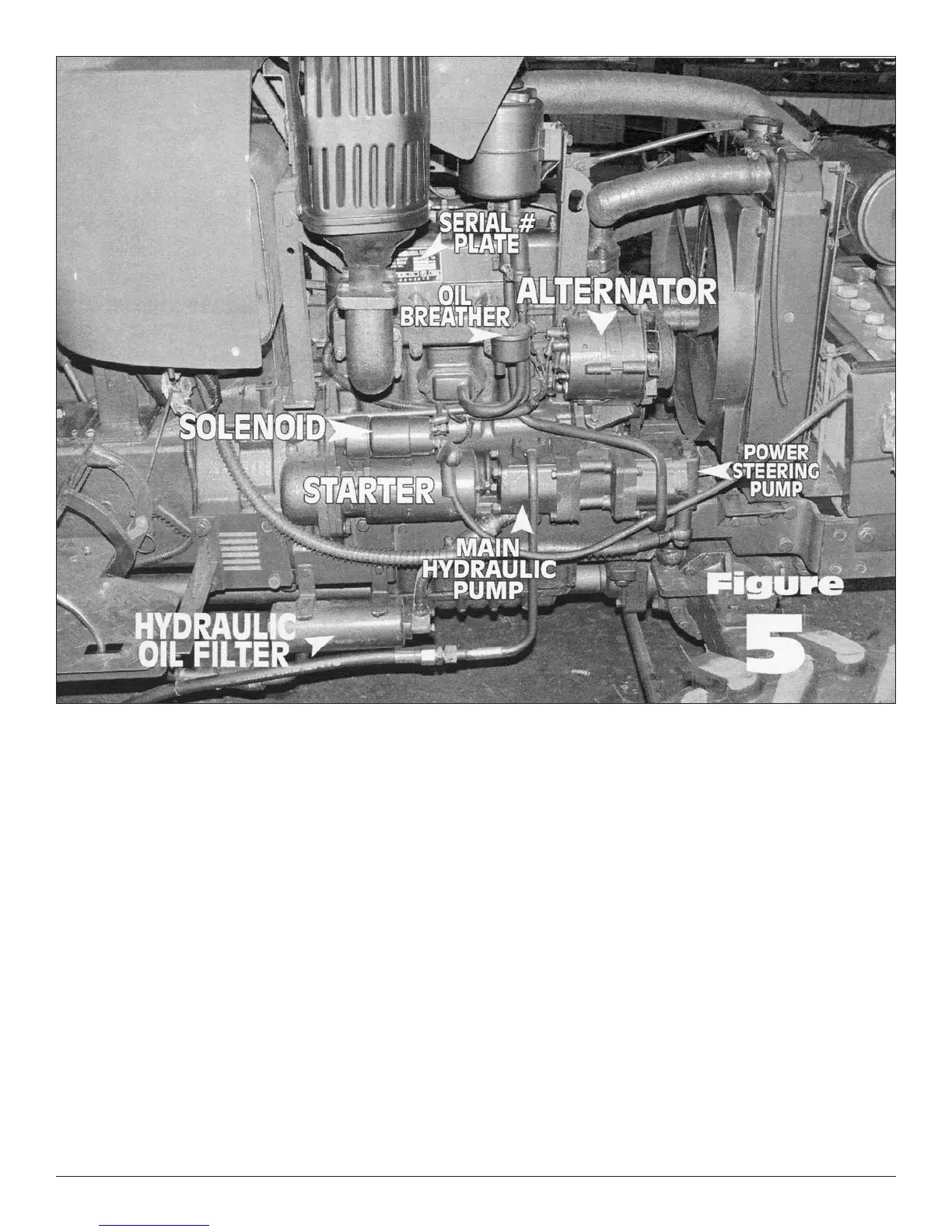
FIGURE 5:
Main Hydraulic pump—This is the pump that supplies the front
loader, three-point implements, and remotes. This pump han-
dles quite a lot of pressure from the oil and actually this is far
more than anything normally found in a domestic vehicle
(car, truck, etc.). You cannot disconnect any hoses connected
to the pump and related points on implements and the engine
without turning off the engine and knowing exactly which
leads to reconnect before restarting the engine. Disconnecting
the pump hoses while the engine is running will cause the
pump to break. Failing to reconnect the proper hoses when
disconnecting the front loader or other hydraulic implements
will also break the pump. See your dealer for proper instruc-
tion on disconnecting any hydraulic hoses since doing this
can be very dangerous.
Hydraulic Oil filter—this is a metal enclosed filter that is
extremely easy to clean. The interior filter is metal and should
be cleaned every 200–300 hours of use, except when new.
When new, it will be cleaned during the major service at 75
hours.
Figure 6—
12V Battery—is large, over-sized strong battery for good rea-
son. Diesel engines are compression run and turning one over
is much harder than a gas engine. This heavy-duty engine is
a powerful advantage in your tractor. Keep the battery termi-
nals clean with special cleaner such as that carried by Napa.
The size is 8" tall x 6.5" wide x 15.75" long. The key to long
battery life is to keep a charger on it when it’s new. Make sure
your system is showing a charge when running after start up.
Use the slowest charge selection only (trickle charge) and
also ensure you have an ‘automatic’ shutoff feature set to
‘on’. Batteries must be fully charged. They must also be fully
filled with battery acid to the marked levels. If the level drops
at any point during your usage to below the interior plates,
then chances are high your battery life is greatly decreased.
Air Cleaner needs checking every 75 hours unless you are in
very adverse conditions. It should be replaced when it
appears to have a build up of dust or dirt. Usually at 100
hours is a good time to change it under normal use.
Radiator should be about ½" below the base of the neck of
where the cap attaches and above the interior housing. The
front of the radiator is equipped with an additional protective
screen that is connected with four small bolts. The screen
should be checked daily when working in heavy grass or
dusty, dirty conditions. An excessive buildup of dirt and
debris will cause overheating. Make sure your radiator fluid



 To Next Page
 Loading...