-2- USE INSTRUCTIONS TFS 100
4/38
1.3 THERMOFORMING MOULD
Thermoforming is one of the oldest methods of plastic material processing. The
film, which is placed over the thermoforming mould held by grips, must be:
1. Preheated.
2. Moulded.
3. Cooled.
The previously heated material is softened and then pushed against a mould
surface, so adapting itself to the shape of the surface (this process is called forming or
moulding). When the hot film touches the cooled fitting, the film cools and its new
shape is stable. The thickness of the mould surface will always be below the starting
thickness of the film.
1.4 SEALING MOULD
Once the thermoforming finished and after having put the product to wrap in the
cavity, the product will enter the heat-sealing unit together with the upper film, where
both materials will be joined together.
The heat- sealing unit varies depending on the processes that will take place
inside it:
The simplest case is a welding mould where both materials are welded.
2) Then you can have a welding mould designed to make a previous
vacuum.
3) Finally, you may want the sealing mould to inject gas into the wrapping. In
this case, a previous vacuum will be made.
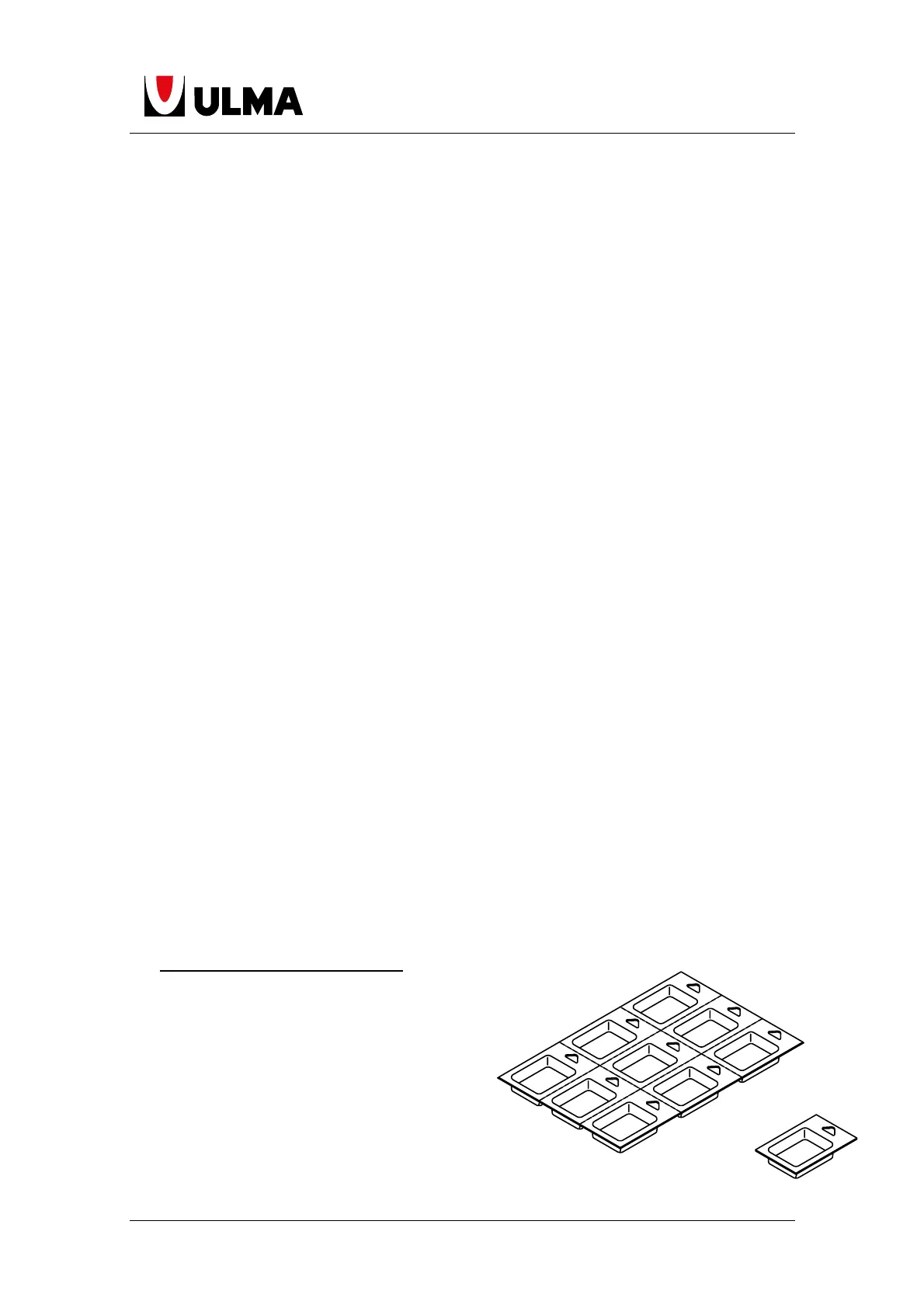
1.5 DIVISION PER TRAY UNIT
So far, we have trays with a product inside and closed by means of an upper
film. These trays reach the cutting area, where the units will be divided.
Depending on the shape and material of the tray, we can use one system or
another, depending on whether we have used a flexible or stiff film.
DIFFERENT TYPES OF CUTTING DEPENDING ON PACKING MATERIAL
FLEXIBLE FILM (MATERIALS)
-CROSS-CUTTING
Guillotine cutting.
-LONGITUDINAL CUTTING
Pneumatic edge cutting.


 To Next Page
 Loading...