The Metro Mini is a compact, portable speaker designed for on-the-go audio. Its primary function is to deliver "BIG SOUND" despite its small size, making it suitable for various environments where a larger speaker might be inconvenient. The device is branded under "up, upcycle," suggesting an emphasis on sustainability or a modern, minimalist design aesthetic.
Function Description:
The Metro Mini serves as a wireless audio output device, capable of connecting to other devices via Bluetooth. It allows users to play music, podcasts, or other audio content wirelessly from their smartphones, computers, or other compatible devices. The speaker is designed for ease of use, with simple controls for power, volume, and track navigation. Its portability is a key feature, enabling users to carry it easily and enjoy their audio anywhere. The inclusion of a TF (TransFlash) card slot indicates that the speaker can also play audio directly from a memory card, functioning as a standalone music player without needing a connected source device. A USB input is also present, which could potentially be used for playing audio from a USB drive, though its primary function is likely for charging or as a power bank output.
Important Technical Specifications:
- FCC ID: 2AMZYLILBUDDY
- Model #: XV-G2
- Speaker Power: 3W
- Battery Type: Lithium polymer 400 mAh
- Input: 5V 2A (Max)
- Wireless Output: 5V 1A
- USB Output: 5V = 2A
- TF Card Capability: Yes (specific capacity not detailed, but implies support for memory cards)
- Compliance: FCC and CE certified, indicating adherence to regulatory standards for electronic devices in the United States and European Economic Area, respectively.
Usage Features:
The Metro Mini offers a straightforward user experience with its intuitive control panel:
- ON/OFF Button: For powering the device on and off.
- M Button (Skip Back): Likely used to navigate to the previous track.
- - Button (Volume Down): Decreases the audio volume.
- + Button (Volume Up): Increases the audio volume.
- > Button (Skip Forward): Likely used to navigate to the next track.
- Bluetooth Connectivity: The primary method for connecting to external devices. Users simply turn on the speaker, open their device's Bluetooth settings, and select "Metro Mini" to pair.
- TF Slot: Allows for direct playback of audio files from a TransFlash (microSD) card, offering a standalone music experience.
- Micro USB Port: Used for charging the speaker's internal battery.
- USB Input: This port's specific function is not explicitly detailed for audio input, but it is listed as an "Input" and also as a "Wireless Output" with 5V 1A, and a "USB Output" with 5V 2A. This suggests it might function as a power bank to charge other devices, or potentially for playing audio from a USB drive. The "Wireless Output" might refer to the speaker's ability to act as a power source for wireless charging pads, though this is less common for speakers of this size and more likely refers to the USB output's capability to power other devices wirelessly connected to the speaker. Given the "USB Output: 5V = 2A" specification, it's highly probable that the USB port can be used to charge other devices, making the Metro Mini a multi-functional accessory.
- Portability: Emphasized by the "ALWAYS ON THE GO!" slogan, the speaker's compact design ensures it can be easily carried in bags or pockets, making it suitable for travel, outdoor activities, or simply moving from room to room.
Maintenance Features:
- Charging: The device is charged via a Micro USB port using the included USB cable. Users can connect the USB end of the charger to a computer or a wall charger (not explicitly stated as included, but implied by "charger (included)"). The Micro USB end connects to the speaker. The 400 mAh lithium polymer battery provides power for portable use.
- FCC Compliance: The device adheres to FCC regulations, meaning it has been tested to ensure it does not cause harmful interference and can accept interference. Users are advised that any unauthorized changes or modifications could void their authority to operate the equipment. In case of interference, troubleshooting steps include reorienting the receiving antenna, increasing separation between equipment and receiver, or connecting the equipment to a different circuit.
- RF Exposure: The device has been evaluated to meet general RF exposure requirements and can be used in portable exposure conditions without restriction, indicating it is safe for close proximity use.
- Cleaning: While not explicitly detailed, general electronic device maintenance practices would apply, such as keeping the device dry and clean, and avoiding extreme temperatures.
- Durability: The product is manufactured by HandStands, a company known for accessories, suggesting a reasonable level of build quality for a portable device.

 Need help?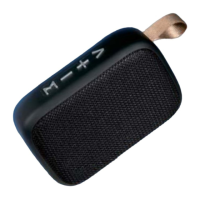

 To Next Page
 General