VTSSC72
V. 02 – 19/02/2019 5 ©Velleman nv
4. Overview
Refer to the illustrations on page 2 of this manual.
soldering tweezers connection
soldering iron connection
temperature unit (°C or °F)
5. Description
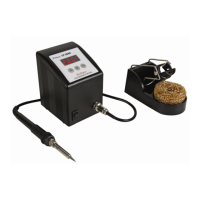
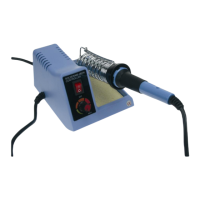
This soldering station is designed to meet the present and future needs of the
electronic production industry. The soldering station is engineered to meet the
stringent demands of hobbyists, maintenance personnel and production people
alike.
A high-quality sensor and heat transfer technology ensure precise temperature
regulation, which is essential for making consistent, reliable soldered connections.
The aluminium alloy housing has several advantages: strong, good heat sink and
very resistant to electro-magnetic interference.
The soldering station’s electronic circuitry enables the user to set soldering
temperatures between 200 and 480 °C (392 to 896 °F) without having to replace
the tip or the heating element. For tweezers, max. temperature is slightly lower:
430~450 °C (806~842 °F). The temperature is maintained to within ± 3 °C
(± 6 °F) of the normal operating temperature by a thermocouple sensor placed in
the head of the heating element. The 80W power results in a rapid heat-up and fast
recovery.
The revolutionary "zero voltage" switching design also protects voltage- and
current-sensitive components (CMOS devices, etc.) against the damaging current
and transient voltage spikes commonly produced by less efficient, mechanically
switched stations. The heating elements are galvanically isolated from the electrical
supply by an isolating transformer that prevents the system from using a max.
tension higher than a (safe) 32 V~.
6. Operating Temperature
The most common soldering alloys used in the electronics industry consist of 60 % tin
and 40 % lead. The operating temperature of this type of solder is detailed below and
can vary from manufacturer to manufacturer. However, to meet RoHS requirements,
these solders are no longer allowed and are replaced by lead-free solders that require a
working temperature, which is ± 30 °C (54 °F) higher.
Production Line Operation



 To Next Page
 Loading...