VEVOR Bone Saw Machine User Manual
This document provides a comprehensive guide for the VEVOR Bone Saw Machine, models HC-210, HC-250, and HC-280, designed for efficient and safe meat and bone processing.
Function Description
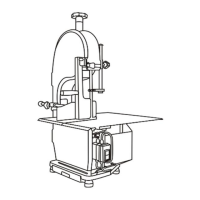
The VEVOR Bone Saw Machine is an advanced appliance engineered for sawing meat, bones, poultry, and fish. It is characterized by high efficiency, low energy consumption, and easy operation, making it ideal for various commercial settings. The machine's design incorporates stainless steel for its appearance and critical spare parts, with a special surface treatment applied to all food-contacting surfaces to comply with National Food Safety Standards. This ensures hygienic operation and durability in demanding environments such as hotels, restaurants, food processing factories, and slaughterhouses. The machine's core function is to provide precise and powerful cutting for various types of meat and bone, streamlining food preparation processes.
Important Technical Specifications
The VEVOR Bone Saw Machine series includes models HC-210, HC-250, and HC-280, each offering specific configurations for voltage, power, saw blade linear velocity, and cutting thickness.
Model HC-210:
- Voltage:
- AC110-120V/60Hz (USA plug type)
- AC220-240V/50Hz (EU plug type)
- AC220-240V/50Hz (AUS plug type)
- Power: 1100W for all voltage configurations
- Saw Blade Linear Velocity: 13m/s
- Cutting Thickness: 4-180mm
Model HC-250:
- Voltage:
- AC110-120V/60Hz (USA plug type)
- AC220-240V/50Hz (EU plug type)
- AC220-240V/50Hz (AUS plug type)
- Power: 1500W for all voltage configurations
- Saw Blade Linear Velocity: 15m/s
- Cutting Thickness: 4-180mm
Model HC-280:
- Voltage:
- AC110-120V/60Hz (USA plug type)
- AC220-240V/50Hz (EU plug type)
- Power: 1500W for all voltage configurations
- Saw Blade Linear Velocity: 15m/s
- Cutting Thickness: 4-180mm
All models are designed to handle a cutting thickness range of 4-180mm, providing versatility for different processing needs. The saw blade linear velocity varies between 13m/s and 15m/s depending on the model, indicating the speed and efficiency of the cutting operation. The power consumption ranges from 1100W to 1500W, reflecting the motor's capability to handle tough cutting tasks.
Usage Features
The VEVOR Bone Saw Machine is designed for straightforward operation, but adherence to safety guidelines is paramount.
Installation Steps:
The installation process involves several steps to assemble the machine and its stand:
- Step 1: Fix component A and four C components with eight screws and nuts. It is important not to tighten them too tightly at this stage.
- Step 2: Fix component B and four C components with eight screws and nuts, ensuring all screws are tightened securely.
- Step 3: Unscrew the four foot pads from the bone cutter.
- Step 4: Fix and tighten the rack and the bone cutter using the foot pads.
Method of Application:
- Guide Block Adjustment: Move the guide block to the correct height based on the size of the item to be cut, then secure it.
- Thickness Adjustment: Adjust the thickness adjustment plate to achieve the desired meat size.
- Operation Start: Press the green button on the power switch to start the machine. During operation, avoid pushing the item too forcefully, as this can cause the saw bar to fall off or become damaged.
- Operator Positioning: The operator should stand in front of the machine and push the product horizontally and straight for optimal cutting.
- Saw Blade Replacement: When replacing the saw blade, ensure the serrated edge is exposed outside the wheel.
- Saw Blade Tension: The side of the saw blade should press against the looseness of the saw blade with the force of rebound, ensuring proper tension.
- Saw Blade Adjustment: Turn the upper wheel by hand. To run the saw blade in, adjust the screw counterclockwise. To run the saw blade out or change the screw, adjust it clockwise.
Important Safeguards and Warnings:
- Counter Space: Ensure nothing else is on the counter during operation.
- Power Check: Verify no abnormal phenomena occur after switching on the power.
- Stability: The machine must be placed on a horizontal plane to prevent shaking and potential danger during use.
- Switching Off: Always turn off the switch when operation is suspended. Unplug the power cord after use and before cleaning or maintenance.
- Foreign Objects: Be cautious of iron nails or other metal items in the cut items, as they can cause damage to the saw blade.
- Pre-Cleaning/Assembly: Always unplug the machine before cleaning, assembling, or disassembling.
- Child Safety: Keep the product out of reach of children. Children aged 8 and above, and persons with reduced physical, sensory, or mental capabilities, can use the appliance under supervision and after receiving proper instruction. Children should not perform cleaning or user maintenance without supervision.
- Unplugging: Do not unplug the machine before it stops operating.
- Cord Damage: If the supply cord is damaged, it must be replaced by the manufacturer, service agent, or similarly qualified persons.
- Electric Shock Danger: Non-professional personnel are forbidden to repair the product. Qualified maintenance personnel should handle all repairs.
- Cleaning Restrictions: Do not immerse the main body in water for cleaning. It should only be scrubbed with a wet towel. The machine must be thoroughly cooled before cleaning.
- Voltage Consistency: Ensure the specified supply voltage matches the product's requirements (AC only).
- Power Cord Care: Avoid squeezing, bending, or friction of the power cord. Keep it away from heat sources and open flames. The power cord must not touch the blade.
- Cord Placement: Lay the power cord flat. Do not pull the power cord, which could cause the product to fall and sustain damage.
- Wet Conditions: Do not use the product on wet ground or touch the product or power cord plug with wet hands.
- Disassembly: Do not disassemble the product at will or insert foreign objects into it, which may cause damage.
- Accessories: Only use accessories provided by the seller or manufacturer. The manufacturer is not responsible for failures caused by unauthorized accessories.
- Surface Requirements: Do not use the product on uneven, damp, or non-heat-resistant surfaces.
- Fire Sources: Do not place the product directly on or near fire sources.
- Plug Connection: Ensure the plug is fully inserted into the socket to prevent overheating due to poor contact.
- Unattended Operation: Do not leave the product working unattended. If overheating occurs, stop immediately and unplug the power.
- Fire Extinguishing: If part of the product catches fire, do not use water directly. Cover the fire with a wet cloth.
- Plastic Bags: Store plastic bags away from children to prevent suffocation.
- Liquid Immersion: It is prohibited to put the main body or power cord into any liquid.
- Case Door: DO NOT open the case door; hands are strictly forbidden from touching the saw blade while the machine operates.
Maintenance Features
Proper maintenance is crucial for the longevity and performance of the VEVOR Bone Saw Machine.
Cleaning:
- The machine must be cleaned immediately after each use. Meat residue and foam attached to the body can become unhygienic over time.
- Failure to clean regularly can lead to increased noise during subsequent use and easier damage to the saw blade.
- As mentioned in the safety warnings, the main body should not be immersed in water but scrubbed with a wet towel after the machine has thoroughly cooled down.
Diagnosis and Repair of Faults:
1. Chainsaw often breaks:
- Reasons:
- Poor quality band saw.
- Band saw is too tight.
- Overpushing or improper use (not direct push).
- Repair:
- Use a good quality band saw.
- Adjust the band saw properly using the handle to ensure it is not too tight. The side of the saw blade should press against the looseness of the saw blade with rebound force.
2. Departure with band saw:
- Reasons:
- Band saw is too loose.
- Something attached to the pulley.
- Improper use.
- Repair:
- Adjust the handle of the band saw properly to prevent it from loosening too easily.
- Remove any foreign objects attached to the pulley.
- Ensure correct usage of the machine.
3. Other malfunctions:
- For any other malfunctions, consult the agent. Do not attempt to repair the machine yourself.
- During the warranty period, the company is not responsible for motor losses caused by improper operation, such as water intake or lack of phase.
Regular cleaning and adherence to operational guidelines will ensure the machine remains in optimal working condition and prolong its lifespan.

 Need help?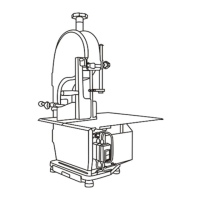

 To Next Page
 General