be knifed into the exit tubes for water proofing. Leave it overnight to cure before running the winch
again.
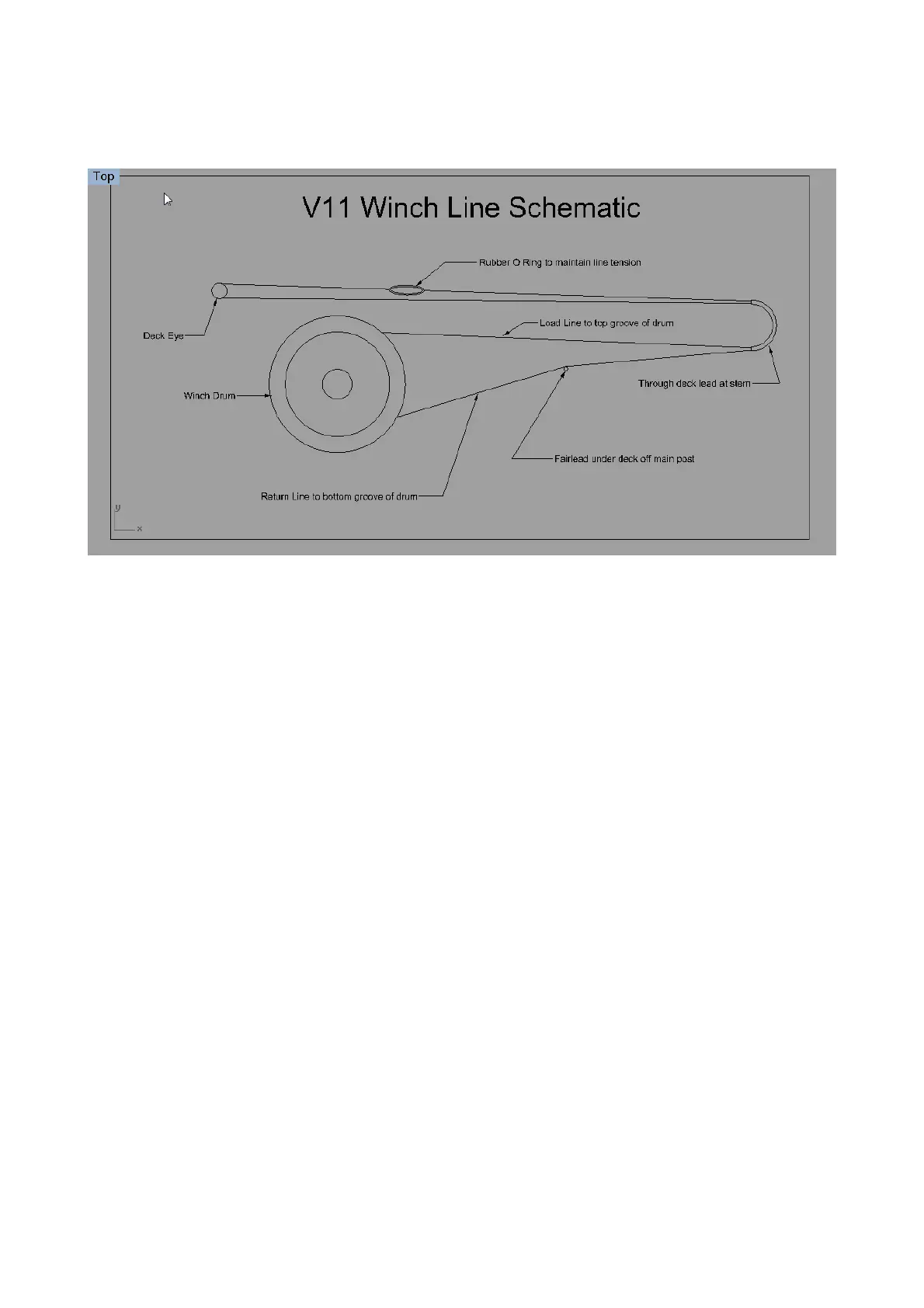
Sheets- The threading of the main and jib sheet may be seen in the pictures. The mainsheet will
start at the winch line and thread through the same deck eye as the winch line and then through
the main post. The boom band should be aft of the post.
The jib sheet starts at the winch line and threads through the outboard deck hoop and then
through the centreline hoop on the foredeck. Forward one for A Rig, middle for B and aft for C. I
like to use the next closest hoop as a leader. Bring your winch line in to your “max. in”position and
establish your sheet lengths. Make the lines as long as you can get away with, since dyneema
line shrinks over time.
Battery- You should velcro the battery onto the stand below the main hatch. I like to use a 2 cell
7.4 volt Lipo around 1800mha.
Receiver- Your receiver can velcro under the deck just aft and starboard of the hatch.
Hatch Application- When attaching the plastic hatch for sailing, place it in position and press the
rim down with one finger and slide around the hatch until the entire hatch sits flush on the deck.
Check that it is properly down. Be sure to preserve the fibreglass rim of the deck hatch, since
scratching with a screw driver or similar will damage its water tight integrity.
Your mainsheet post is adjustable in height. You can remove it and tighten the nut against the O
ring to increase the friction.
The mast ram adjusts by turning the white plastic wheel.
The forward most eye on the foredeck is for your A rig jib swivel attachment. The 2nd back is for B
rig and 3rd for C rig.
Floatation
Your hull corrector weight which incidentally will be done last of all once you know the finished
weight of the boat, should be split into 2 pieces. They should be placed either side of the centre
case as far forward as they can go against the keel frame. You will need to remove the winch to
access this. With corrector weight attached in the hull, the 4kg yacht ready to sail should float with
the transom corner kissing the water surface. The waterline forward should be about 40mm back
from the bumper.
This should complete the basic set up of the hull.


 To Next Page
 Loading...