5-26
SET-UP AND SAFE OPERATING PROCEDURES
0056-0114
5.02 REGULATORS
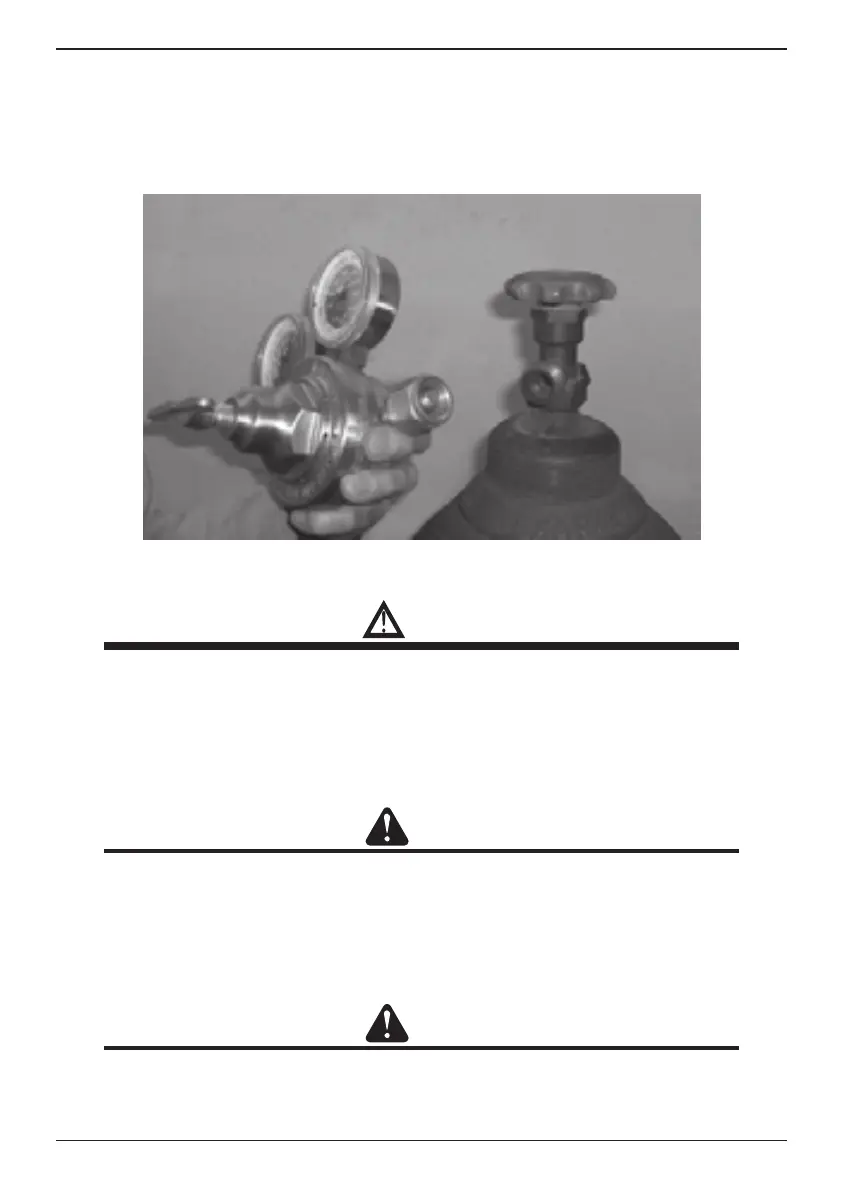
Carefully inspect the cylinder valve, regulator threads and mating surfaces for traces of oil, 1.
grease, or dirt. DO NOT wipe the mating surfaces with your finger. Make sure the regulator
has the correct pressure rating for the cylinder being used (see Figure 9).
MATING SURFACESMATING SURFACES
INLET FILTER
INLET FILTER
dwg-00383
Figure 9: Inspecting the Cylinder and Cylinder Valve
WARNING
DO NOT use the regulator if oil, grease, or damaged parts are detected on the regulator
or the cylinder valve or if the inlet filter is missing or dirty (see Figure 9). Inform your
gas supplier of this condition immediately. Have a qualified repair technician clean or
repair the regulator.
2. Momentarily open and close the cylinder valve (commonly referred to as “cracking”). This
dislodges any loose contaminants that may be present.
CAUTION
Open the cylinder valve only slightly. If the valve is opened too much the cylinder could tip
over. When “cracking” the cylinder valve, DO NOT stand, nor have anyone stand directly
in front of the valve opening. Stand behind or to one side. Crack the cylinder valve in a
well ventilated area only. If an acetylene cylinder sprays a mist when it is cracked, let
it set for 30 minutes. Then try to crack the cylinder valve again. If the problem persists,
contact your gas supplier.
CAUTION
Use the regulator only for the gas and pressure for which it is designed. NEVER alter a
regulator for use with any other gas.
Setting Up Equipment for Welding


 To Next Page
 Loading...