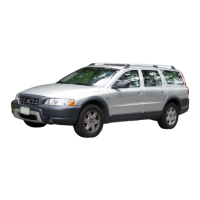
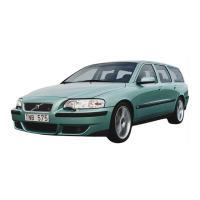
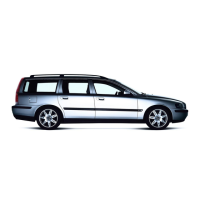
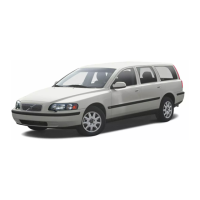
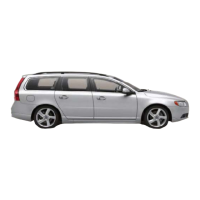
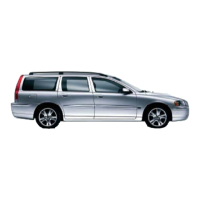
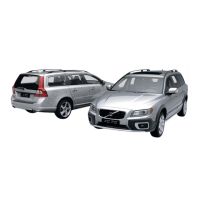
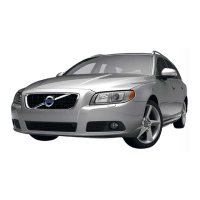
This manual describes the 2006 Volvo V70, focusing on its operation, care, and safety features.
The manual serves as a comprehensive guide for Volvo V70 owners, covering various aspects from basic operation to detailed safety systems and maintenance. It emphasizes the importance of familiarizing oneself with the vehicle's equipment, operating instructions, and maintenance recommendations to ensure satisfaction and safe driving. Volvo strongly recommends wearing seat belts at all times and advises against operating the vehicle under the influence of alcohol, medication, or any other impairment.
The Volvo V70 is designed to meet all applicable safety and emission standards, as indicated by certification labels on the driver's door opening and the left wheel housing in the engine compartment.
For further information, customers can contact their retailer or:
- In the USA:
- Volvo Cars of North America
- Customer Care Center
- P.O. Box 914
- Rockleigh, New Jersey 07647-0914
- Phone: 800-458-1552
- In Canada:
- Volvo Cars of Canada Ltd.
- National Customer Service
- 175 Gordon Baker Road
- North York, Ontario M2H 2N7
- Phone: 800-663-8255
- Website: http://www.volvocars.com
Key Features and Usage:
- Shiftlock: When the car is parked, the gear selector is locked in the (P)ark position. To release it, turn the ignition key to position II (or start the engine), depress the brake pedal, press the button on the front of the gear selector knob, and move the selector from (P)ark.
- Keylock: The gear selector must be in the (P)ark position before the ignition key can be removed.
- Anti-lock Brake System (ABS): The ABS performs a self-diagnostic test when the vehicle first reaches approximately 12 mph (20 km/h). During this test, the brake pedal may pulsate, and a sound might be audible from the ABS control module, which is normal.
- Fuel Filler Door: Press the button on the light switch panel (page 37) when the car is at a standstill to unlock the fuel filler door. It remains unlocked until the car starts moving forward, at which point an audible click indicates it has relocked.
- Fuel Filler Cap: After refueling, close the cap by turning it clockwise until it clicks into place. Failure to close it tightly or refueling with the engine running may trigger the Malfunction Indicator Lamp ("Check Engine" light).
Important Notes for First-Time Operation:
Before operating the car for the first time, users should familiarize themselves with:
- New-engine oil consumption information (page 159).
- Information in chapters one, two, and four of this manual.
The rest of the manual contains useful information and should be read after initial vehicle operation.
Export Warning:
Do not export the Volvo to another country without investigating that country's applicable safety and exhaust emission requirements, as compliance may be difficult or impossible. Modifications to the emission control system could render the vehicle non-certifiable for legal operation in the U.S., Canada, and other countries.
Disclaimer:
All information, illustrations, and specifications are based on the latest product information available at the time of publication. Vehicle equipment may vary due to special legal requirements or optional equipment not available in all markets. Volvo reserves the right to make model changes, alter specifications, or change design without notice.
CALIFORNIA Proposition 65 Warning:
Engine exhaust, some of its constituents, and certain vehicle components contain or emit chemicals known to the state of California to cause cancer, birth defects, or other reproductive harm. Additionally, certain fluids and component wear products contain or emit chemicals known to cause cancer, birth defects, or other reproductive harm.
Volvo and the Environment:
Volvo is committed to environmental responsibility, adopting a holistic view that considers a product's entire life cycle, including design, production, use, and recycling.
- Production: Volvo has phased out or reduced several harmful chemicals (e.g., freons, lead chromates, naphtanates, asbestos, mercury, cadmium) and reduced chemical use in plants by 50% since 1991.
- In Use: Volvo was the first to introduce the three-way catalytic converter with a Lambda sond (oxygen sensor) in 1976, which reduces harmful emissions (CO, HC, NOx) by approximately 95%. Volvo also offers CFC-free retrofit kits for air conditioning systems for models as far back as M/Y 1975 240.
- Recycling: Metal content is about 75% of a car's total weight, making Volvo cars highly recyclable. Dismantling manuals indicate the weight and material of individual components, and plastic parts weighing over 1.7 oz (50 grams) are marked with international symbols for sorting.
- PremAir®: The radiator surface has a special PremAir® coating that acts as a catalytic converter, converting most ground-level ozone into oxygen. PremAir is a registered trademark of Engelhard Corporation.
Tips to Reduce Environmental Impact:
- Maintain proper tire air pressure.
- Follow the recommended maintenance schedule.
- Drive at a constant speed.
- Have the vehicle inspected by an authorized Volvo retailer if the check engine lamp illuminates or stays on.
- Properly dispose of vehicle-related waste (e.g., used motor oil, batteries, brake pads).
- Use Volvo's environmentally adapted car care products.
Safety (Chapter 1):
Volvo's commitment to safety dates back to 1927. The company pioneered three-point seat belts, safety cages, and energy-absorbing impact zones. Volvo continuously seeks to improve and refine safety features.
Occupant Safety:
Safe driving depends on vision, concentration, and quick decision-making under stress.
- Never drink and drive.
- Consult a physician about medication effects on driving.
- Take driver-retraining courses.
- Have eyes checked regularly.
- Keep windshield and headlights clean; replace wiper blades when they streak.
- Consider traffic, road, and weather conditions, especially stopping distance.
Reporting Safety Defects (U.S.):
If you believe your vehicle has a defect that could cause a crash, injury, or death, inform the National Highway Traffic Safety Administration (NHTSA) and Volvo Cars of North America. NHTSA may open an investigation and order a recall if a safety defect is found in a group of vehicles.
- NHTSA Contact:
- Toll-free: 1-888-DASH-2-DOT (1-888-327-4236) or 1-800-424-9393
- Washington D.C. area: 1-202-366-0123
- Website: http://www.nhtsa.dot.gov
Volvo strongly recommends completing service campaigns, safety, or emission recalls promptly.
Seat Belts (pg. 3):
Volvo, the inventor of the three-point seat belt, urges all occupants to wear seat belts and ensure children are properly restrained using appropriate infant, car, or booster seats. Volvo recommends no child sit in the front seat. Most states and provinces mandate seat belt use.
- Seat Belt Tensioners: Reduce slack in belts and are triggered when airbags deploy. Front seat belts also limit peak forces during a collision.
- Buckling: Pull the belt and insert the latch plate into the receptacle until a distinct click is heard.
- Retractor Function: Normally "unlocked" for free movement, but locks if the belt is pulled rapidly, during braking/acceleration, if the vehicle leans excessively, or when driving in turns.
- Proper Wearing:
- Belt should not be twisted.
- Lap section low on hips (not pressing abdomen).
- Shoulder belt rolled up into retractor and both belts taut.
- Unbuckling: Press the red section on the receptacle. Ensure the belt retracts fully; guide it if necessary.
- Seat Belt Reminder: Audible signal, indicator light above rearview mirror, and instrument panel symbol alert driver and front passenger if belts are unfastened.
- Maintenance: Periodically check belts for good condition. Clean with water and mild detergent. Test mechanism by attaching and pulling rapidly on the strap.
Seat Belt Warnings (pg. 4):
- Never use a seat belt for more than one occupant.
- Never wear the shoulder portion under the arm or behind the back; this can cause injury.
- Replace seat belts after any collision, even if they appear undamaged.
- Never repair belts yourself; have an authorized Volvo service technician do it.
- Devices that induce slack in the shoulder belt compromise protection.
- Seat back should not be tilted too far back; shoulder belt must be taut.
- Do not use child safety seats or booster cushions/backrests in the front passenger's seat. Children who have outgrown these devices should sit in the rear seat with the seat belt properly fastened.
Seat Belt Use During Pregnancy (pg. 8):
Seat belts should always be worn during pregnancy, correctly positioned:
- Diagonal section over the shoulder, between breasts, and to the side of the belly.
- Lap section flat over thighs and as low as possible under the belly, never riding upward.
- Remove all slack, ensure a close fit without twists.
- Pregnant drivers should adjust seats and steering wheel for easy control, maintaining maximum distance between belly and steering wheel.
Child Seats:
Refer to page 21 for information on securing child seats with seat belts.
Supplemental Restraint System (SRS) (pg. 5):
The SRS enhances the three-point seat belts and includes:
- Seat belt tensioners
- Front airbags
- Side impact airbags
- Occupant weight sensor
- Inflatable curtains
All systems are monitored by the SRS control module.
- SRS Warning Light: Illuminates in the instrument panel when the ignition key is turned to position I, II, or III, and normally extinguishes after ~7 seconds if no faults are detected. A text message may also be displayed.
- SRS Warning: If the SRS warning light stays on after starting the engine or illuminates while driving, have the vehicle inspected by a trained and qualified Volvo service technician immediately. Never attempt to repair SRS components yourself, as interference can cause malfunction and serious injury.
Flood Damage Warning (pg. 9):
If the vehicle has been subjected to flood conditions (e.g., soaked carpeting/standing water) or is flood-damaged, do not attempt to start the vehicle or put the key in the ignition before disconnecting the battery. This may cause airbag deployment and personal injury. Have the vehicle towed to a trained and qualified Volvo service technician for repairs.
Automatic Transmission Override (for towing):
To override the shiftlock system and move the gear selector to neutral before towing:
- Switch off ignition for at least 10 minutes and disconnect the battery.
- Wait at least one minute.
- Insert key, turn to position II.
- Press firmly on the brake pedal.
- Move gear selector from (P)ark to (N)eutral.
Front Airbags (pg. 6):
Front airbags supplement three-point seat belts; seat belts must be worn at all times for intended protection.
- System Components: Gas generators (1) surrounded by airbags (2) and a deceleration sensor (3) activate gas generators, inflating airbags with nitrogen gas.
- Deployment Process: As occupants compress airbags, gas is expelled at a controlled rate for cushioning. Seat belt tensioners also deploy to minimize slack. The entire inflation and deflation process takes approximately one-fifth of a second.
- Location:
- Driver's side: Steering wheel hub, embossed with "SRS AIRBAG."
- Passenger's side: Behind a panel above the glove compartment, embossed with "SRS AIRBAG."
- Decals on both sun visors and on the front and far right side of the dash also indicate airbag locations.
Front Airbag Warnings (pg. 10):
- Airbags are SUPPLEMENTS to, not replacements for, three-point seat belts. Wear seat belts at all times for maximum protection.
- Never drive with hands on the steering wheel pad/airbag housing.
- Front airbags deploy very quickly and with considerable force. Deployment can cause abrasions, bruises, swellings, or other injuries.
- Ensure accessory equipment does not damage the front airbag system to prevent malfunction.
Front Airbag Deployment (pg. 10):
- Deployment Conditions: Designed to deploy during certain frontal or front-angular collisions, impacts, or decelerations, depending on crash severity, angle, speed, and object impacted. May also deploy in non-frontal collisions with rapid deceleration.
- SRS Sensors: React to both impact and inertial forces, determining if collision intensity is sufficient for seat belt tensioners and/or airbags to deploy.
- Non-Deployment Conditions: Not all frontal collisions activate front airbags. May not deploy in collisions with nonrigid objects (e.g., snow drift, bush) or rigid, fixed objects at low speed.
- Do not normally deploy in side impact, rear collision, or rollover situations.
- Damage to bodywork does not reliably indicate if airbags should have deployed.
Deployment Characteristics (NOTE):
- Deployment occurs only once.
- Noise and a small amount of powder (appearing as smoke) are normal; it does not indicate fire.
- Dual-Threshold, Dual-Stage Airbags: Use special sensors to control deployment based on seat belt use and collision severity.
- Less severe but clear injury risk: Triggered at 70-80% of total capacity.
- More severe impact: Triggered at full capacity.
- Collisions can occur where only one airbag deploys.
SRS System Questions:
Contact a trained and qualified Volvo service technician or Volvo Customer Support.
- In the USA:
- Volvo Cars of North America
- Customer Care Center
- P.O. Box 914

 Need help?
 General

 To Next Page