Need help?
Do you have a question about the Warm Audio WA-87 Black and is the answer not in the manual?
Instructions to register the product for warranty support.
Information on obtaining repairs outside the warranty period.
Overview of the WA-87 BLACK's development and design philosophy.
Details on the microphone's key features and controls.
Visual representation of the microphone's frequency response across different polar patterns.
General advice on the WA-87 BLACK, its applications, and best practices.
Explains common applications for the cardioid polar pattern, especially for vocals.
Details applications for the figure-of-eight polar pattern, like duets or stereo recording.
Covers uses for the omnidirectional pattern, often for room or ambient recording.
Guidance on positioning the microphone for optimal sound capture.
Emphasizes the importance of room acoustics for recording quality.
Discusses factors affecting signal quality, including cables and phantom power.
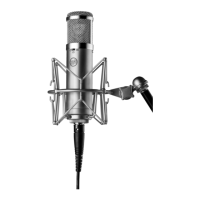
The Warm Audio WA-87 BLACK is a classic large-diaphragm condenser microphone designed for recording artists seeking a vintage sound at an affordable price. It aims to capture the essence of analog recording from a bygone era, offering a rich sound, versatile functionality, and a distinct vibe. The WA-87 BLACK is built with high-quality, hand-assembled components, including tantalum, polystyrene, and WIMA film capacitors, Fairchild FETs, and a custom K87 capsule reproduction. It also features a custom output transformer by CineMag USA and an all-discrete signal path using top-quality through-hole components. This commitment to quality ensures that the WA-87 BLACK delivers an unprecedented value and is expected to provide a lifetime of quality recordings, making it a valuable addition to any mic locker.
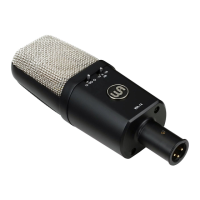
The WA-87 BLACK is primarily a studio condenser microphone, meaning it requires +48V phantom power and a balanced XLR to XLR microphone cable, connecting to a preamp with a 3-pin XLR microphone input. It is not designed for live stage use due to its relative size and sensitivity compared to most dynamic live performance microphones. While its capsule is electrically isolated, it lacks the internal shock mounting often found in live performance microphones. The microphone is a side-address type, with its capsule mounted upright and projecting sound from either side. The front of the microphone body, marked with the Warm Audio (WA) badge, is considered the 'front side' of the capsule, with the opposite side being the 'back side'.
The WA-87 BLACK offers three selectable polar patterns: omnidirectional, cardioid, and figure-of-eight, providing flexibility for various recording scenarios. The polar pattern is selected via a switch on the microphone body. The XLR output is a balanced, gold-contact 3-pin connector, compatible with standard XLR to XLR shielded microphone cables.
For enhanced control over the sound, the WA-87 BLACK includes a high-pass filter switch. This switch engages an 80Hz high-pass filter, which helps reduce rumble and other subsonic information. Flipping the switch to the left activates the filter, while flipping it to the right provides a flat response. Additionally, a -10dB pad switch is available to attenuate the signal within the active circuitry. Engaging the pad by flipping the switch to the right is useful for recording loud sources, while flipping it to the left maintains a normal output level.
The classic '87-style microphone, like the WA-87 BLACK, is renowned for its versatility, particularly as a lead and backing vocal microphone. It has been widely used across genres such as rock, country, hip-hop, gospel, blues, and metal, as well as for voiceover and spoken word applications. For drum overhead recording, two WA-87 BLACK microphones can be used in an X-Y configuration or as a spaced pair, a classic choice for capturing a full drum sound. Similarly, a pair of WA-87 BLACKs in an X-Y configuration can create a rich acoustic guitar sound. A single WA-87 BLACK is also an excellent choice for miking guitar amplifiers, either alone or in combination with dynamic or ribbon microphones.
In cardioid mode, close miking is a common practice, offering greater isolation and control of individual instruments in a mix, and capturing fewer reflections and unwanted room information. However, it can lead to an exaggerated proximity effect and a lack of perceived space.
Figure-of-eight pattern recording is often employed for advanced stereo techniques like the Blumlein Pair array, using two identical microphones. It also has practical applications for single-microphone setups, such as recording a duet or group vocal. Two or even four vocalists can position themselves on either side of the microphone, each receiving the full attention of one side of the mic capsule. Another variant involves one person playing an instrument, like an acoustic guitar, into one side, while a partner sings into the other.
Omnidirectional pattern is frequently used for room mic recording, whether for a drum kit or as an ambience mic placed further from a guitar or bass cabinet. It's also associated with 'live' recording techniques and classical recording. An omnidirectional mic can also be combined with a figure-of-eight microphone to create a Mid/Side stereo recording array. Omnidirectional patterns generally offer the most linear frequency response and are least affected by the proximity effect, as most condenser microphone capsules are inherently designed as omnidirectional devices.
Microphone placement and spacing are crucial aspects of recording, involving a balance between the direct sound source and reflections/acoustic space. Closer placement captures less ambience, which can be desirable if reverb is to be added digitally later. For natural acoustics, a greater distance is preferred. It's important to note that a microphone's perception of sound can differ significantly from human hearing. Experimenting with placement, starting around 12 inches from the source and fine-tuning slowly, is recommended to achieve the desired sound.
Room acoustics significantly impact recording quality. Even the best microphone can sound poor if unwanted reflections or external noises are picked up. While a walk-in vocal booth isn't always necessary, a good quality vocal shield can make a substantial difference. For recording combo amps and other instruments, using gobos or other acoustic isolation products can be highly beneficial. Proper isolation and the right amount of room ambience are critical, as these cannot be effectively corrected later in the process.
Signal integrity is paramount in professional audio. A quality microphone cable is important, as thin, poor-quality, or worn XLR cables can affect sound quality. Over time, cable shields can degrade, allowing RFI and EMI to leak, or signal wires can make intermittent contact. Corroded XLR pins or broken solder joints can also cause issues. Regular cable testing and maintenance, including using contact cleaner on XLR pins, are good practices. Using a cable length appropriate for the job (e.g., 20 ft instead of 35 ft if sufficient) is also advisable to prevent signal attenuation or contamination.
Phantom power quality is also a consideration. While most preamps, mixers, and interfaces adhere to the +48V/10mA industry standard, some legacy devices may provide lower voltage. It's recommended to check your preamp's literature to ensure proper phantom power delivery, as '87-style microphones are known to demand robust phantom power. For long cable runs (over 200 ft or multiple cables), investing in a quality external phantom power supply closer to the microphone can be beneficial. To protect the WA-87 BLACK, always connect all microphone cables before engaging phantom power and allow about two minutes for the microphone to fully optimize for the highest quality sound. Similarly, always disengage phantom power and allow the microphone to discharge for several moments before disconnecting it from its XLR cable and preamp.
When recording vocals, using a high-quality pop filter is essential. This protects the microphone and prevents plosives (clipping from sudden air pressure on the capsule) in recordings. Pop filters can also be used creatively in other situations involving sudden air pressure changes, such as with large loudspeakers, kick drum sound holes, or hi-hat cymbals. Higher quality pop filters have less audible impact on the sound, while less expensive or foam windscreen types can sometimes muffle high frequencies.
The WA-87 BLACK is designed for longevity and enjoyment with proper care. Warm Audio believes that a properly working unit being put to great use is the best advertisement.
 General
| Type | Condenser |
|---|---|
| Frequency Response | 20 Hz - 20 kHz |
| Power Requirements | 48V Phantom Power |
| Pad | -10 dB |
| Low Cut Filter | 80 Hz |
| Connector | 3-Pin XLR |
| Polar Patterns | Cardioid, Omnidirectional, Figure-8 |
| Impedance | 200 Ohms |
| Equivalent Noise Level | 12dB (A-weighted) |
| Diaphragm | Gold Sputtered Mylar |
| Weight | 1.5 lbs |
| Diaphragm Size | 1-inch |

 To Next Page