3
minutes. Get immediate medical attention.
IMPORTANT SAFETY INSTRUCTIONS -
SAVE THESE INSTRUCTIONS
TO REDUCE THE RISK OF FIRE OR
ELECTRIC SHOCK.
CAREFULLY FOLLOW THESE
INSTRUCTIONS
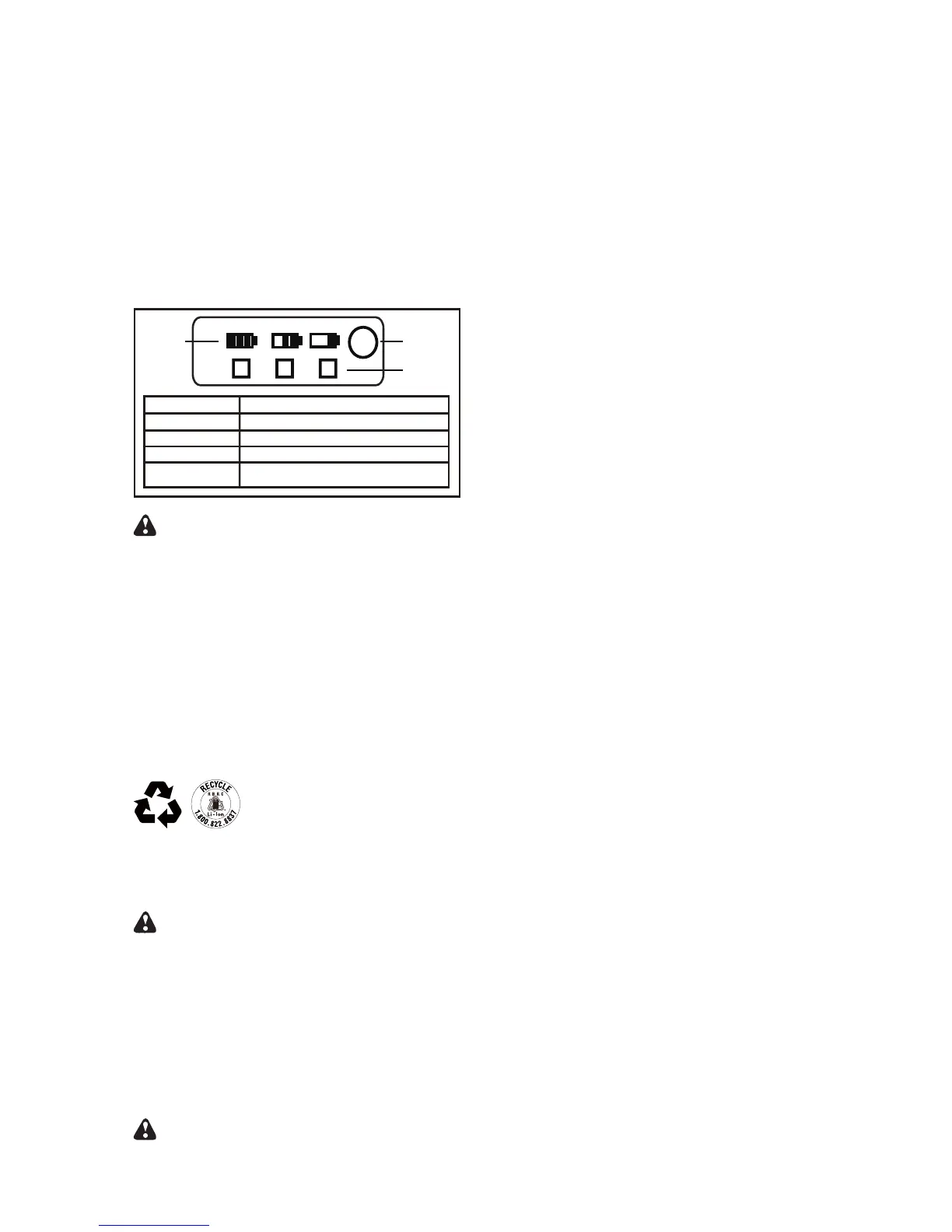
CHECKING BATTERY CAPACITY
Press the Battery Capacity Indicator (BCI)
button. The lights will illuminate according to
the batteries current power level. See chart
below:
BCI
BUTTON
LIGH
T
METRE
BATTERY
METRE
Lights Capacity
The battery is at 80-100% capacity
The battery is at 50-80% capacity
The battery is at 20-50% capacity
3 Green Lights
2 Green Lights
1 Green Light
Lights go out
The battery is under 10% capacity and
requires charging immediately
CAUTION:
Do not use strong solvents or
detergents on the plastic housing or plastic
components. Certain household cleaners may
cause damage and may also cause a shock
hazard.
CLEANING
1. Wipe the outside of the charger with a dry,
soft cloth. Do not hose down or wash with
water.
ENVIRONMENTALLY SAFE BATTERY
DISPOSAL
The following toxic and corrosive materials
are in the batteries used in this tool battery
pack: Li-ion, a toxic material.
WARNING:
All toxic materials must be
disposed of in a specied manner to prevent
contamination of the environment. Before
disposing of damaged or worn out Lithium-
ion battery packs, contact your local waste
disposal agency, or the Environmental
Protection Agency for information and specic
instructions. Take the batteries to a local
recycling and/or disposal center, certied for
Li-ion disposal.
WARNING:
If the battery pack cracks or
breaks, with or without leaks, do not recharge
it and do not use. Dispose of it and replace
with a new battery pack. DO NOT ATTEMPT
TO REPAIR IT! To avoid injury and risk of
re, explosion, or electric shock, and to avoid
damage to the environment:
• Cover the battery's terminals with heavy-
duty adhesive tape.
• DO NOT attempt to remove or destroy any
of the battery pack components.
• DO NOT attempt to open the battery pack.
• If a leak develops, the released electrolytes
are corrosive and toxic. DO NOT get the
solution in the eyes or on skin, and do not
swallow it.
• DO NOT place these batteries in your
regular household trash.
• DO NOT incinerate.
• DO NOT place them where they will
become part of any waste landll or
municipal solid waste stream.
• Take them to a certied recycling or
disposal center.


 To Next Page