Introduction
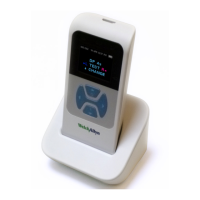
This directions for use describes the capabilities and operation of the Welch Allyn OAE
Screener.
The purpose of the screener is to provide rapid screening of Distortion Product
Otoacoustic Emissions (DPOAEs) or Transient Evoked Otoacoustic Emissions (TEOAEs)
at several frequencies.
Intended use
The Welch Allyn OAE Hearing Screener is a test instrument that measures otoacoustic
emissions in infants, children, and adults.
Indications for use
The Welch Allyn OAE Hearing Screener is indicated for testing of cochlear function in
infants, children, and adults by measuring otoacoustic emissions (OAEs). The OAEs are
generated by a series of clicks that are directed into the ear canal.
Otoacoustic emissions are low level audio-frequency sounds that are produced by the
cochlea as part of the normal-hearing process. Available evidence suggests that
otoacoustic emissions are generated by the cochlea’s outer hair cells and that the
presence of OAEs is an indication that the outer hair cells are viable. Clinical evidence
indicates that these emissions normally occur with normal hearing, or at most, mild
hearing loss (usually 30-40 dB HL). The majority of hearing-impaired individuals will be
identified by a simple OAE test.
Note Some product features described in this publication might not be available
in your country.
For information about any Welch Allyn product, contact Welch Allyn Technical Support:
www.welchallyn.com/about/company/locations.htm.
7


 To Next Page
 Loading...