6
49C154 Westward Operating Instructions and Parts Manual
Portable/wheel Pressure Washer,1500PSI
3. Vary the fan pattern spray angle and the distance
to the cleaning surface until optimum cleaning
efficiency is achieved without damaging the surface.
Turbo nozzle (not included with all models)
A turbo nozzle, sometimes referred to as a rotary
nozzle, is a very effective tool that can significantly
reduce cleaning time. The turbo nozzle combines the
power of a narrow high impact stream and the
efficiency of a 25 degree fan pattern. This swirls the
narrow high impact stream into a cone shape that
cleans a larger area.
Since a turbo nozzle uses a narrow
high impact stream, only use it in applications where
the cleaning surface cannot be damaged by narrow
high impact spray. Additionally, the turbo nozzle is not
adjustable and cannot be used to apply detergent.
DETERGENTS
The use of detergents can dramatically reduce
cleaning time and assist in the removal of difficult
stains. Some detergents have been customized for
pressure washer use on specific cleaning tasks.
These detergents are approximately as thick as
water. The use of thicker detergents, such as dish
soap, will clog the chemical injection system and
prevent the application of the detergent.
The cleaning power of detergents comes from
applying them to a surface and, giving the chemicals
time to break down the dirt and grime. Detergents
work best when applied at low pressure. The
combination of chemical action and high pressure
rinsing is very effective. On vertical surfaces, apply
the detergent starting at the bottom and work your
way upward. This will prevent the detergent from
sliding down and causing streaks. High pressure
rinsing should also progress from the bottom to top.
On particularly tough stains, it may be necessary to
use a brush in combination with detergents and high
pressure rinsing.
Operation
The following cleaning procedure will help you to
organize your cleaning task, and ensure that you
achieve the most beneficial results in the shortest
amount of time. Remember to use the
spraying/cleaning techniques previously listed.
1. Surface preparation
Before starting a pressure wash cleaning job, it is
important to prepare the surface that is to be cleaned.
This is done by cleaning the area of furniture, and be
sure that all windows and doors are closed tight. In
addition, you should make sure that all plants and
trees adjacent to the cleaning area are protected by a
drop cloth. This will ensure that your plants won’t be
sprayed by the detergents.
2. Initial High Pressure Rinse
The next step is to spray the cleaning surface with
water to clear off any dirt or grime that may have
collected on the surface. This will allow your detergent
to attack the deep down dirt that has worked its way
into the cleaning surface. Before triggering the gun,
adjust the nozzle to a wide fan pattern and slowly
adjust to the desired spray pattern. This will help you
avoid applying too much concentrated spray to the
surface which could cause damage.
3. Detergent Application
USE THE INSTRUCTIONS APPROPRIATE FOR
MODEL PURCHASED
NOTE: Use only detergents formulated for
pressure washes.
NOTE: Test detergent in an inconspicuous
area before use.
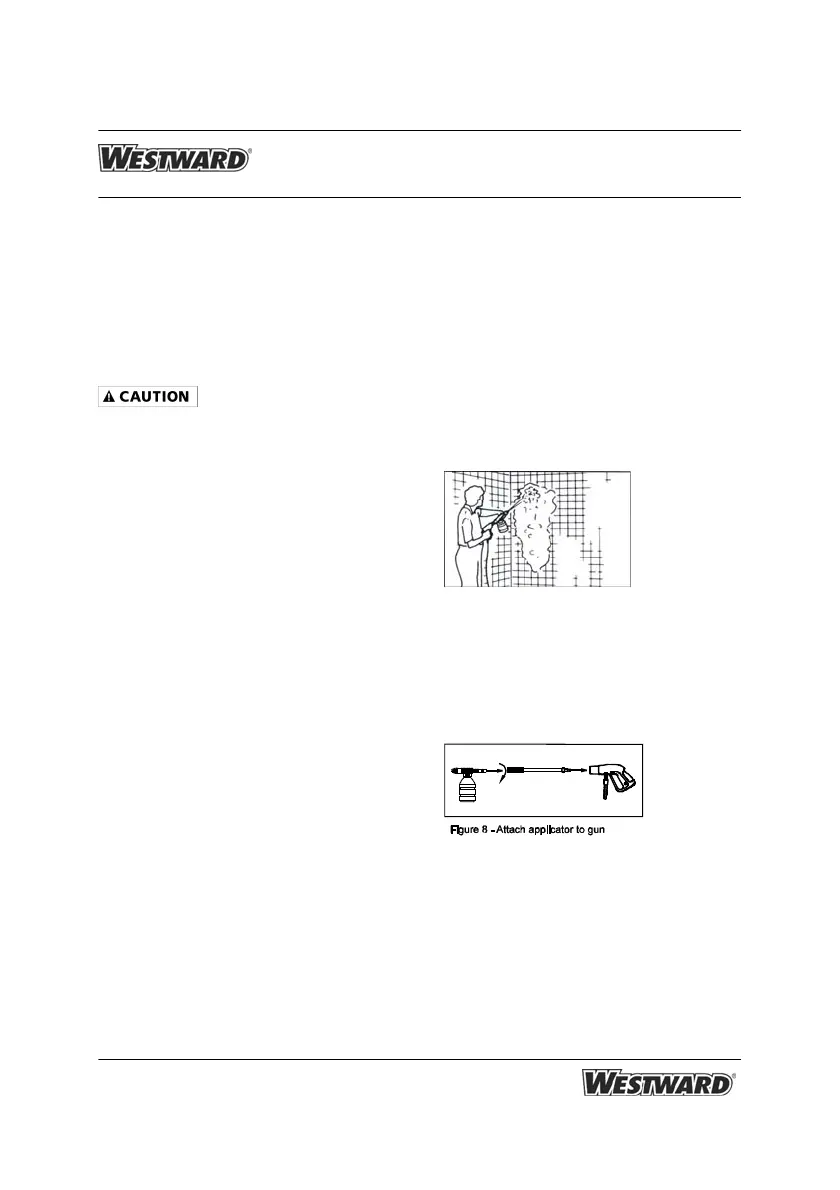
Figure 7- Detergent application
Units with Detergent Applicator Included
Follow manufacturer’s label directions for mixing
correct concentrations of detergent to water ratio
through the pressure washer, which is approximately
5.4% (1 to 19).
1. Unscrew to top of detergent applicator and fill
applicator with detergent.
2. Replace top on applicator.
3. Remove lance from gun.
4. Attach detergent applicator to gun. (See Figure 8)
5. Apply detergent so it thoroughly covers cleaning
surface. Apply from bottom to top to prevent detergent
from sliding down and streaking.
6. Allow detergent to remain on the surface for a few
minutes. This is a good time to use a brush to lightly
scrub heavily soiled areas. Never allow detergent to
dry on the cleaning surface.
7. Remove detergent applicator from gun and replace
with the lance, or remove applicator from end of lance.
8. Rinse detergent from surface.
NOTE: Flush detergent applicator with clear water
after each use.


 To Next Page
 Loading...