EasyManua.ls Logo

Whirlpool GC5THGXKB00 - User Manual

Whirlpool GC5THGXKB00
64 pages
Print Icon
To Next Page IconTo Next Page
Loading...
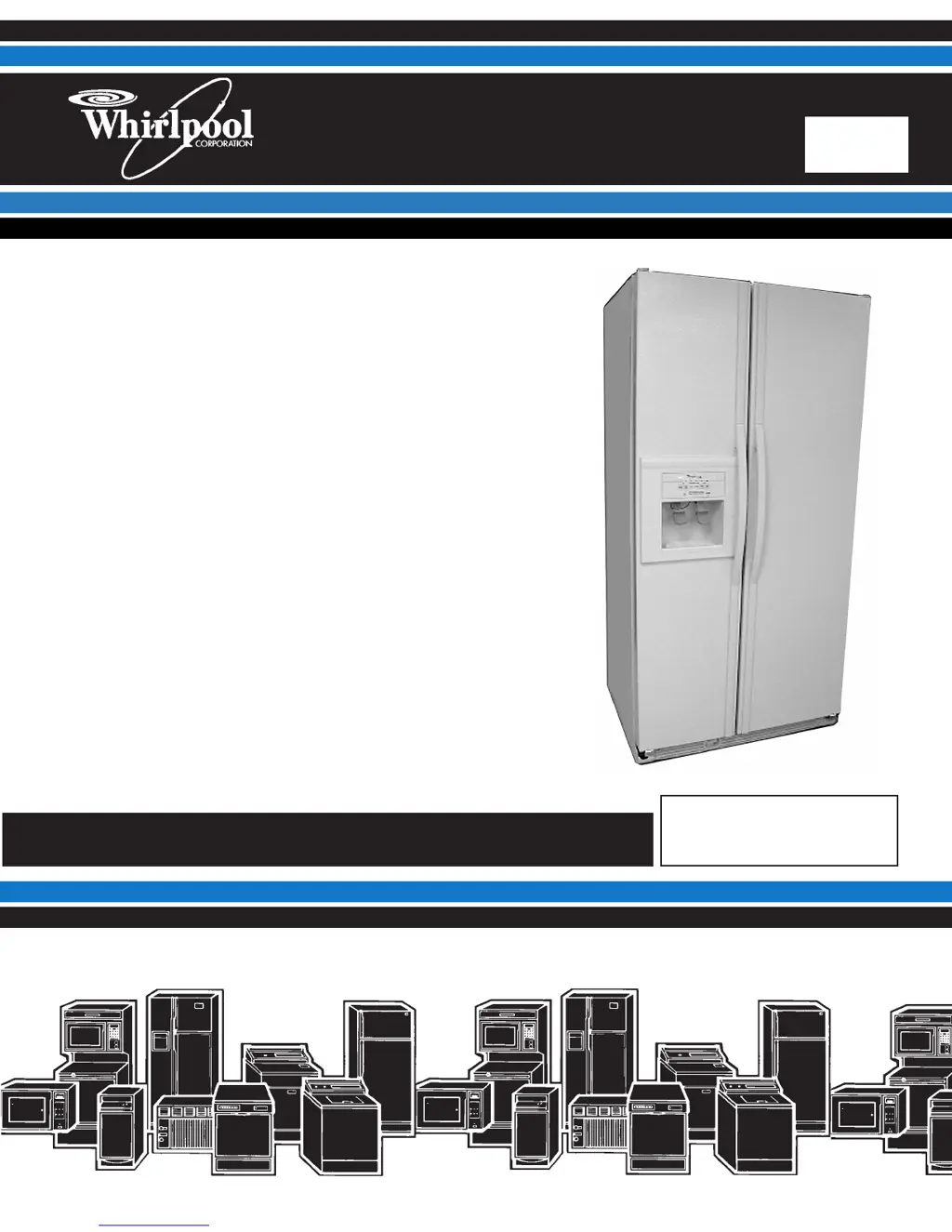
CONSUMER SERVICES TECHNICAL
EDUCATION GROUP PRESENTS
R-95
JOB AID
Part No. 8178066A
2001 K MODEL
COUNTER DEPTH
SIDE-BY-SIDE REFRIGERATOR
WITH VARIABLE CAPACITY
COMPRESSOR
MODELS:
GC5SHGXKB00
GC5SHGXKQ00
GC5SHGXKS00
GC5SHGXKT00
GC5THGXKB00
GC5THGXKQ00
GC5THGXKT00

Other manuals for Whirlpool GC5THGXKB00

Questions and Answers

  • J
    Jeremy MartinAug 8, 2025
    Why is my Whirlpool GC5THGXKB00 Refrigerator compartment too warm?
    • D
      dunndonnaAug 8, 2025
      If the refrigerator compartment in your Whirlpool Refrigerator is too warm, first, make sure the refrigerator control isn't set too warm; try setting it to a lower temperature. Inspect the refrigerator thermistor's wires and connectors, and run diagnostics; confirm with an ohms test if a defective thermistor is indicated. Also, check the air door for ice or blockages and run a diagnostic test to operate the air door. Ensure the evaporator fan motor is running by running a diagnostic test, checking for blockages, and checking the voltage from pin P7-9 to P7-10 (it should be 5-17vdc); replace the motor if the voltage is correct. Finally, check for any blockages in the air door outlet and air returns. Note that a warm freezer compartment can also cause this issue.
  • A
    allen78Aug 13, 2025
    What to do if the freezer compartment is too warm in my Whirlpool GC5THGXKB00 Refrigerator?
    • P
      Patrick AguilarAug 13, 2025
      If the freezer compartment in your Whirlpool Refrigerator is too warm, ensure the freezer control isn't set too warm by setting it to a lower temperature. Check the freezer thermistor's wires and connectors, and run diagnostics; confirm with an ohms test if a defective thermistor is indicated. Run a diagnostic test to ensure the evaporator fan motor is running, check for any blockages, and verify 5-17vdc from pin P7-9 to P7-10; replace the motor if the voltage is correct. Check the condenser fan motor for blockages and test it. Finally, run a diagnostic test to operate the defrost system and test the defrost heater and bi-metal if frost is blocking the evaporator.
  • M
    Mary ReedAug 19, 2025
    How to fix a Whirlpool GC5THGXKB00 Refrigerator compartment that is too cold?
    • B
      brianadavisAug 19, 2025
      If the refrigerator compartment in your Whirlpool Refrigerator is too cold, first, ensure the refrigerator control isn't set too cold; adjust it to a higher temperature. Check the wires and connectors of the refrigerator thermistor, run diagnostics, and confirm with an ohms test if a defective thermistor is indicated. Look for ice or blockages in the air door, run diagnostics to operate it, and check for proper DC input voltage; replace the air door if the voltage is normal but the door still doesn't operate. Finally, inspect the air door seal for damage and repair or replace it. The main PC board may also be a cause.
  • O
    ortizkaraAug 27, 2025
    What to do if the condenser fan runs but the compressor won't start in my Whirlpool Refrigerator?
    • C
      Christopher CharlesAug 27, 2025
      If the condenser fan is running but the compressor won't start in your Whirlpool Refrigerator, it could be due to several reasons. There might be no DC control voltage from the main PCB to the inverter board, requiring a test procedure in the "Component Testing" section. Check for loose or reversed control voltage wires and repair them if needed. The compressor or inverter board itself might be the issue, requiring testing as described in the "Component Testing" section.
  • J
    jbarnettSep 1, 2025
    Why does my Whirlpool Refrigerator run too long?
    • R
      Rebecca WilliamsSep 1, 2025
      It is normal for Whirlpool Refrigerators to run almost constantly at the lowest possible compressor speed. Starting and stopping the compressor uses more power than continuous low rpm operation.

Summary

General Information and Safety

Safety First

Provides crucial safety information for servicing the refrigerator and protecting individuals.

Electrical Power Supply and Grounding Requirements

Details essential electrical safety precautions and proper grounding for appliance service.

Electrostatic Discharge (ESD) Sensitive Electronics

Explains the risks of ESD and necessary precautions to protect electronic components during service.

Model and Serial Number Designations

Describes how to interpret model and serial numbers for identification and tracking purposes.

Model and Serial Number Label and Tech Sheet Locations

Shows the physical locations of the model/serial number label and technical sheets on the appliance.

Specifications

Lists detailed technical specifications for various models of the refrigerator.

Refrigerator Warranty

Outlines the terms and conditions of the refrigerator's limited warranties, including parts and labor.

Installation Information

Leveling the Refrigerator

Instructions on how to properly level the refrigerator for optimal performance and stability.

Base Grille Removal

Procedure for safely removing the base grille to access internal components.

Adjusting The Rollers

Guide on adjusting the refrigerator's rollers for proper alignment and stability.

Theory of Operation

Overview of Refrigerator System

General introduction to the refrigerator's cooling system and its main components.

The Electronic Control Panel

Explains the function and operation of the electronic control panel and its indicators.

Temperature Control Mechanisms

Details how the electronic control manages refrigerator and freezer temperatures.

Compressor Operation and Control

Describes the variable capacity compressor, its speed control, and protection features.

Evaporator Fan Motor Function

Explains the operation and role of the variable speed evaporator fan motor.

Air Door Functionality

Details the motorized air door's function in controlling airflow between compartments.

Adaptive Defrost Cycle

Explains the adaptive defrost control and its timed defrost cycle.

Pulsed Defrost Operation

Describes the specific pulsing pattern of the defrost heater during the defrost cycle.

Power Interruption Handling

Details the refrigerator's behavior and system reset after a power interruption.

Failure Default Modes

Explains the default operational modes when thermistors or the keypad fail.

Thermistor Functionality

Describes the role of refrigerator and freezer thermistors in temperature monitoring.

Electronic Control Thermal Shutoff

Explains the thermal shutoff mechanism for the electronic control to prevent overheating.

Air Circulation System

Details how air circulates between refrigerator and freezer compartments.

Component Access and Removal

Component Locations Overview

Diagrams showing the location of major components within the refrigerator and freezer.

Removing Touch;Display Board and Motorized Air Door

Step-by-step guide to remove the electronic control panel and motorized air door assembly.

Removing a Thermistor

Procedure for safely removing and replacing refrigerator and freezer thermistors.

Removing a Door Switch

Instructions on how to access and remove the refrigerator and freezer door switches.

Removing a Light Socket

Detailed steps for removing the light socket assemblies from the refrigerator compartments.

Removing the Water Reservoir

Procedure for accessing and removing the water reservoir for maintenance or replacement.

Removing Ice Maker and Auger Motor;Solenoid

Guide to removing the ice maker assembly, auger motor, and crush/cube solenoid.

Removing Evaporator Fan Motor, Bimetal, and Defrost Heater

Steps for accessing and removing the evaporator fan motor, bimetal, and defrost heater.

Removing the Condenser Fan Motor

Procedure for safely removing the condenser fan motor located at the rear of the unit.

Removing the Compressor

Detailed instructions for safely removing the main compressor unit.

Removing the Inverter Assembly

Steps for safely disconnecting and removing the compressor inverter assembly.

Removing the Main Control Board Assembly

Procedure for safely accessing and removing the main electronic control board.

Removing the Water Dispenser Fill Tube

Instructions for removing the water dispenser fill tube and its related components.

Removing the Water Valve

Procedure for safely disconnecting and removing the water inlet/outlet valve.

Removing Freezer Door Handles and Door

Guide on how to remove the freezer door handles and the entire freezer door.

Removing a Roller

Steps for removing and replacing the refrigerator's adjustable rollers.

Component Testing Procedures

Testing the Thermistor

Detailed steps for testing thermistor resistance and voltage output.

Testing the Evaporator Fan Motor

Procedure for testing evaporator fan motor resistance and voltage.

Testing the Condenser Fan Motor

Procedure for testing condenser fan motor operation and voltage.

Testing the Compressor and Inverter

Steps for testing compressor windings and inverter board voltage output.

Testing the Motorized Air Door

Procedure for testing the motorized air door motor resistance.

Testing the Defrost Heater and Bimetal

Instructions for testing the defrost heater resistance and bimetal continuity.

Testing the Main Control Board

Details on testing main control board inputs, outputs, and voltage conditions.

Testing Crush;Cube Solenoid

Procedure for testing the resistance of the crush/cube solenoid.

Testing Ice Maker Auger Motor

Procedure for testing the resistance of the ice maker auger motor.

Testing Water Valve Solenoids

Instructions for testing the resistance of the water dispenser and ice maker solenoids.

Testing Door Switches

Procedure for testing the continuity of the refrigerator and freezer door switches.

Diagnosis and Troubleshooting

General Diagnosis Procedures

Overview of diagnostic steps, including pre-checks and entering diagnostics mode.

Pre-Diagnostics Checks

Essential checks to perform before initiating the diagnostic mode for troubleshooting.

Entering Diagnostics Mode

Instructions on how to activate the refrigerator's diagnostic testing mode.

Diagnostic Test Chart

A chart detailing diagnostic steps, expected results, and component status indicators.

Water Filter Input (WFI) Test

Procedure to test the water valve monitoring through the WFI control system.

Troubleshooting Chart

A guide correlating common refrigerator problems with their possible causes and solutions.

Wiring Diagrams and Strip Circuits

Wiring Diagram Overview

Schematic showing the electrical connections for all refrigerator components.

Strip Circuits Explained

Detailed strip circuit diagrams illustrating power flow for cooling and defrost cycles.

Product Specifications and Warranty Support

Contact Information for Product Support

Provides phone numbers for product specifications, warranty, and technical assistance in the US and Canada.

Whirlpool GC5THGXKB00 Specifications

General IconGeneral
BrandWhirlpool
Model NumberGC5THGXKB00
Refrigerator StyleSide-by-Side
Total Capacity25 cu. ft.
Ice MakerYes
Water DispenserYes
FinishBlack
Defrost TypeFrost-Free
Number of Shelves4
Number of Door Bins4
Reversible DoorNo
Width35 1/2 in

Related product manuals