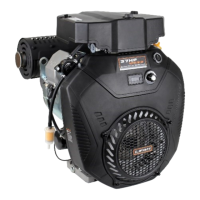
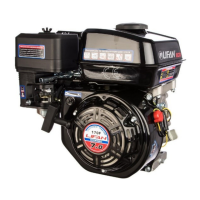
This document describes the LIFAN Petrol Engine, a single-cylinder, 4-stroke, air-cooled gasoline engine designed for a wide range of applications in craft, industry, horticulture, agriculture, and household use. The manual covers various models, including 92400, 92403, 92404, 92407, 92408, 92413-92416, 92423, 92425, 92427, 92428, 92434, 92435, 92437, 92438, 92441-92444, 92447, 92448, 92452, 92455, 92459, 92460, 92496, and 92497.
Function Description
The LIFAN Petrol Engine is a robust and versatile power unit. It operates on a four-stroke cycle, utilizing gasoline as fuel and an air-cooling system to maintain optimal operating temperatures. The engine is designed for ease of use and portability, making it suitable for various tasks requiring a reliable power source. Most models feature an OHV (Over Head Valve) design, except for the 152F/154 FA/P (SV) models. Ignition is managed by a TCI (Transistor Controlled Ignition) module, ensuring efficient combustion. The fan hood is constructed from specially silent steel plate, contributing to quieter operation. The engine can be started either manually or electrically, depending on the model.
Important Technical Specifications
The LIFAN Petrol Engine series encompasses a range of models with varying displacements, power outputs, and other specifications. Below is a summary of key technical data for several models:
Engine Type:
- All models are 4-stroke, 1-cylinder, air-cooled, petrol engines.
- Some models (e.g., UP154, 160F/P, UP170, 177, 188, UP190, 190, 192) feature an OHV (Over Head Valve) design.
- Other models (e.g., SC152F, 152F, 154FA/P) utilize an SV (Side Valve) design.
Displacement (c㎡):
- SC152F: 98 c㎡
- 152F: 87 c㎡
- UP154: 87 c㎡
- 154FA/P: 105 c㎡
- 154F/P, SC154F: 87 c㎡
- 160F/P: 118 c㎡
- 168: 196 c㎡
- UP170: 208 c㎡
- 177: 270 c㎡
- 188: 389 c㎡
- UP190: 419 c㎡
- 190: 420 c㎡
- 192: 439 c㎡
Spark Plug Type:
- F7TC (for SC152F, 154FA/P, 154F/P, SC154F, 168, UP170, UP190, 190, 192)
- E6TC (for 152F, UP154, 160F/P, 177, 188)
- Spark plug gap: 0.6–0.7 mm (0.024–0.028 in)
Max. Power (with 3600 rpm):
- SC152F: 1.8 kW/2.5 hp
- 152F: 2.2 kW/3 hp
- UP154: 1.8 kW/2.4 hp
- 154FA/P: 2.2 kW/3.0 hp
- 154F/P, SC154F: 2.2 kW/3 hp
- 160F/P: 3 kW/4 hp
- 168: 4.8 kW/6.5 hp
- UP170: 5.2 kW/7 hp (at 4000 rpm)
- 177: 6.8 kW/9 hp (at 4000 rpm)
- 188: 9.6 kW/13.0 hp (at 4000 rpm)
- UP190: 10.4 kW/14 hp
- 190: 11.8 kW/16 hp
- 192: 12.5 kW/18 hp
Starting Device:
- All listed models use a Recoil starter.
Engine Oil Type:
- SAE 15W/40 mineral for winter/summer.
Engine Oil Capacity (l):
- 0.40 l (for SC152F, 152F, UP154, 154FA/P)
- 0.60 l (for 154F/P, SC154F, 160F/P, 168, UP170, UP190, 190, 192)
- 1.10 l (for 177, 188)
Fuel Type:
- Premium unleaded gasoline.
Fuel Tank Capacity (premium unleaded) (l):
- 1.40 l (for SC152F, 152F, UP154, 154FA/P)
- 1.60 l (for UP154)
- 1.30 l (for 154FA/P)
- 1.50 l (for 154F/P, SC154F, 160F/P, 168)
- 3.60 l (for 160F/P, 168, UP170, UP190, 190, 192)
- 6 l (for 177, 188)
- 6.5 l (for UP190, 190, 192)
Cooling:
- All models are air-cooled engines.
Ignition:
Engine Stop System:
Valve Clearance (cold):
- IN: 0.15 ± 0.02 mm
- EX: 0.20 ± 0.02 mm
Torques (Nm):
- Cylinder head screw: 24±1 (152F-160), 25±1 (168-192), 34±1 (168-192)
- Crankshaft case screws: 14±1 (152F-160), 24±1 (168-192)
- Connecting rod bolt: 11±1 (152F-160), 23±1 (168-192)
- Fly wheel screws: 50 (152F-160), 75-85 (168-192), 110-120 (168-192)
- Spark plug: 20
Usage Features
The engine is designed for user-friendly operation, but adherence to safety guidelines is crucial.
- Ventilation: Always operate the engine in well-ventilated environments to prevent health risks from fumes.
- Clearance: Maintain at least 1 meter distance from house walls or other fixed facilities. Ensure the exhaust pipe is free and accessible.
- Fueling: Switch off the engine before refueling. Do not overfill the tank. Clean up any spilled fuel before starting.
- Oil Check: Ensure the tank cap is closed when changing oil to prevent oil from entering the petrol tank.
- Environment: Avoid using the unit near open flames, flammable or explosive substances/gases, or flying sparks.
- Moving Parts: Ensure all moving and rotating parts are covered during operation.
- Hot Components: Be aware that components like the exhaust become hot during operation and can cause burns.
- Children and Safety: Operate in a safe environment and keep children away.
- Surface: Operate on a straight and solid surface. Slopes can cause fuel leakage and negatively influence gear operation, even with full oil levels.
- Transportation: Take care during transport to prevent fuel leaks. It is recommended to empty the fuel tank and close the fuel inlet valve.
- Pre-Commissioning: Before starting, verify all fuel lines are connected and tight, all screws and nuts are firmly tightened, and check fuel and oil levels, refilling if necessary.
- Starting Procedure: Open the throttle and the carburettor drain screw. Once fuel runs out, refasten the drain screw, then start the engine.
- Engine Operation: The engine should only run within its rated power and speed. Stop immediately and take corrective measures if abnormal episodes occur. Avoid charging the engine during the first 1–3 minutes after starting.
- Stopping Procedure: Reduce speed to a minimum, set the choke to Off, and turn the on/off switch (located on the crankshaft housing) to off.
Maintenance Features
Regular maintenance is essential for optimal performance and extended engine life.
- Air Filter: Clean the air filter regularly, approximately every 25 hours of working. Replace it if it cannot be cleaned effectively. The air filter should be regularly checked and, if necessary, cleaned or replaced.
- Fittings: Check all fittings for tightness and re-tighten them if necessary.
- Engine Oil: Regularly check the engine oil level. Change the oil every 20 hours or every 3 months.
- Spark Plug: Clean, test, or replace the spark plug every 50 hours of operation. If the earth electrode is burnt or the spark plug is worn, replace it with a new spark plug of the same type. Only mount or dismount spark plugs in a cold engine. Use ONLY ORIGINAL spark plugs.
- Fuel Tank: Clean the fuel tank every 100 hours of operation by removing it from its holder and rinsing it. The fuel filter should also be cleaned periodically.
- Long-Term Storage: For long periods of storage, completely empty the fuel tank and carburettor via its discharge screw. Discharge the engine oil while the engine is hot (but switched off), then refill with new oil. Clean the engine exterior of dirt. Recheck and replace/clean the air filter and spark plug. Fill the combustion chamber with some motor oil when the spark plug is unscrewed to prevent oxidation. Store the engine in a dry place.

 Need help?

 To Next Page
 General