Need help?
Do you have a question about the WLtoys 124019 and is the answer not in the manual?
Guidelines for safe battery use and charging to prevent damage or accidents.
Essential safety measures for operating the RC model to avoid injury or damage.
Solutions for common operational issues like non-response or control loss.
Critical warnings regarding product usage, small parts, and environmental conditions.
Procedures for cleaning, rust prevention, and storing the RC car and batteries.
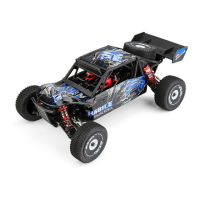
Details brand, model number, scale, color, and maximum speed of the RC car.
Information on RC frequency, control distance, and battery charging/play times.
Provides comprehensive product name, dimensions, speed, usage time, and control details.
This document provides a comprehensive guide for the operation, maintenance, and assembly of a 1:12 scale electric 4WD climbing RC car. It emphasizes safety precautions, troubleshooting common issues, and offers detailed instructions for both beginners and experienced users.
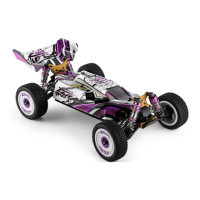
The RC car is a four-wheel-drive electric climbing vehicle designed for off-road use. It features a proportional R/C system, allowing for precise control over steering and throttle. The car is capable of moving forward, backward, turning left, and turning right. Its design incorporates a robust chassis and powerful motor to handle various terrains and offer a dynamic driving experience. The proportional control system means that the degree of wheel twisting on the remote directly corresponds to the turning angle of the car, and the angle of the throttle trigger adjusts the forward and backward speed. This level of control enhances the driving experience, making it suitable for both casual play and more challenging maneuvers.
The RC car is operated via a remote controller with several key functions:
Before operating the car, users are instructed to:
The manual strongly advises against operating the model on public roads, in crowded areas, near people or animals, or near water bodies (rivers, ponds, lakes) to prevent accidents, injury, or damage. It also highlights the importance of using the correct frequency to avoid loss of control due to interference from other R/C models. A specific shutdown procedure (transmitter antenna extended, transmitter on, R/C model on, then reverse for shutdown) is provided to prevent runaway models.
The car's design includes a high-strength aluminum alloy chassis, which contributes to its strong stability and durability. It features a 550 strong magnetic motor, enabling speeds up to 60km/h, and zinc alloy gears for strong wear resistance. Oil-filled hardware shock dampers are incorporated to provide a smooth ride over various terrains and effectively reduce vibrations and impact forces, making the car adaptable to multiple environments.
Regular maintenance is crucial for the longevity and optimal performance of the RC car. The manual outlines several key maintenance practices:
The manual also includes a troubleshooting section to address common operational issues, such as the car not operating, or not responding to controls. Solutions range from checking power switches and battery placement to charging batteries and ensuring proper antenna extension. The importance of observing the operation manual and packing explanation for installation and use is highlighted, with a note that some parts should be installed by adults. Small parts are present, posing a choking hazard, and the product should be assembled and stored out of reach of children. The car's motor can become hot during and after operation, so users are advised not to touch it until it has cooled down.
 General
| Scale | 1/12 |
|---|---|
| Drive System | 4WD |
| Remote Control Frequency | 2.4GHz |
| Radio System | 2.4 GHz |
| Tire Type | Rubber |
| Motor Type | Brushed |
| Battery | 7.4V Li-Po |
| Remote Distance | 100m |
| Charging Time | 2-3 hours |
| Charger | Included |
| Shock Absorber | Oil-filled |

 To Next Page