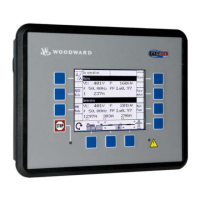
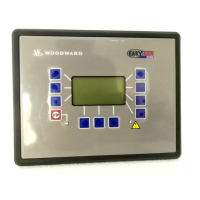
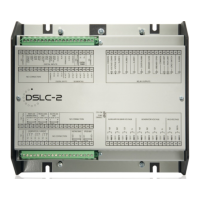
Manual 37443A DSLC-2 - Digital Synchronizer and Load Control
Page 156/226 © Woodward
Dead Bus Closing – Single Unit
When a dead bus is detected and dead bus closing mode is enabled, the DSLC is doing a security check before is-
suing a breaker closure command. The dead bus arbitration is automatically cancelled, if no other control is rec-
ognized on the common network. If a “Missing Member” or a “Communication Monitoring” error is detected, the
DSLC-2 will not close to a dead bus.
Figure 4-15: Dead bus closing – Example of single dead busbar closure arbitration
Voltage Matching
The voltages of the generators in a parallel system must be matched within a small percentage to minimize the
reactive power flow in the system. If two synchronous generators of unequal voltage are paralleled, the combined
voltage will have a value different from the voltage generated by either of the generators. The difference in vol-
tages results in reactive currents flowing in the system with subsequent lowered system efficiency.
If a synchronous generator is paralleled to a larger system such as a utility, a difference in voltages before paral-
leling will not change the voltage of the bus. If the generator voltage is lower than the bus voltage when the
breaker is closed, reactive power will be drawn from the bus and used to excite the generator to the higher bus
voltage. In the case where the generator voltage is low enough, the reactive power flow could motorize the gene-
rator with potential damage to the generator windings.
The DSLC-2 measures the RMS values of the generator and busbar voltages. The synchronizer issues appropriate
raise or lower commands to the voltage regulator until the generator voltage is within the specified voltage win-
dow. The automatic voltage matching function will occur in both, the “Check” and “Run” modes and is verified
only by the sync-check function in “Permissive” mode. A voltage trim function provides accurate voltage control
in isochronous load sharing mode.


 To Next Page
 Loading...