Installation
2–8 975-0466-01-01
Lightning Protection
Reduce the risk of lightning damage by using a single-point grounding system. In
this system, all ground lines terminate at the same point. This point normally is the
main utility ground installed by the utility company to provide a ground for the
house wiring. This ground usually consists of a copper rod driven 1.5 to 2.5
meters into the earth.
Routing the Wires
Typical
configurations
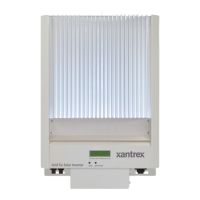
Determine all wire routes to and from the GT Inverter. Typical routing
configurations include:
• AC wiring from the GT Inverter to the main utility service panel
• DC input wiring from the PV array to the GT Inverter
Preparing for the Installation
Wiring
Wire size and length will be determined by the location of each component and
their relative distance to each other. Wire sizes may also be affected by whether or
not conduit is used, in accordance with wire size tables in applicable codes.
WARNING: Shock hazard
Whenever a PV array is exposed to sunlight, a shock hazard exists at the output wires or
exposed terminals. To reduce the risk of shock during installation, cover the array with an
opaque (dark) material before making any connections and open any and all external
disconnect switches between the array and the inverter. The PV modules, wiring, and
other equipment must be installed in accordance with the manufacturer's instructions and
all applicable installation codes.
Important:
Ensure your local utility is consulted for any requirements for connecting
to or returning power to the grid. Obtain all permits necessary to complete the installation.
Consult your local and national electrical codes for more information.
Important:
In this manual wiring and wires are used in reference to both AC and DC
wiring/cabling and wires/cables.
Important:
Wire size should be based on the maximum power rating of the inverter.
Ensure that wiring is not undersized. Undersized wiring can result in significant power
losses and reduction in system efficiency.


 To Next Page
 Loading...