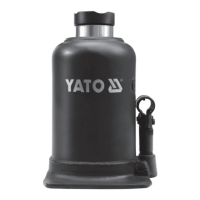
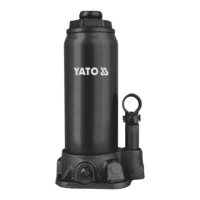
The device described in this manual is a hydraulic lift, specifically a floor jack, designed for lifting significant weights. It is intended for use in workshops and garages for lifting vehicles or other heavy objects to facilitate maintenance, repair, or inspection. The model number for this device is YT-17211.
Technical Specifications
- Lifting capacity: 3 tons (3000 kg). This indicates the maximum weight the jack can safely lift.
- Lifting range: 130 - 465 mm. This specifies the minimum and maximum height the jack can raise an object.
- Weight: 27.7 kg. This is the weight of the jack itself.
Usage Features
The hydraulic lift operates by means of a lever and a hydraulic system. To use the jack, the operator must first ensure the device is placed on a firm, flat, and stable surface. The jack should be positioned under the load in the middle section of the saddle.
Lifting:
- Preparation: Before lifting, ensure the load is stable and cannot roll or shift. Chock the wheels of the vehicle if applicable. Do not exceed the maximum load capacity of 3 tons.
- Positioning: Place the jack's saddle directly under the designated lifting point of the object. For vehicles, this is typically a reinforced part of the chassis or frame.
- Operation: Insert the handle into the socket and pump it up and down. This action will extend the hydraulic ram, raising the saddle and the load.
- Safety: Once the desired height is reached, engage the safety lock (if available) to prevent accidental lowering. For prolonged work, it is recommended to use additional support stands (jack stands) to secure the load, and then slightly lower the jack until the load rests on the stands.
Lowering:
- Preparation: If support stands were used, slightly raise the load with the jack to remove pressure from the stands, then remove the stands.
- Operation: Slowly turn the release valve counter-clockwise. This will allow the hydraulic fluid to return to the reservoir, and the load will gradually descend.
- Control: Control the lowering speed by adjusting how much the release valve is opened. Do not open the valve too quickly, as this can cause the load to drop suddenly, which is dangerous.
- Storage: Once the load is fully lowered, remove the jack and store it in a clean, dry place.
Important Safety Recommendations:
- Always read and understand the operating instructions before using the device.
- Wear appropriate personal protective equipment, such as safety glasses and gloves.
- Never exceed the rated lifting capacity.
- Do not use the jack on an uneven, soft, or unstable surface.
- Ensure the load is centered on the saddle to prevent tipping.
- Never work under a load supported only by the hydraulic jack. Always use additional support stands.
- Keep hands, feet, and loose clothing away from moving parts.
- Do not modify the jack in any way.
- Regularly inspect the jack for damage or wear. Do not use a damaged jack.
- The manufacturer recommends having the device inspected by an authorized service center every 4 years from the date of first use.
Maintenance Features
Regular maintenance is crucial for the safe and efficient operation of the hydraulic lift.
Hydraulic System Maintenance:
- Oil Level Check: Periodically check the hydraulic oil level. If the oil level is low, air bubbles may form in the system, impairing its efficiency.
- Oil Refill/Replacement: If the oil level is low, refill with hydraulic oil of SAE 10 viscosity. The manual specifies that other liquids are prohibited. To refill, remove the oil plug, fill with oil, and then close the plug.
- Air Bleeding: If the jack does not lift to its full height or lifts unevenly, there may be air in the hydraulic system. To bleed air, open the release valve, pump the handle several times without a load, then close the release valve and pump the handle to its maximum height. Repeat this process a few times until the air is expelled.
- Oil Leakage: Inspect for any oil leaks. Leaks indicate a problem with seals or fittings and should be addressed immediately by an authorized service center.
General Maintenance:
- Cleaning: Keep the jack clean and free from dirt, grease, and debris. This prevents contamination of the hydraulic system and ensures smooth operation of moving parts.
- Lubrication: Lubricate all moving parts, such as the pivot points and wheels, with appropriate grease or oil to reduce friction and wear.
- Inspection: Regularly inspect the jack for any signs of damage, wear, or corrosion. Pay attention to the handle, frame, saddle, and wheels.
- Storage: Store the jack in a dry, clean place, preferably in its original packaging or a protective cover, to prevent rust and damage.
- Spring Replacement: If the back spring is damaged or weakened, it should be replaced. The manual provides instructions for replacing the back spring by removing the damaged spring from its holes and installing a new one.
Troubleshooting:
The manual includes a troubleshooting guide for common issues:
- Jack lowers under a load: Could be insufficient oil, air in the hydraulic system, or a faulty release valve.
- Jack does not lift a load: Could be insufficient oil, air in the hydraulic system, or a faulty pump.
- Jack does not lift to full height: Could be insufficient oil, air in the hydraulic system, or a damaged back spring.
- Pump springs back during lifting: Could be a damaged back spring or deformed arm driving elements.
- Jack does not lower completely: Could be a stuck release valve.
- Oil is leaking from under the plug: Indicates excessive oil in the system.
For all complex issues or repairs, it is recommended to contact an authorized service center. Do not attempt to repair the hydraulic system yourself unless you are qualified.

 Need help?
 General

 To Next Page