NTP Overview 357
NTP Overview As the network topology gets more and more complex, it becomes important to
synchronize the clocks of the equipment on the whole network. Network Time
Protocol (NTP) is the TCP/IP that advertises the accurate time throughout the
network.
NTP ensures the consistency of the following applications:
■ For the increment backup between the backup server and client, NTP ensures
the clock synchronization between the two systems.
■ For multiple systems that coordinate to process a complex event, NTP ensures
them to reference the same clock and guarantee the right order of the event.
■ Guarantee the normal operation of the inter-system (Remote Procedure Call).
■ Record for an application when a user logs in to a system, a file is modified, or
Basic Operating Principle of NTP
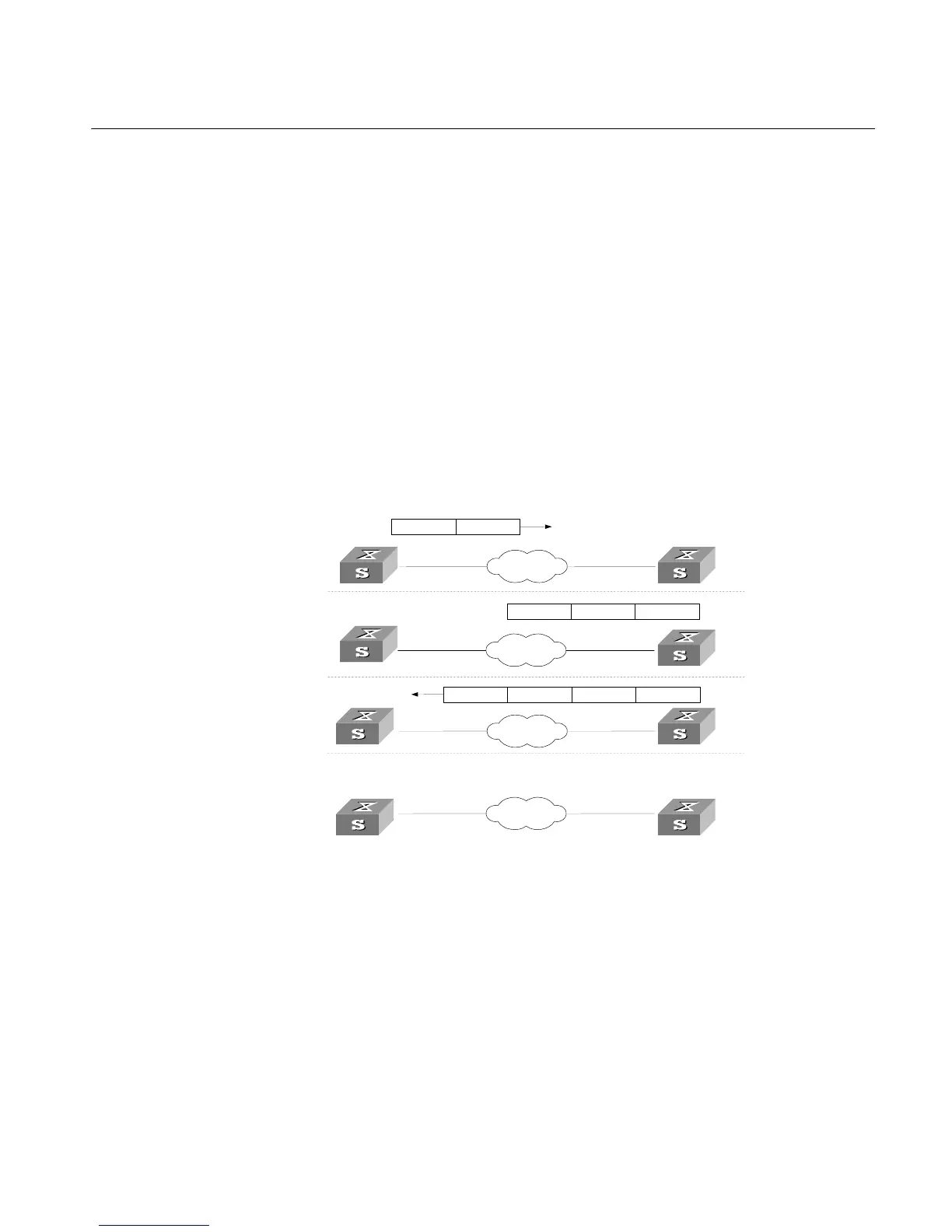
The following figure illustrates the basic operating principle of NTP:
Figure 93 Basic Operating Principle of NTP
In the figure above, Switch A and Switch B are connected via the Ethernet port.
They have independent system clocks. Before implementing automatic clock
synchronization on both Switches, it is assume that:
■ The clock on Switch A is set to 10:00:00am, and that on B is set to
11:00:00am.
■ Switch B serves as an NTP time server. That is, Switch A synchronizes the local
clock with the clock of B.
■ It takes 1 second to transmit a data packet from either A or B to the opposite
end.
The system clocks are synchronized as follows:
Network
Network
NTP消息包 10:00:00am
Network
Network
11:00:01am
NTP消息包 10:00:00am 11:00:01am 11:00:02am
NTP消息包 10:00:00am
NTP Packet received at 10:00:03
1.
2.
3.
4.
LS_A
LS_A
LS_A
LS_A
LS_B
LS_B
LS_B
LS_B









 To Next Page