How a Failure affects the Distributed Fabric 441
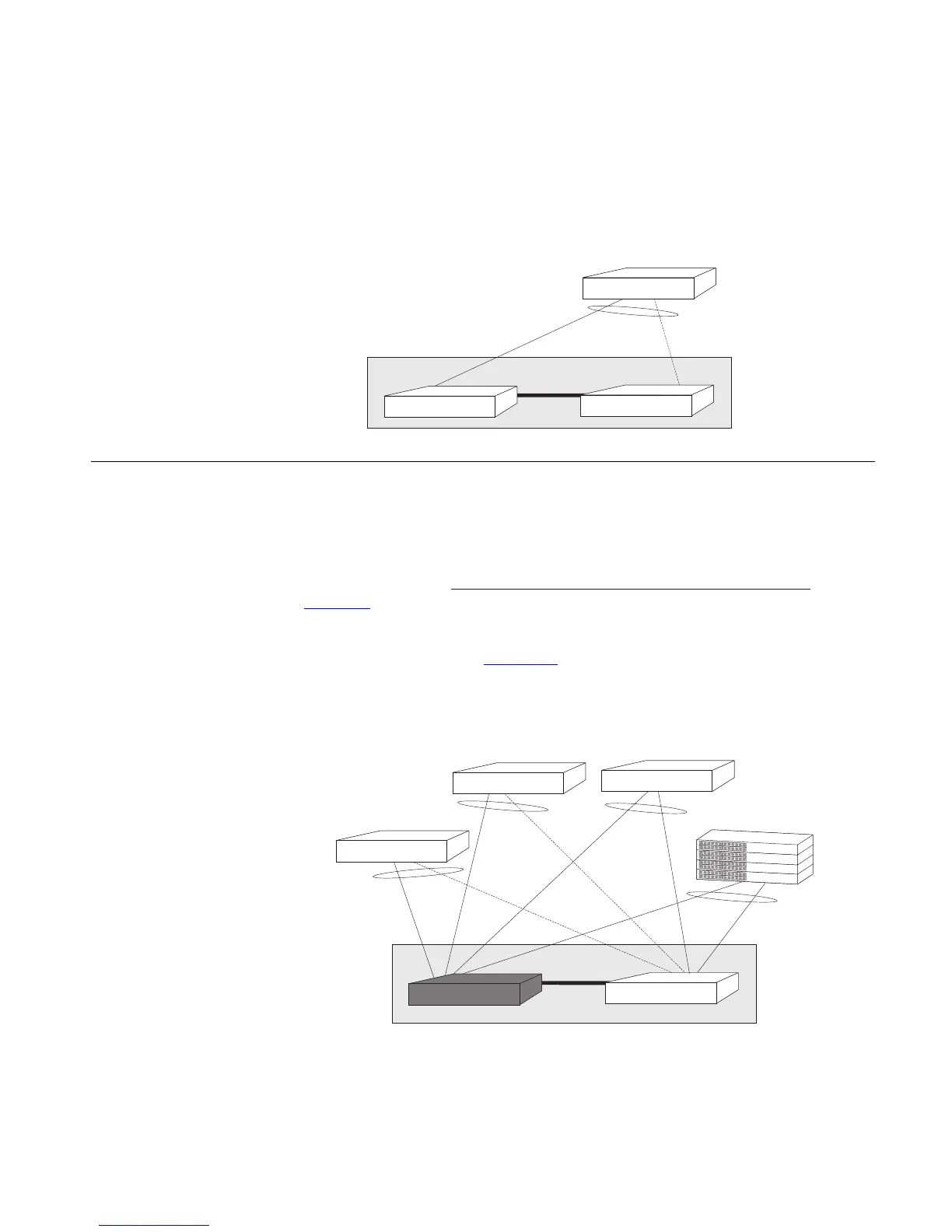
For example, if the resilient links were configured on Switches A and B, if the
interconnect fails, both Switches will detect a failed link to Switch 3300 and both
A and B will activate their links to Switch 3300. So both links in the resilient link
will be passing traffic, potentially causing a loop in the network.
Figure 113 How XRN interacts with Resilient Links
How a Failure affects
the Distributed Fabric
This section provides supplementary information on how the Distributed Fabric
and traffic flow is affected by failure of an Fabric Interconnect and of a unit in the
Distributed Fabric.
Loss of a Switch within
the XRN Distributed
Fabric
When a Switch unit in the Distributed Fabric fails, assuming you have followed the
recommendations in
“Important Considerations and Recommendations” on
page 434, your traffic flow should continue through your network.
The way the network reacts depends upon which features are configured on
which links. For example,
Figure 114 shows an XRN network where all the edge
devices are connected to the Distributed Fabric using a range of supported
features, some of which are legacy features.
Figure 114 XRN Network reaction on Distributed Fabric unit failure
Should Switch A fail, the network will react in the following way:
LACP (IEEE 802.3ad) and Legacy Aggregated Links
The Switch 4400 and Switch 4300 Aggregated Links will reroute all traffic down
the link connected to Switch B.
Switch 5500
XRN Distributed Fabric
Resilient Link
Standby Link
Active Link
Switch A
Switch B
Switch 4400 units
XRN Distributed Fabric
802.3ad
Aggregated Link
Resilient Link
Standby Link
Active Link
Switch B
STP/RSTP enabled
X
Switch 4200
Switch 3300
Switch A
Legacy
Aggregated Link
Switch 4300
Unit Failure



 To Next Page