EasyManua.ls Logo

ABS ABSFBM-120T - User Manual

ABS ABSFBM-120T
21 pages
Print Icon
To Next Page IconTo Next Page
Loading...
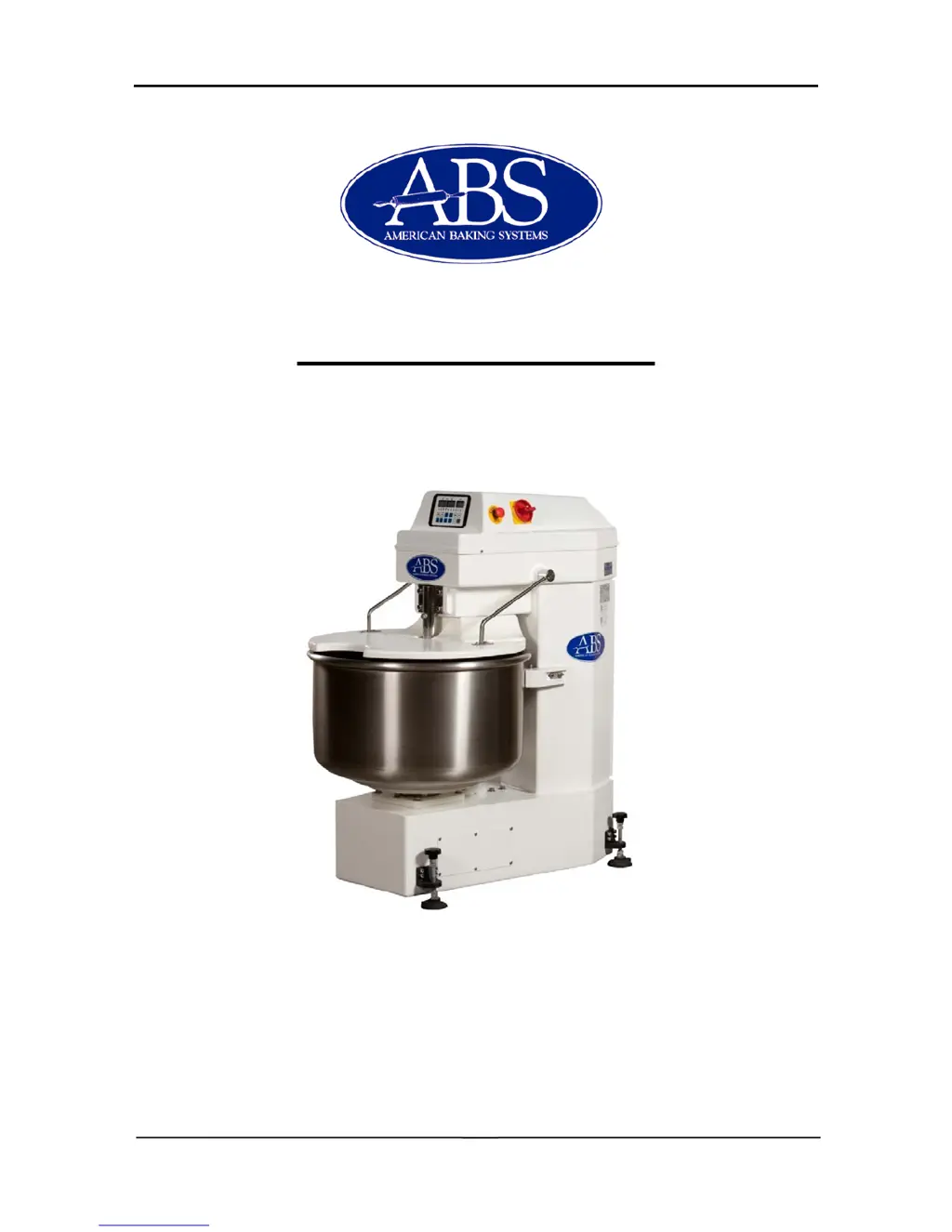
OWNER’S MANUAL
ABSFBM-120T
Spiral Mixer

Questions and Answers

  • R
    robertcruzAug 17, 2025
    What to do if my ABS Mixer does not start?
    • V
      vbellAug 17, 2025
      If your ABS Mixer doesn't start, first ensure it is properly plugged in and switched on. Also, make sure the switch is turned on and placed in the correct position. If these steps don't resolve the issue, consider releasing it by rotating and pulling out.
  • A
    Anna CarrAug 19, 2025
    Why does my ABS Mixer start and then stop?
    • S
      shopkinsAug 19, 2025
      If your ABS Mixer starts and then stops, it might be because both high and low speed timers are set to zero. Set the mixing time on both timers to resolve this issue.
  • W
    william56Aug 22, 2025
    What to do if my ABS ABSFBM-120T Mixer labors under load and the belts screech?
    • J
      Jennifer WalshAug 22, 2025
      If your ABS Mixer labors under load and the belts screech, it could be due to the dough being too stiff or tight. Review and adjust the dough consistency by adding more liquid.
  • A
    angel60Aug 25, 2025
    What to do if my ABS Mixer does not stop?
    • S
      Sean SinghAug 26, 2025
      If your ABS Mixer does not stop, switch off the power at the main switch. As an additional safety measure, isolate the mixer by unplugging it and attach a danger tag to the machine.
  • B
    Brittany HarrisAug 27, 2025
    Why does my ABS ABSFBM-120T Mixer move or rock during operation?
    • S
      steven27Aug 27, 2025
      If your ABS Mixer moves or rocks during operation, it's likely due to the floor not being level or the adjustable feet being located incorrectly. Readjust the level and stabilize the mixer using the adjustable foot.
  • S
    Stephanie LaneAug 30, 2025
    Why is my bread dough too soft when using ABS ABSFBM-120T Mixer?
    • B
      Barbara WallAug 30, 2025
      If your bread dough is too soft when using the ABS Mixer, it may be caused by excessive water used in the dough due to human error. Review the recipe and adjust the dough consistency. It could also be caused by over-mixed dough, so review, check, and adjust the mix cycle.
  • D
    davidwhiteSep 2, 2025
    Why is the final dough temperature too hot when using ABS ABSFBM-120T Mixer?
    • T
      Thomas FrazierSep 2, 2025
      If the final dough temperature is too hot when using the ABS Mixer, it's likely because the water temperature is too hot or the dough was mixed for too long. Try reducing the water temperature and shortening the mix cycle.
  • R
    Richard JenkinsSep 4, 2025
    Why is the final dough temperature too cold when using ABS ABSFBM-120T Mixer?
    • N
      Nathan ByrdSep 4, 2025
      If the final dough temperature is too cold when using your ABS Mixer, it could be because the water temperature is too cold, or the dough was mixed for too short a time. Increase the water temperature or lengthen the mix time.
  • C
    Catherine JohnsonSep 7, 2025
    What to do if there is excessive flour dust coming from my ABS ABSFBM-120T Mixer?
    • H
      hallaprilSep 7, 2025
      If there is excessive flour dust coming from your ABS Mixer, the first speed timer might be set too short. Extend the first speed mix/blending cycle.
  • A
    alexanderrichardSep 10, 2025
    Why do the ABS ABSFBM-120T Mixer bowl and dough hook operate in the wrong direction?
    • E
      Edward FergusonSep 12, 2025
      If the ABS Mixer bowl and dough hook operate in the wrong direction, it could be because the mixer is plugged into a new electrical socket after cleaning or being moved. Return it to its original position. Another reason could be reversed polarity of the 3-phase plug.

Summary

Introduction

Introduction

Overview of the ABSFBM-120T Spiral Mixer, its features, and manual usage.

Specifications

Technical specifications including dimensions, capacity, power, and speed for the mixer.

Installation and Commissioning

Installation

Steps for uncrating, inspecting, positioning, leveling, and connecting power for the mixer.

Commissioning

Procedures for checking rotation direction, emergency stop, and safety guard limit switch.

Operation

Control Panel Overview

Explanation of the control panel layout, including timers, indication lights, and function keys.

Timer Functions

Details on setting and using the three timers for slow and fast speed mixing operations.

Operation Details

Indication Lights

Description of various indicator lights and their meanings for mixer status.

Function Keys

Explanation of the purpose and function of each key on the control panel.

Operation Procedures

Operation Preparation

Pre-operation checks including clearing the machine, work area, and checking ingredients.

Auto Operation Steps

Detailed steps for performing auto operation, including timer setting and starting the mixer.

Operation Modes

Manual Operation Steps

Steps for operating the mixer in manual mode, including speed selection and stopping.

Manual Control Buttons

Explanation of manual switches for speed selection and starting/stopping the machine.

Safety Precautions

General Safety Warnings

Important safety precautions to follow when using the spiral mixer.

Cleaning and Maintenance

Cleaning Procedure

Step-by-step guide for cleaning the spiral mixer, including brush, scraper, and water usage.

Trouble Shooting

Mixer Operational Faults

Common faults like not starting, stopping, or laboring, with possible causes and remedies.

Trouble Shooting Issues

Dough and Temperature Issues

Troubleshooting dough consistency, temperature, and removal problems with suggested solutions.

Parts List - Assemblies 1

Control Panel and Main Shaft Parts

Identification of components within the control panel and main shaft assemblies.

Parts List - Assemblies 2

Mixer and Shaft Components

Identification of various external mixer components and main shaft parts.

Parts List - Assemblies 3

Cover, Transmission, Castor, and Wheel Parts

Identification of parts for the bowl cover, transmission shaft, castor, and wheel assemblies.

Parts List - Assemblies 4

Shaft and Roller Parts

Identification of parts for the transmission shaft and bowl roller assemblies.

Parts List - Assemblies 5

Rotating Plate and Outrigger Parts

Identification of parts for the rotating plate and outrigger assemblies.

Parts List - Detailed 1

Parts List - Section 1

Detailed list of parts with numbers, codes, names, and specifications.

Parts List - Detailed 2

Parts List - Section 2

Continuation of the detailed parts list with numbers, codes, names, and specifications.

Parts List - Detailed 3

Parts List - Section 3

Final part of the detailed parts list with numbers, codes, names, and specifications.

Wiring Diagram

Mixer Wiring Schematic

Schematic diagram illustrating the electrical connections and components of the mixer.

ABS ABSFBM-120T Specifications

General IconGeneral
BrandABS
ModelABSFBM-120T
CategoryMixer
LanguageEnglish